
Have you ever wondered why some suits look like stiff, lifeless armor while others drape effortlessly, moving with your body as if they were a second skin? The secret to this sartorial magic does not lie in the exterior wool, cashmere, or silk. Instead, the true soul of premium menswear is hidden entirely beneath the surface. In the world of high-end tailoring, interior construction is everything.
At Monsoon Apparel, we believe that true elegance must be built from the inside out. Today, we are peeling back the layers to deconstruct the absolute pinnacle of traditional craftsmanship: the full canvas suit. Think of the canvas as the skeleton and muscle of your jacket—a complex internal foundation forged through hundreds of meticulous steps that transforms a flat piece of cloth into a living, breathing masterpiece.
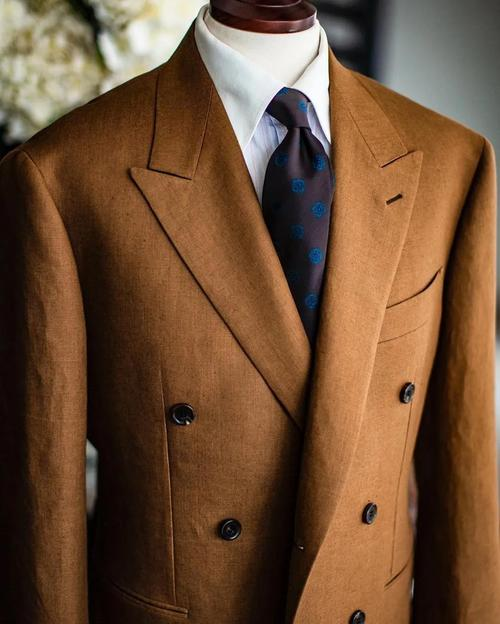
The Anatomy of Elegance: What is a Full Canvas?
To understand the full canvas construction, we must first look at how modern suits are typically made. The vast majority of mass-produced jackets are “fused,” meaning the outer wool is glued to an internal synthetic lining to give it shape. While this saves time and money, glue restricts movement, traps heat, and degrades over time.
A full canvas jacket, on the other hand, rejects adhesives entirely. Instead, it relies on a carefully shaped layer of canvas—traditionally woven from a blend of horsehair, camel hair, wool, and cotton—that runs the entire length of the jacket, from the shoulder down to the bottom hem. This canvas is physically sewn to the outer fabric using thousands of tiny, flexible hand-stitches.

The Skeleton: Building a Three-Dimensional Foundation
If the outer fabric is the skin of the suit, the canvas is its skeleton. Before a single piece of exterior wool is cut, master tailors at Monsoon Apparel must architect the jacket’s structural core.
This process involves intricately layering different weights of canvas to build the chest piece and shoulder structure. Stiffer horsehair is often used in the chest to provide a robust, masculine swell, while softer cotton and wool blends are used further down to ensure the jacket skirts drape fluidly. This internal skeleton dictates the entire silhouette of the garment. It ensures the shoulders sit cleanly, the chest looks full and athletic, and the jacket holds its elegant shape whether you are standing perfectly still or rushing to hail a cab.
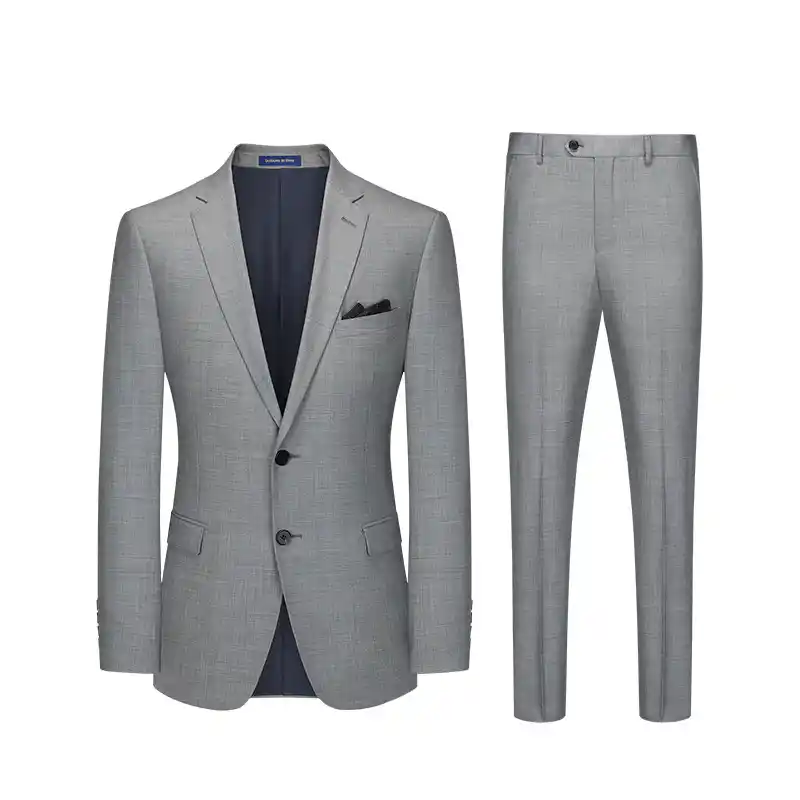
The Muscle: Pad Stitching and the Perfect Lapel Roll
If the raw canvas acts as the skeleton, the meticulous hand-stitching acts as the muscle and sinew, binding the layers together while allowing for dynamic movement. This is where the true artisanship of the “hundreds of processes” comes into play.
The most critical technique in canvas construction is known as pad stitching. A tailor uses needle and thread to apply hundreds of tiny, invisible chevron stitches across the canvas and the jacket’s lapel. By carefully controlling the tension of the thread, the tailor physically forces the flat canvas to curve and bow.
This creates the legendary “lapel roll.” Unlike cheaper fused suits where the lapel is simply pressed flat with a hot iron, a full canvas lapel curves organically over the chest, gently rolling down to the button stance with a beautiful, three-dimensional life of its own. Because it is held by thread rather than glue, this “muscle” flexes and moves. Over time, the canvas literally memorizes the unique contours of your body, meaning the suit actually fits you better the more you wear it.
Deconstructing the Craft: A Journey of a Hundred Steps
Creating a full canvas garment is a labor of love that cannot be rushed. It involves over a hundred distinct, highly specialized steps.
It begins with the precise drafting of the pattern and the hand-cutting of both the cloth and the internal canvas. Next comes the basting—temporary white stitches used to hold the floating layers together while the jacket is assembled.
Then comes the extensive ironwork. Master tailors use heavy steam irons to stretch and shrink the fabric, sculpting the cloth over the canvas to build volume where it is needed and suppress it where it is not. Pockets are painstakingly jetted, armholes are hand-pitched to allow for maximum rotation, and the collar is delicately attached to ensure it hugs the back of the neck without gapping. Finally, the buttonholes are cut and bound by hand with silk thread, serving as the final signature of a master craftsman.
The Ultimate Sartorial Investment
Investing in a full canvas suit is an investment in longevity, comfort, and uncompromising style. Because there is no glue to degrade, a canvas suit will never suffer from “bubbling” or delamination after dry cleaning. The natural fibers of the horsehair canvas allow air to circulate freely, making the jacket significantly more breathable in warmer weather and more insulating in the cold.
Most importantly, it provides an unmatched aesthetic. The natural drape, the memory of the fit, and the sculptural beauty of the lapel roll simply cannot be replicated by factory machines.
When you slip into a meticulously crafted jacket from Monsoon Apparel, you aren’t just wearing a piece of clothing; you are wearing generations of tailoring heritage. You are wearing a garment with a skeleton and muscle all its own, engineered through hundreds of unseen steps to make you look and feel your absolute best.