Choosing the right men’s jeans manufacturer is one of the most important decisions for a clothing brand that wants to build a successful denim collection. Jeans are a long-established fashion essential, but producing high-quality denim requires specialized knowledge, careful product development, and consistent manufacturing standards.
Whether you are launching a new fashion label, expanding an existing clothing business, or developing a private label denim collection, the manufacturer you choose can directly influence product quality, production costs, delivery times, and customer satisfaction.
A reliable manufacturing partner should be able to do more than produce garments according to a basic specification. The right partner should understand denim construction, fabric selection, fit development, washing, branding, quality control, and production management.
This guide explains the key factors clothing brands should consider when selecting a professional manufacturer for men’s jeans.
1. Look for Experience in Men’s Denim Production
The first factor to consider is manufacturing experience.
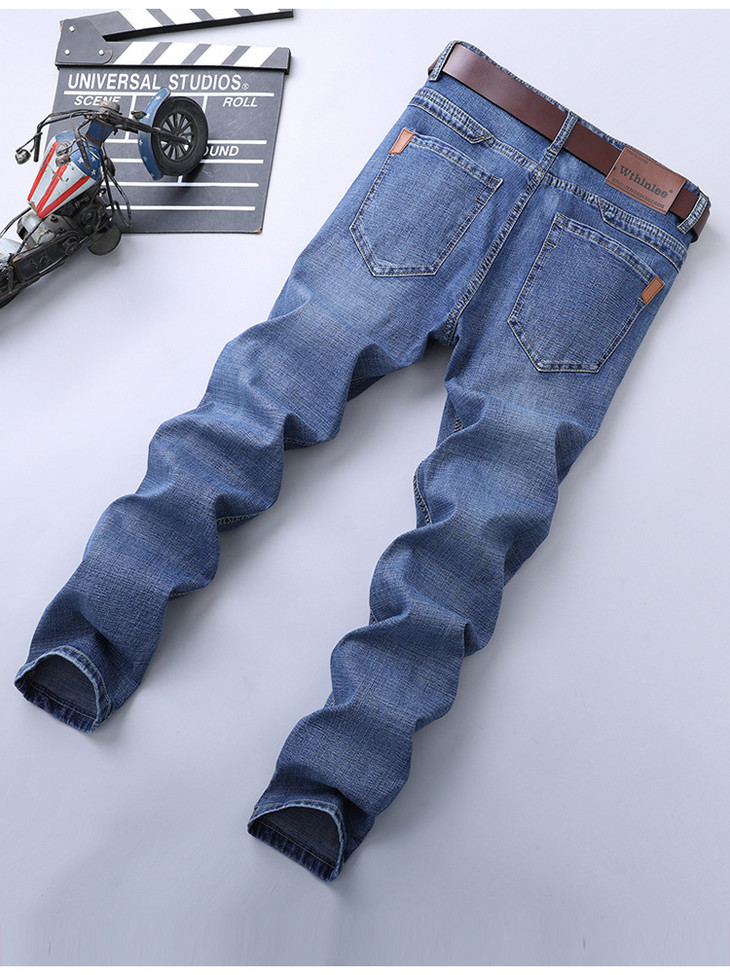
Denim production is different from producing lightweight T-shirts, shirts, or other basic apparel. Jeans require specialized construction techniques and careful attention to details such as waistbands, pockets, belt loops, rivets, buttons, zippers, seams, and reinforcement.
The manufacturer should understand how different denim fabrics behave during cutting, sewing, washing, and finishing. Experience is particularly important when developing custom men’s jeans because the production team needs to translate a brand’s design concept into a practical garment.
An experienced manufacturer can also help identify potential problems before mass production begins.
For example, a particular fabric may behave differently after washing than expected. A pocket design may need adjustment to improve durability. A certain fit may require changes to the pattern to achieve the desired silhouette.
Working with a knowledgeable production team can make these issues easier to identify and resolve.
2. Evaluate Denim Fabric Options
Fabric selection has a major impact on the final appearance and performance of men’s jeans.
Different denim fabrics can create completely different products, even when they use the same basic pattern.
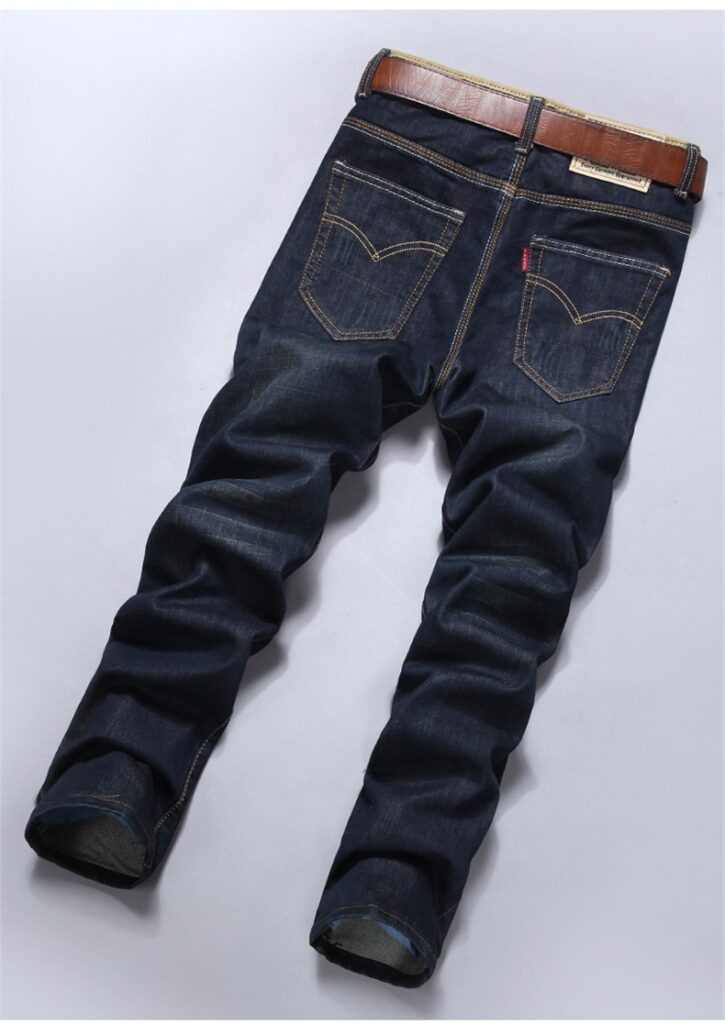
Brands may choose from rigid denim, stretch denim, raw denim, selvedge denim, recycled blends, and other fabric options depending on the product concept.
Stretch denim can provide additional comfort and flexibility, making it suitable for everyday men’s jeans. Rigid denim can create a more traditional and structured appearance. Raw denim can appeal to customers who appreciate a classic denim experience, while selvedge fabrics can be used for premium collections.
Fabric weight is also important.
Lightweight denim may be appropriate for warmer climates or more relaxed garments, while heavier denim can create a structured and durable product.
A professional men’s jeans manufacturer should be able to help brands evaluate different materials according to the intended fit, target customer, season, price point, and overall design.
Monsoon Apparel emphasizes material quality and provides apparel production using a variety of fabrics and materials, with product development based on individual brand requirements.
3. Make Fit Development a Priority
Fit is one of the biggest factors that determines whether customers will enjoy wearing a pair of jeans.
A pair of men’s jeans can have excellent fabric and attractive branding, but if the fit is uncomfortable or inconsistent, customers may not purchase the product again.
Common men’s jeans silhouettes include:
- Slim fit
- Straight fit
- Skinny fit
- Tapered fit
- Relaxed fit
- Loose fit
- Wide-leg fit
- Bootcut fit
Each silhouette requires different pattern proportions.
For example, relaxed jeans should provide additional room through areas such as the seat and thigh while maintaining the intended overall shape. A tapered style needs a carefully developed transition from the upper leg to the ankle.
The rise is also important. Low-rise, mid-rise, and high-rise jeans create different proportions and wearing experiences.
A capable manufacturer should work with the brand to establish detailed measurements before creating the final production pattern.
4. Ask About Custom Jeans Development
If your goal is to create a distinctive fashion brand, standard jeans may not be enough.
Custom men’s jeans allow a business to control important product details and create a collection that reflects its own identity.
Customization may include:
- Denim composition
- Fabric weight
- Color
- Wash
- Fit
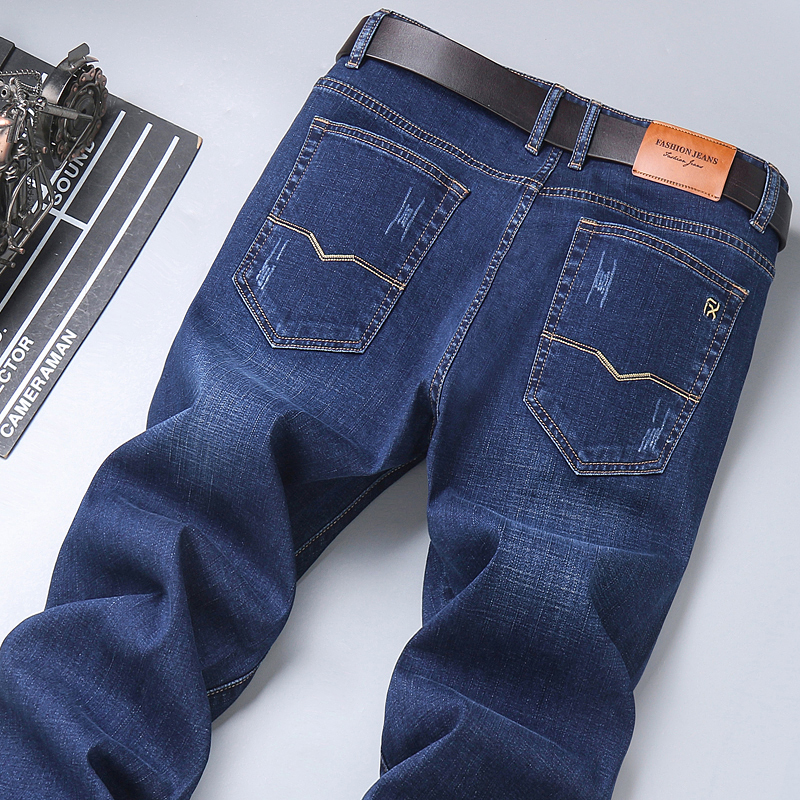
- Pocket shape
- Pocket placement
- Stitching
- Buttons
- Rivets
- Zippers
- Labels
- Patches
- Embroidery
- Printed graphics
- Packaging
These details can make a significant difference.
For example, a streetwear brand might develop loose jeans with vintage washing, contrast stitching, oversized pockets, and embroidered graphics.
A premium menswear brand could choose dark indigo denim, subtle branding, high-quality hardware, and a clean straight-leg silhouette.
The manufacturer should be able to accommodate different design directions rather than forcing every customer into the same standard product.
5. Consider Private Label Manufacturing
Private label manufacturing can be an effective solution for brands that want to sell men’s jeans under their own name.
Instead of operating a manufacturing facility, the brand works with a production partner to manufacture the garments according to its specifications.
The clothing company remains responsible for the brand identity, product positioning, marketing, sales, and customer experience, while the manufacturer manages the production process.
Private label details can include custom brand labels, care labels, hang tags, patches, embroidery, packaging, and other branded components.
This approach can help businesses create a professional product line without investing in their own factory.
Monsoon Apparel provides private label services and allows brands to add their own names and logos to custom garments, helping businesses create products that are consistent with their brand identity.
6. Check the Sampling Process
Never underestimate the importance of product sampling.
A technical drawing or specification sheet can communicate many details, but a physical sample allows you to evaluate the actual garment.
Before approving bulk production, brands should carefully inspect the sample for:
- Overall fit
- Waist measurement
- Rise
- Hip and thigh width
- Leg opening
- Inseam
- Pocket placement
- Fabric weight
- Fabric feel
- Stitching
- Hardware
- Wash
- Branding
- Overall appearance
If the first sample is not perfect, revisions can be made.
This is a normal part of apparel development.
Monsoon Apparel’s production process includes design and concept development, prototyping, and sample approval before mass production. This gives customers the opportunity to review the product and request refinements before the order moves into larger-scale manufacturing.
For brands developing custom denim, this process can help reduce the risk of expensive production mistakes.
7. Ask About Minimum Order Quantities
Minimum order quantity is another important factor when choosing a jeans supplier.
Large production quantities may work well for established retailers, but they can create significant inventory risk for startups and emerging brands.
A business launching its first denim collection may prefer to test a smaller number of styles before committing to a large order.
Lower MOQ options can make it easier to:
- Test a new product
- Launch a capsule collection
- Introduce seasonal styles
- Evaluate customer demand
- Reduce excess inventory
- Manage initial investment
Monsoon Apparel states that it supports businesses of different sizes by maintaining a low minimum order quantity, helping brands reduce inventory costs and overstocking risks.
This flexibility can be especially useful for online clothing businesses and new fashion labels.
8. Examine Production Capacity and Equipment
Production capacity is important even if your first order is relatively small.
A manufacturer should have the equipment, workforce, technical knowledge, and production systems necessary to maintain consistent quality.
Modern production equipment can improve manufacturing efficiency and help support more complex garment designs.
Monsoon Apparel highlights the use of advanced equipment and production technology to manufacture both basic garments and more intricate designs. The company also works with established industry suppliers for components and production support.
For a growing fashion brand, this can be an important consideration because production requirements may increase over time.
9. Pay Attention to Quality Control
Quality control should be considered throughout the manufacturing process rather than only at the end.
For men’s jeans, quality checks can include fabric appearance, measurements, stitching, seams, pockets, hardware, labels, washing, and overall finishing.
Measurement consistency is particularly important.
If a customer purchases the same size from two different production batches, the fit should remain consistent with the approved specifications.
Similarly, color and washing effects should remain within the agreed production standard.
A reliable manufacturer should have a clear process for checking garments before they are shipped.
Consistency is especially important for brands that want to build long-term customer loyalty.
10. Consider Branding and Packaging
The finished jeans are only part of the customer’s experience.
Branding and packaging can also influence how a product is perceived.
A manufacturer that can support custom labels, logos, embroidery, printing, patches, and packaging can make it easier for brands to create a complete product identity.
For an online fashion brand, packaging can be particularly important because it is often the first physical interaction a customer has with the company after placing an order.
A carefully branded product can feel more professional and memorable than a generic garment with standard packaging.
Monsoon Apparel offers custom labeling, OEM production, personalized support, packaging, and other apparel services as part of its manufacturing capabilities.
11. Evaluate Communication and Support
Good communication can make a significant difference during product development.
Custom jeans may involve many specifications, including measurements, fabrics, washing references, artwork, hardware, labels, packaging, and delivery requirements.
A manufacturer should be able to communicate clearly throughout each stage.
It should also be willing to answer questions and provide guidance when a brand is uncertain about a technical production decision.
Monsoon Apparel describes personalized support throughout the ordering process, including assistance with production, pricing, and customization options.
For businesses that are new to apparel manufacturing, this type of support can make the production process much easier to manage.
12. Think About Long-Term Cooperation
The best men’s jeans manufacturer is not necessarily the supplier offering the lowest initial price.
A low quotation can become expensive if the manufacturer produces inconsistent garments, misses delivery deadlines, has limited customization options, or cannot support the brand as it grows.
Instead, brands should evaluate the complete manufacturing relationship.
Consider whether the supplier can support:
- Product development
- Sampling
- Custom fabrics
- Custom fits
- Private labeling
- OEM production
- Flexible quantities
- Quality control
- Packaging
- International shipping
- Larger future orders
A manufacturer capable of supporting multiple stages of a brand’s development can become a valuable long-term production partner.
Final Thoughts
Finding the right men’s jeans manufacturer requires careful evaluation of more than price.
Brands should consider denim expertise, fabric choices, fit development, customization, sampling, MOQ, quality control, production capacity, branding, communication, and long-term scalability.
For startups, flexible production quantities and private label services can make it easier to enter the men’s denim market. For established brands, experienced product development and consistent manufacturing can support the expansion of an existing collection.
Monsoon Apparel provides custom apparel manufacturing solutions with private label and OEM capabilities, low MOQ options, product development, prototyping, sample approval, mass production, packaging, and international delivery. The company states that it serves customers across more than 60 countries.
When your brand chooses a manufacturing partner that understands both the technical requirements of denim and the commercial goals of your business, it becomes much easier to develop men’s jeans that combine reliable quality, strong fit, distinctive branding, and consistent production.