The demand for high-quality men’s denim continues to create opportunities for fashion brands, private label businesses, retailers, and online clothing companies. However, launching a successful denim collection requires more than choosing a popular style. Brands need to make careful decisions about fit, fabric, washing, construction, branding, production quantity, and quality control.
This is where an experienced men’s jeans manufacturer can provide valuable support.
A professional manufacturer can help transform an initial design idea into a production-ready garment while managing important stages such as fabric sourcing, pattern development, sampling, sewing, washing, finishing, inspection, packaging, and delivery.
For brands that want to create distinctive denim products rather than sell generic jeans, custom manufacturing can offer significantly more control over the final product.
What Are Custom Men’s Jeans?
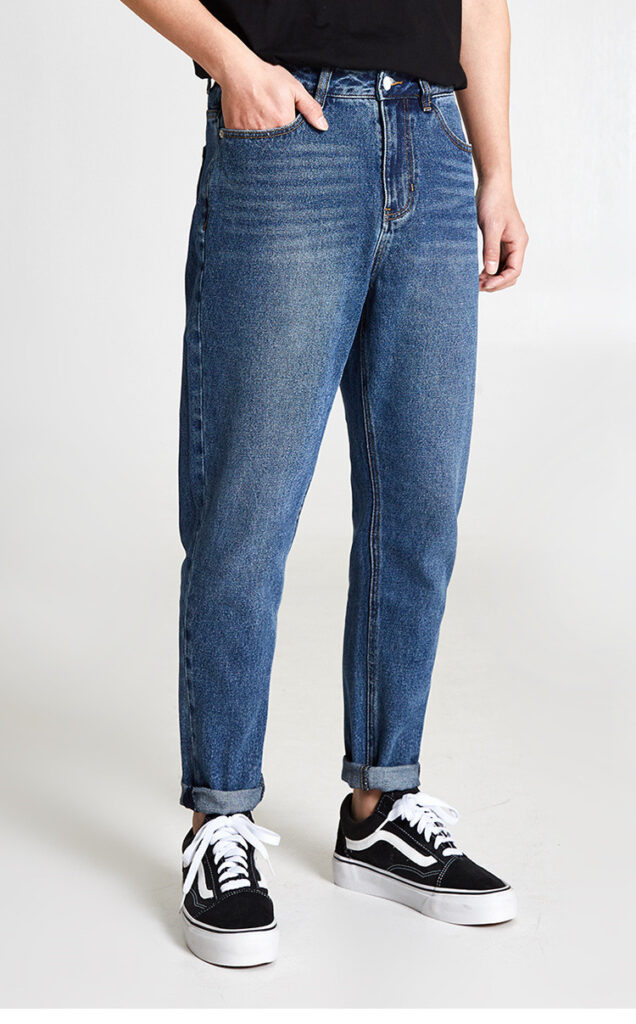
Custom men’s jeans are denim products developed according to a brand’s specific requirements rather than being selected from a standard factory collection.
Customization can cover almost every part of the garment.
A brand may determine the:
- Fit and silhouette
- Denim fabric
- Fabric weight
- Stretch level
- Color
- Wash
- Pocket design
- Stitching
- Buttons
- Rivets
- Zippers
- Labels
- Embroidery
- Patches
- Artwork
- Packaging
This flexibility makes custom jeans particularly useful for brands with a strong visual identity.
For example, a contemporary streetwear brand might want loose-fitting jeans with a vintage wash and bold embroidery, while a premium menswear company may prefer a clean straight-leg silhouette made from heavy rigid denim.
Both products are men’s jeans, but the manufacturing requirements can be completely different.
Start with the Right Jeans Fit
Fit should be one of the first decisions made when developing a custom denim product.
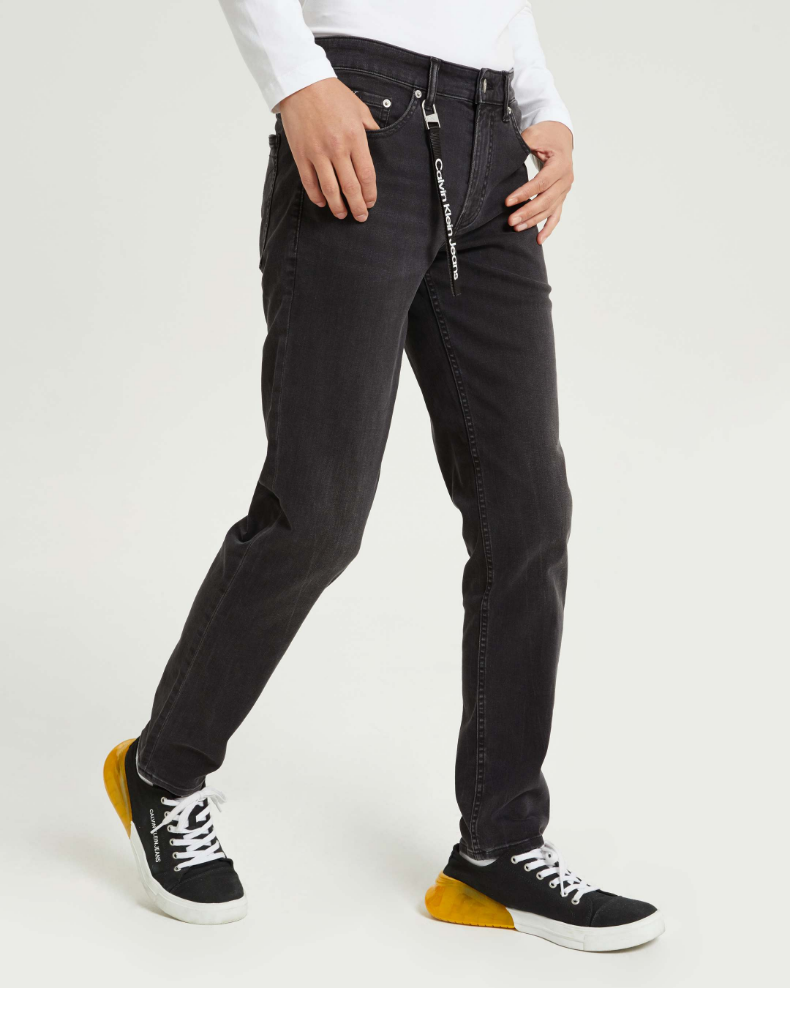
Men’s jeans are available in many silhouettes, including slim, straight, tapered, relaxed, loose, wide-leg, skinny, and bootcut styles.
Each fit creates a different appearance and requires its own pattern.
A slim fit typically follows the body more closely through the thigh and leg. A straight fit maintains a relatively consistent leg shape, while relaxed and loose fits provide additional room through the seat, thigh, and leg.
A good men’s jeans manufacturer should be able to develop patterns according to the intended silhouette rather than simply scaling an existing pattern.
Brands should also consider the rise.
Low-rise, mid-rise, and high-rise jeans can create very different proportions, even when the waist and inseam measurements are identical.
During product development, the manufacturer and brand should establish detailed measurements for the waist, hip, rise, thigh, knee, leg opening, and inseam.
This helps create a consistent fit across different sizes.
Selecting the Right Denim Fabric
Fabric selection is another fundamental part of custom jeans manufacturing.
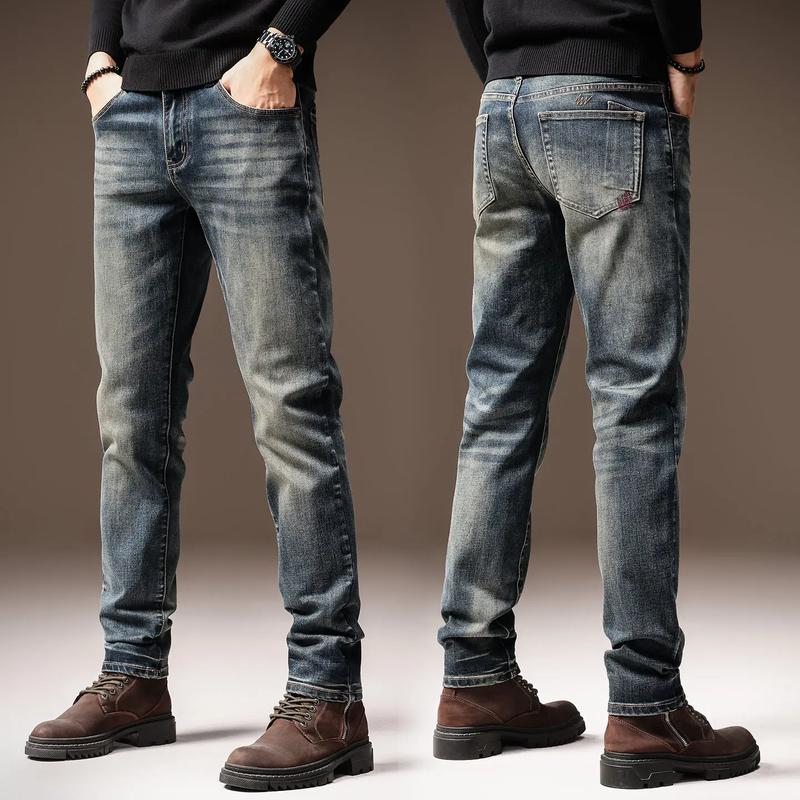
Denim is available in many compositions and weights. Traditional denim is commonly associated with cotton, but modern fabrics may include elastane or other fibers to provide stretch and comfort.
The choice depends on the brand’s target market and product concept.
For everyday men’s jeans, a cotton-stretch blend can provide comfort and ease of movement. For a classic denim collection, rigid cotton denim may provide a more traditional structure and appearance.
Brands interested in premium denim may consider selvedge fabrics, heavier weights, or specialized finishes.
Recycled denim and other more environmentally conscious fabric options can also be considered when sustainability is an important part of a brand’s product strategy.
The fabric should always be evaluated together with the intended fit and washing process.
A fabric that works well for one style may not provide the same results for another.
Monsoon Apparel offers different denim materials, including stretch denim, raw denim, selvedge denim, and recycled blends, giving brands options when developing custom denim products.
Choosing the Right Denim Wash
The wash can completely change the character of men’s jeans.
Two pairs made from the same basic denim fabric can look dramatically different after different washing and finishing treatments.
Popular effects include:
- Dark indigo washes
- Medium blue washes
- Light blue washes
- Stonewashed finishes
- Vintage effects
- Faded finishes
- Distressed effects
- Acid-style effects
- Clean rinses
The choice should match the brand’s overall aesthetic.
A premium collection might use a clean, consistent dark wash, while a streetwear collection may use pronounced fading, whiskering, abrasion, or distressed details.
Wash development should be carefully controlled because variations can affect the appearance of the final product.
Brands should provide clear references when requesting a specific effect and should approve samples before moving into bulk production.
Pocket Design Can Create a Distinctive Look
Pocket construction is often overlooked, but it can become an important part of a jeans brand’s identity.
Back-pocket shapes, stitching patterns, pocket sizes, and placement can help distinguish one product from another.
A simple embroidery design on the back pocket can also become a recognizable brand signature.
Front pockets require careful consideration as well. The opening angle, depth, size, and construction can affect both appearance and functionality.
For custom men’s jeans, brands can work with a manufacturer to develop unique pocket specifications rather than relying on standard patterns.
This is especially useful for brands that want a recognizable silhouette across multiple denim styles.
Hardware and Trims Matter
Small components can have a significant effect on the perceived quality of jeans.
Buttons, rivets, zippers, labels, patches, and other trims should complement the product design.
For example, antique-finish metal hardware may suit vintage-inspired denim, while clean silver or matte hardware may work better for a contemporary collection.
Brands can also use customized hardware to reinforce their identity.
Logo buttons, branded rivets, custom patches, and leather labels can turn a basic pair of jeans into a more recognizable branded product.
Monsoon Apparel supports customized labels, logos, hardware, embroidery, screen printing, patchwork, and other branding options for private label and custom apparel production.
Sampling Before Bulk Production
A well-developed sample is one of the most valuable tools in custom jeans manufacturing.
Before placing a large order, the brand should have the opportunity to evaluate a physical sample.
This allows the design team to check the actual garment rather than relying entirely on drawings or specifications.
Important areas to evaluate include:
- Fit
- Measurements
- Fabric
- Color
- Wash
- Stitching
- Pocket placement
- Hardware
- Branding
- Overall appearance
If the jeans do not fit as expected, adjustments can be made to the pattern.
If the wash is too light or too dark, the finishing process can be modified.
If the hardware does not match the brand’s aesthetic, alternative options can be selected.
This development process can prevent problems from becoming expensive bulk-production issues.
Monsoon Apparel describes a workflow that includes prototype development and sample approval before mass production.
Private Label Men’s Jeans for Growing Brands
Private label production allows fashion businesses to develop denim products under their own brand without owning a manufacturing facility.
This can be particularly useful for ecommerce businesses, fashion startups, retailers, and companies expanding into men’s apparel.
The brand can control the product concept, branding, marketing, pricing, and distribution, while the manufacturing partner handles production.
Private label jeans can include custom woven labels, care labels, hang tags, packaging, embroidery, patches, branded hardware, and other details.
The result is a finished product designed to represent the brand rather than a generic wholesale item.
For businesses building a long-term fashion label, this can provide greater control over product identity and customer experience.
Why MOQ Flexibility Is Important
Minimum order quantity can have a major impact on the financial risk of a new denim collection.
A startup may not want to purchase thousands of pieces before knowing whether customers will respond to the product.
Flexible MOQ options can allow brands to begin with smaller quantities, test their designs, collect customer feedback, and then increase production as demand develops.
This can be particularly useful for:
- New fashion startups
- Online clothing brands
- Capsule collections
- Limited-edition launches
- Seasonal products
- New denim styles
Monsoon Apparel offers flexible MOQ solutions for startups and growing brands, helping businesses approach denim production according to their specific order requirements.
Quality Control for Custom Jeans
Quality control is essential when producing denim at any volume.
The manufacturer should check products against the approved specifications to ensure that the final garments remain consistent.
Quality checks can include fabric appearance, measurements, stitching, seams, pockets, hardware, labels, washing effects, and overall finishing.
Measurement control is particularly important.
For example, if the approved waist measurement for a specific size is not maintained during bulk production, the finished jeans may fit differently from the approved sample.
Similarly, inconsistent washing can cause different production batches to have noticeably different colors.
A professional men’s jeans manufacturer should therefore have quality control procedures throughout the production process.
Monsoon Apparel states that its denim production includes quality assurance and inspection of finished garments before delivery.
Packaging and Branding Complete the Product
The manufacturing process does not end when the jeans are sewn.
Packaging is another opportunity for brands to create a consistent customer experience.
Depending on the brand, packaging may include custom hang tags, branded bags, folded-garment packaging, labels, stickers, and other presentation elements.
For ecommerce brands, packaging can be especially important because it becomes part of the customer’s first physical interaction with the product.
A well-designed pair of jeans inside generic packaging can create a very different impression from the same product presented with carefully developed brand materials.
A full-service manufacturer can coordinate these details together with garment production.
Choosing a Long-Term Manufacturing Partner
The right manufacturer should be evaluated based on more than price.
Before starting a production relationship, brands should consider:
Experience: Does the manufacturer understand denim construction and men’s fits?
Customization: Can it produce the specific fabric, fit, wash, hardware, and branding required?
Sampling: Does it support revisions before bulk production?
MOQ: Can the order quantity match the brand’s current stage?
Quality control: Does it have procedures for maintaining consistency?
Communication: Can specifications and revisions be handled clearly?
Production capacity: Can the manufacturer support larger orders as the business grows?
Services: Can it provide packaging, labeling, and delivery support?
These factors can have a greater long-term impact than simply choosing the lowest unit cost.
Conclusion
Developing custom men’s jeans is a detailed process that combines fashion design with technical manufacturing.
The right men’s jeans manufacturer can help brands select suitable denim, develop accurate patterns, create samples, refine washes, add custom branding, manage bulk production, and maintain consistent quality.
For startups, flexible MOQ and private label services can make entering the denim market more manageable. For established brands, professional product development and scalable production can help expand an existing collection.
Monsoon Apparel provides custom denim and private label manufacturing services, supporting brands through product development, sampling, production, quality control, packaging, and international delivery. (monsoonapparel.com)
Whether you are developing a classic everyday jean, a premium denim collection, or a fashion-forward streetwear style, choosing an experienced manufacturing partner can help turn your design concept into a reliable, market-ready product.