For fashion brands, online clothing stores, private label businesses, and apparel startups, launching a new T-shirt collection often begins with a simple idea: a design, a fabric preference, a logo, or a vision for a new clothing line. Turning that idea into a high-quality finished product, however, requires the right manufacturing partner.
Working with an experienced women’s t-shirt manufacturer allows brands to move beyond generic ready-made products and develop garments that are designed specifically for their target customers. From fabric selection and fit development to custom labels, printing, sampling, and bulk production, every stage can influence the final quality of a women’s T-shirt.
For businesses planning to build a recognizable clothing brand, custom manufacturing can provide the flexibility needed to create products that are different from mass-market alternatives.
What Is Custom Women’s T-Shirt Manufacturing?
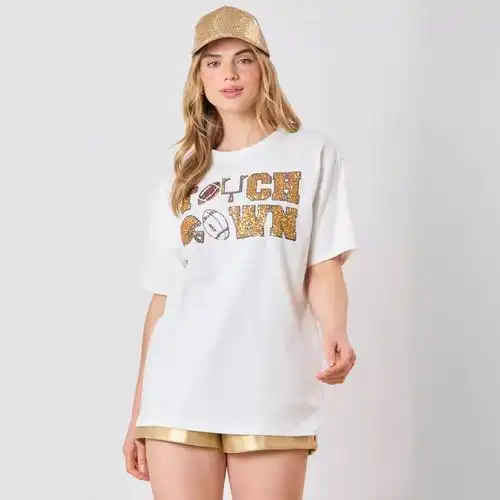
Custom women’s T-shirt manufacturing means producing T-shirts according to a brand’s specific requirements rather than simply purchasing standard garments from a wholesale catalog.
A brand may provide its own design, measurements, artwork, fabric requirements, branding details, or packaging specifications. The manufacturer then develops the product based on those requirements.
Depending on the project, customization can include:
- Fabric composition and weight
- Garment color
- T-shirt silhouette
- Neckline design
- Sleeve length
- Garment length
- Oversized or fitted proportions
- Printing
- Embroidery
- Custom labels
- Hang tags
- Packaging
- Special washes and finishes
This approach is particularly useful for brands that want to create a unique product identity.
A professional custom women’s t-shirt manufacturer should be able to transform design specifications into a production-ready garment while maintaining consistency between the approved sample and the final bulk order.
Why Brands Choose Custom T-Shirts
The T-shirt market is highly competitive. Consumers can find thousands of basic T-shirts from fashion retailers, marketplaces, and independent brands.
Simply offering another basic T-shirt may not be enough to create a strong brand identity.
Custom manufacturing gives businesses more control over the product.
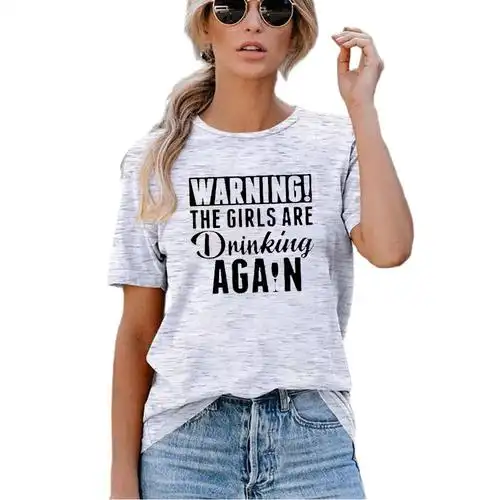
For example, a streetwear brand may want a heavyweight oversized T-shirt with dropped shoulders, a relaxed body, and a large back graphic. A minimalist fashion label might prefer a lightweight fitted T-shirt with a clean neckline and subtle embroidered logo. A sustainable clothing brand may prioritize organic cotton or other environmentally conscious materials.
These different requirements cannot always be achieved with standard blank garments.
By working directly with a women’s t-shirt manufacturer, brands can create products that better reflect their positioning, target market, and design philosophy.
Start With the Right Fabric
Fabric selection should be one of the first decisions in the manufacturing process.
Cotton is a popular choice for women’s T-shirts because of its softness, breathability, and versatility. However, different cotton fabrics can create very different finished products.
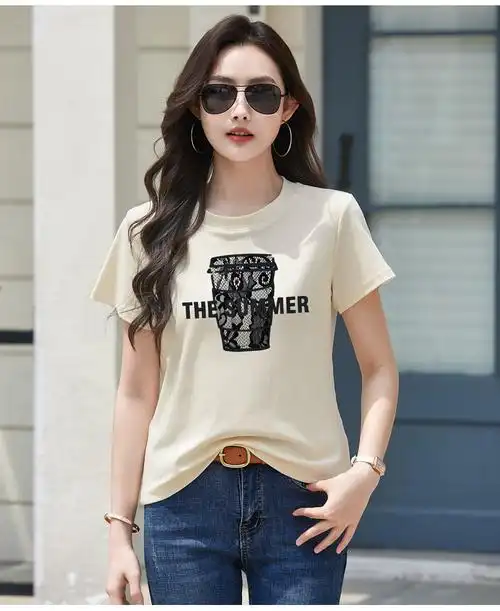
A lightweight cotton jersey can produce a soft and breathable summer T-shirt, while a heavier jersey can create a more structured oversized silhouette.
Brands may also consider organic cotton, hemp, linen blends, recycled materials, stretch fabrics, and other options depending on the product requirements.
Monsoon Apparel states that it uses materials including organic cotton, hemp, and linen as part of its focus on more environmentally conscious apparel production.
When selecting fabric, brands should consider more than appearance. Important factors include:
- Fabric weight
- Stretch and recovery
- Softness
- Breathability
- Shrinkage
- Colorfastness
- Durability
- Surface texture
- Intended retail price
The right fabric should match both the design and the expectations of the target customer.
Develop the Right Women’s T-Shirt Fit
Fit development is another critical stage.
Women’s T-shirts can have dramatically different silhouettes. A fitted basic tee, oversized streetwear shirt, cropped T-shirt, and relaxed boyfriend-style T-shirt all require different patterns.
Brands should provide clear measurements and construction requirements whenever possible.
A technical specification may include:
- Bust width
- Shoulder width
- Body length
- Sleeve length
- Sleeve opening
- Neck width
- Neck drop
- Hem width
- Armhole measurements
A manufacturer with an experienced product development team can use these specifications to create a prototype.
Monsoon Apparel describes its manufacturing process as beginning with understanding the brand’s vision and product goals, followed by detailed technical specifications and prototyping.
This step helps reduce the risk of discovering major fit problems after bulk production has already started.
Sampling Before Bulk Production
One of the most important advantages of working with a professional manufacturer is the ability to review a physical sample before committing to mass production.
A sample allows the brand to evaluate the actual garment rather than relying only on digital drawings or measurements.
During sample review, brands should check:
Fit
Does the T-shirt fit according to the intended silhouette?
Fabric
Does the fabric feel and perform as expected?
Construction
Are the seams, hems, neckline, and stitching properly finished?
Branding
Are the logo, label, print, or embroidery correctly positioned?
Color
Does the physical color match the approved specification?
Measurements
Are the actual measurements consistent with the size chart?
If changes are necessary, the manufacturer can make adjustments before production begins.
Monsoon Apparel’s stated process includes prototyping followed by sample evaluation and approval before moving forward with mass production.
For brands, this provides an additional layer of control and helps minimize unexpected production issues.
Private Label Women’s T-Shirt Manufacturing
For businesses building their own fashion brands, private labeling can be an important part of product development.
A private label women’s t-shirt manufacturer can produce garments while allowing the brand to add its own identity.
This may include custom neck labels, woven labels, printed labels, hang tags, packaging, and other brand elements.
Private labeling helps create a more consistent customer experience.
Imagine a customer receives a T-shirt and sees the same brand identity on the garment label, hang tag, packaging, and online store. These details can make the product feel like part of a professional collection rather than a generic wholesale item.
Monsoon Apparel provides private label services and allows customers to add their own brand name and logo to custom garments.
For emerging fashion companies, this can be particularly useful because it allows them to build their own product identity from the beginning.
Printing and Embroidery Options
Graphics can completely change the appearance of a women’s T-shirt.
Depending on the design, brands may use screen printing, embroidery, or other decoration techniques.
Screen printing is commonly used for logos, typography, illustrations, and larger graphic designs. It can work particularly well for streetwear, promotional apparel, lifestyle collections, and graphic T-shirts.
Embroidery can provide a more dimensional and premium appearance. It is often suitable for small logos, chest designs, sleeve branding, and detailed decorative elements.
Monsoon Apparel states that it supports both screen printing and embroidery for custom garments.
When selecting a decoration method, brands should consider the artwork, fabric, production quantity, desired appearance, and target price.
MOQ Matters for Growing Brands
Minimum order quantity is an important consideration when selecting a manufacturing partner.
A large fashion company may be comfortable placing a large production order, but a startup or independent online brand may want to test a new product before investing heavily in inventory.
Lower MOQ can make product testing more manageable.
A brand could launch one design in several colors, evaluate customer response, and then reorder its best-selling options. This approach can reduce the risk of holding large quantities of products that do not sell.
Monsoon Apparel states that it maintains a low MOQ to support businesses of different sizes and help reduce inventory costs and overstocking risks.
Brands should always confirm the exact MOQ for their specific fabric, construction, decoration, and customization requirements before placing an order.
Production Speed and Planning
A successful product launch depends on timing.
If a brand is preparing a seasonal collection, missing the planned launch date can lead to lost sales opportunities. Production planning should therefore begin well before the intended retail launch.
A typical project may involve:
- Design development
- Fabric selection
- Technical specifications
- Prototype development
- Sample review
- Revisions
- Final approval
- Bulk production
- Quality inspection
- Packaging
- Shipping
Monsoon Apparel states that its standard turnaround time is generally 7–20 working days and that expedited production can be available for urgent orders. Actual timing will depend on the specific order and production requirements.
Brands should discuss the production schedule with their manufacturer before confirming a launch date.
Choosing a Reliable Women’s T-Shirt Supplier
Not every clothing supplier offers the same level of manufacturing support.
When evaluating potential suppliers, brands should look beyond the quoted unit price.
Important questions include:
- Can the manufacturer produce custom designs?
- Does it offer private labeling?
- Can it develop samples?
- What fabrics are available?
- What printing and embroidery options are offered?
- What is the MOQ?
- How long does production take?
- How is quality controlled?
- Can the supplier support larger orders as the brand grows?
- Does it provide international shipping?
- Can it support different manufacturing models?
Monsoon Apparel states that it supports CMT, FOB, and ODM cooperation models, giving brands flexibility depending on their business requirements.
The company also reports serving customers in more than 60 countries across North America, Europe, Australia, and other international markets.
Why Monsoon Apparel for Custom Women’s T-Shirts?
Choosing a manufacturer is ultimately about finding a production partner that can understand your brand and consistently deliver according to your requirements.
Monsoon Apparel provides custom clothing manufacturing with support across product development, prototyping, sample approval, mass production, private labeling, packaging, and shipping. Its stated capabilities include advanced production equipment, professional apparel development support, and a broad selection of clothing categories.
For brands that need more than standard blank garments, this end-to-end approach can simplify the product development process.
Whether you are launching a small online clothing brand, developing a private label collection, or expanding an established apparel business, having one experienced manufacturing partner can make communication and production management easier.
Final Thoughts
Creating a successful women’s T-shirt requires more than a good graphic or attractive design. Fabric, fit, construction, branding, decoration, sampling, production consistency, and delivery all contribute to the final customer experience.
That is why choosing the right women’s t-shirt manufacturer is an important business decision.
A reliable manufacturing partner should be able to help you move from an initial concept to a production-ready product while giving you control over the details that matter to your brand.
If you are looking for custom women’s T-shirts, private label apparel, OEM manufacturing, or low-MOQ clothing production, Monsoon Apparel can support the process from initial product development through bulk manufacturing and worldwide delivery.
Start with your design concept, define your target customer, select the right materials, develop a sample, and carefully review the product before moving into full production. With the right manufacturing partner, your next women’s T-shirt collection can become a strong foundation for long-term brand growth.