For fashion brands looking to build a strong men’s clothing collection, denim is one of the most valuable product categories to consider. A well-designed pair of jeans can become a core product that customers purchase repeatedly, but successful denim production requires careful planning and the right manufacturing partner.
Working with an experienced men’s jeans manufacturer allows brands to develop products according to their own specifications instead of relying only on ready-made styles. From fabric and fit to washing, hardware, labels, and packaging, custom manufacturing gives businesses greater control over the final product.
For startups, private label businesses, retailers, and established fashion companies, understanding the manufacturing process can help reduce unnecessary risks and create a more reliable path from the initial design concept to finished jeans.
Why Custom Men’s Jeans Are Important for Modern Brands
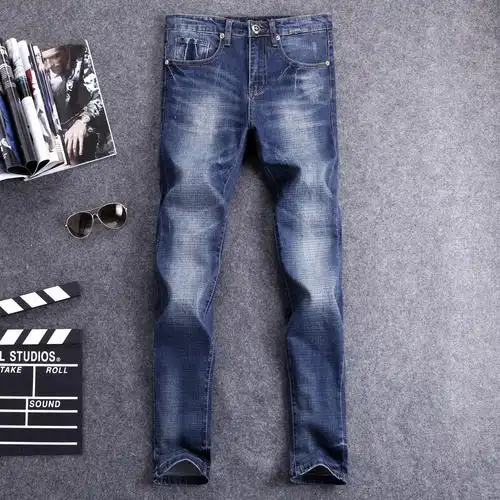
The men’s denim market includes a wide range of styles, from classic five-pocket jeans to contemporary loose-fit, relaxed, tapered, distressed, and streetwear-inspired designs.
Because customers have so many choices, a brand needs to offer something that fits its target market.
Custom jeans allow a company to create products that reflect its own identity.
Instead of selecting a standard garment and adding a simple logo, brands can develop the actual construction of the jeans around their target customer.
A brand may choose a specific leg shape, rise, pocket design, denim weight, washing effect, stitching style, and hardware combination.
These details can help create a product that looks and feels different from competing jeans.
For a growing clothing company, this differentiation can be especially valuable.
Start with a Clear Product Concept
Before contacting a men’s jeans manufacturer, brands should have a clear idea of what they want to produce.
The initial concept does not necessarily need to be a complete technical specification, but it should communicate the overall direction.
Useful information may include:
- Target customer
- Intended retail price
- Preferred fit
- Reference images
- Denim color
- Fabric preferences
- Seasonal requirements
- Branding ideas
- Estimated order quantity
- Desired delivery schedule
For example, a brand targeting younger consumers may want relaxed men’s jeans with a washed finish and contemporary proportions.
A premium casualwear brand may instead want dark indigo denim with a clean finish and a classic straight-leg fit.
Providing this information early can help the manufacturer understand the project and recommend appropriate production solutions.
Choosing the Right Denim Fabric
Fabric is one of the most important decisions in jeans production.
Denim can vary considerably in weight, texture, stretch, color, construction, and finishing.
A brand should choose fabric based on how the jeans are intended to look and feel.
Stretch denim is often used when comfort and mobility are important. Rigid denim can create a more structured appearance. Raw denim provides a traditional and authentic look, while selvedge denim is often associated with premium denim products.
Brands may also consider recycled or blended materials when developing collections with specific material requirements.
The fabric should also be compatible with the intended washing process.
A denim fabric may look excellent before washing but change considerably after finishing. Experienced manufacturers can help brands evaluate how the material is likely to behave during production.
Monsoon Apparel offers various denim fabric options, including stretch, raw, selvedge, and recycled blends, supporting different product concepts and brand requirements.
Fit Is More Than a Size Chart
One of the most important aspects of men’s jeans manufacturing is fit development.
A size chart alone does not define how a pair of jeans will look on the body.
The relationship between the waist, rise, hip, thigh, knee, and leg opening determines the final silhouette.
For example, two pairs of jeans may both have a 32-inch waist and 32-inch inseam but look completely different because their rise and leg proportions are different.
This is why brands should work with a manufacturer that understands pattern development.
The production team should be able to create a pattern based on the intended fit and then refine it through sampling.
Fit testing can help identify issues such as:
- Excess fabric around the seat
- Tightness around the thigh
- Incorrect rise length
- Uneven leg proportions
- Uncomfortable waistband
- Incorrect leg opening
- Inconsistent measurements between sizes
These problems are much easier to correct before bulk production.
The Importance of Sample Development
Sampling is a critical step when developing custom men’s jeans.
The first sample provides an opportunity to compare the physical product with the original design concept.
Brands can inspect the garment, test the fit, evaluate the fabric, review the washing effect, and check the placement of branding and hardware.
A sample may need several rounds of adjustment before it is approved.
This is not necessarily a sign of a problem with the manufacturer. Product development often requires refinement because design concepts and physical garments can behave differently.
Monsoon Apparel describes a production process that includes prototype development and sample approval before mass production.
This type of process allows brands to make important changes before committing to a large production quantity.
Denim Washing Creates the Final Character
Washing is one of the defining characteristics of denim.
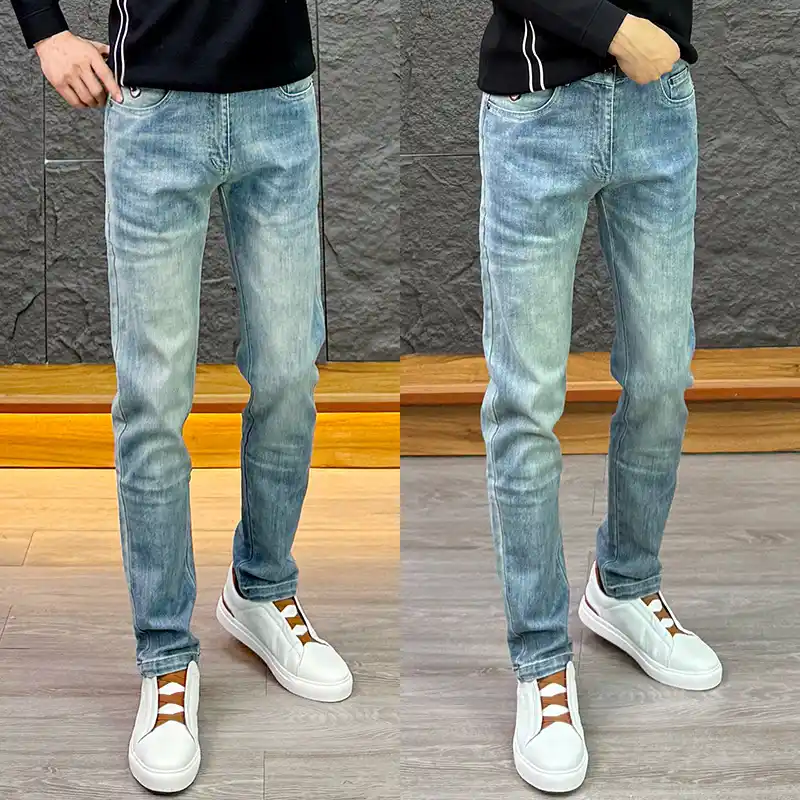
A clean dark wash can create a sophisticated appearance, while a heavily faded or distressed finish can create a vintage or streetwear aesthetic.
Common denim finishes can include dark rinse, medium wash, light wash, stonewashed effects, fading, whiskering, abrasion, and distressed treatments.
Brands should communicate the desired appearance clearly, preferably with visual references.
The manufacturer can then develop the appropriate washing and finishing process.
It is important to understand that washing can also affect garment measurements and fabric characteristics.
This makes production testing especially important.
A professional denim manufacturer should consider the interaction between fabric, pattern, sewing, washing, and final measurements.
Custom Pocket Design Can Strengthen Brand Recognition
Pocket design is another area where custom jeans can stand out.
The shape and placement of the back pockets can influence the overall appearance of the garment.
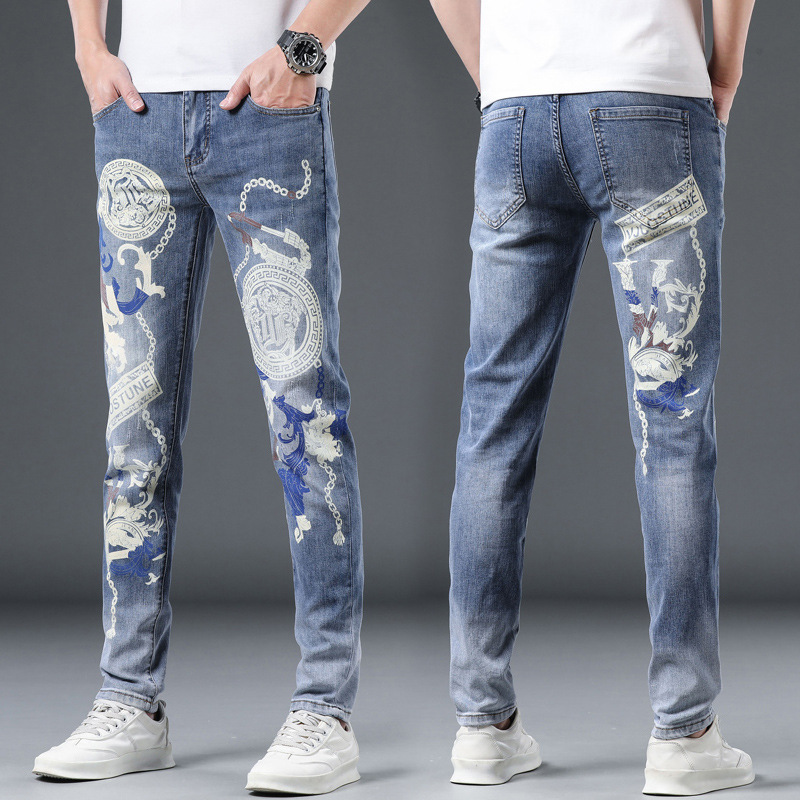
Brands can also develop signature stitching or embroidery patterns.
For example, a simple curved stitch can become a recognizable visual feature across a denim collection.
Front pockets should also be designed with practical use in mind.
Pocket depth, opening angle, placement, and construction can influence both appearance and functionality.
A manufacturer with custom product development capabilities can help transform these ideas into production-ready specifications.
Hardware Adds Functional and Visual Details
Buttons, rivets, zippers, and other hardware are small components, but they can have a noticeable impact on the final product.
Hardware should be selected according to the design and quality expectations of the collection.
A vintage-inspired pair of men’s jeans may use antique-style metal finishes, while a modern premium design may require cleaner and more understated hardware.
Brands can also incorporate their own logos into selected components.
Custom buttons, branded rivets, patches, and labels can create a more complete private label product.
Monsoon Apparel supports customized branding elements, including labels, logos, hardware, embroidery, printing, and patches, depending on the project requirements.
Private Label Jeans for Fashion Startups
Private label manufacturing can provide an efficient way for new brands to enter the denim market.
A startup does not necessarily need to build its own production facility. Instead, it can work with an experienced manufacturer that produces garments according to the brand’s requirements.
The brand can focus on:
- Product strategy
- Brand identity
- Marketing
- Ecommerce
- Retail
- Customer relationships
Meanwhile, the manufacturing partner manages production-related processes.
Private label men’s jeans can be customized with branded labels, care instructions, hang tags, patches, packaging, and other details.
This gives the finished product a more professional and recognizable identity.
Why Low MOQ Can Matter
Minimum order quantity is a major consideration for small and growing clothing businesses.
Ordering a large number of products before testing the market can increase inventory pressure.
A manufacturer offering flexible MOQ options can allow brands to launch smaller collections and evaluate demand.
This can be useful when introducing:
- A new denim brand
- A limited collection
- A seasonal style
- A new fit
- A new fabric
- A new washing technique
Monsoon Apparel promotes low MOQ production options and works with startups and growing brands that may not require very large initial quantities.
Flexible ordering can help businesses manage cash flow while learning which styles perform best with their customers.
Quality Control Protects Your Brand
A successful denim collection requires consistent quality.
Quality control should cover the garment throughout the production process.
Important inspection points can include:
Fabric: Check for visible defects, color consistency, and material quality.
Measurements: Confirm that garments remain within approved measurement tolerances.
Stitching: Check seams, thread quality, pocket attachment, and reinforcement.
Hardware: Ensure buttons, rivets, and zippers are properly installed.
Washing: Compare the final color and finishing with the approved sample.
Branding: Confirm that labels, patches, embroidery, and other details are correctly positioned.
Final appearance: Inspect finished garments before packaging and shipment.
Consistent quality helps protect a brand’s reputation and can reduce customer complaints and returns.
Production Capacity Should Match Your Growth
A suitable manufacturer should be able to support your business as it develops.
Your first order may be relatively small, but successful products can eventually require larger production runs.
Changing suppliers every time your order volume increases can create unnecessary problems with fit consistency, fabric sourcing, and production specifications.
For this reason, brands should consider both current and future requirements when choosing a men’s jeans manufacturer.
A manufacturer offering different production models and scalable capacity can provide greater flexibility.
Monsoon Apparel offers OEM, private label, CMT, FOB, and ODM cooperation options, allowing different brands to choose production solutions according to their requirements.
Packaging Completes the Customer Experience
Packaging is often the final step in the production process, but it should not be overlooked.
For online clothing brands, the package delivered to the customer is an important part of the overall brand experience.
Custom hang tags, branded packaging, labels, bags, and other presentation elements can help create a consistent identity.
When garment production and packaging are coordinated by the same manufacturing partner, brands may find it easier to maintain consistency and simplify production management.
What to Ask a Men’s Jeans Manufacturer
Before placing an order, brands should ask important questions about the manufacturing process.
Consider asking:
- What denim fabrics are available?
- Can you develop custom fits and patterns?
- Can you produce custom washes?
- What branding options are available?
- Can you provide samples before bulk production?
- What is the minimum order quantity?
- How is quality controlled?
- Can you handle repeat orders?
- Can production scale as the brand grows?
- Do you support packaging and international delivery?
The answers can help you determine whether the manufacturer is suitable for your particular business model.
Conclusion
Working with the right men’s jeans manufacturer can make a major difference when developing a new denim collection.
From the first concept to fabric selection, pattern development, sampling, washing, branding, bulk production, quality control, packaging, and delivery, every stage can influence the final product.
Custom manufacturing gives fashion brands more control over the details that make their jeans distinctive. Private label production can also provide startups and growing companies with an efficient way to build their own branded denim collections.
Monsoon Apparel provides custom clothing manufacturing services for brands looking for OEM and private label production, with support for product development, sampling, mass production, branding, packaging, and international delivery.
For any company planning to launch or expand a men’s denim collection, choosing an experienced manufacturing partner is an important step toward creating jeans that combine strong design, reliable quality, consistent fit, and a recognizable brand identity.