Launching a successful denim collection requires careful planning at every stage, from the first product idea to the final shipment. For clothing brands, retailers, fashion startups, and private label businesses, working with an experienced men’s jeans manufacturer can simplify this process and help transform creative concepts into commercially ready products.
Men’s jeans may appear to be a relatively simple garment, but producing consistent, high-quality denim involves many technical details. Fabric selection, pattern development, fit, stitching, washing, hardware, branding, quality control, and packaging all contribute to the final result.
A professional manufacturing partner can help manage these stages while allowing the brand to focus on its customers, product positioning, and market growth.
Start with a Clear Denim Product Strategy
Before beginning production, a brand should define what it wants its men’s jeans collection to represent.
The product strategy should consider the target customer, price range, design direction, season, and intended sales channel.
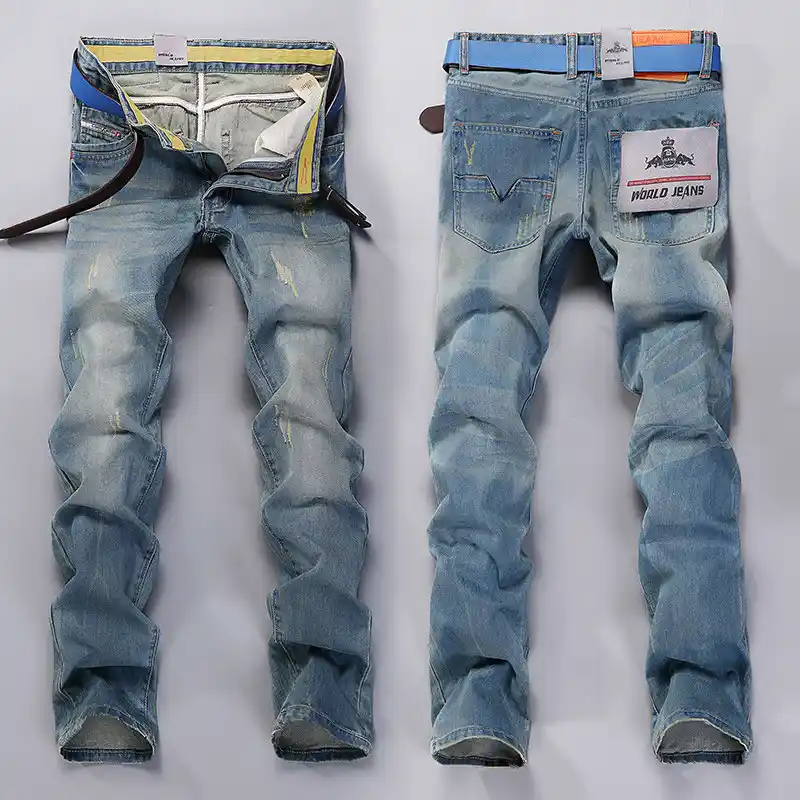
For example, a brand selling premium casualwear may focus on classic straight-leg jeans made from high-quality dark denim. A streetwear company may prefer oversized silhouettes, faded washes, distressed details, and distinctive branding.
An ecommerce startup might begin with several versatile styles that can appeal to a broad customer base.
Having a clear direction helps the manufacturer understand the project and recommend appropriate materials and production methods.
It also prevents unnecessary changes later in the development process.
Develop the Right Men’s Jeans Fit
Fit development is one of the most important stages of denim production.
Customers expect men’s jeans to fit consistently according to the size they purchase. However, creating a good fit involves much more than setting a waist and inseam measurement.
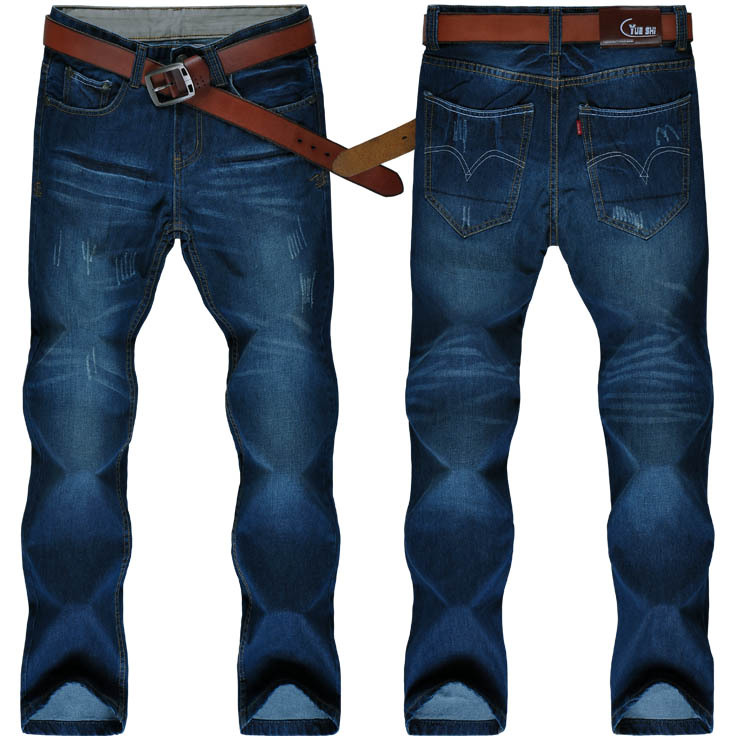
The pattern needs to account for the relationship between:
- Waist
- Hip
- Front rise
- Back rise
- Thigh
- Knee
- Leg opening
- Inseam
- Overall length
Different silhouettes require different proportions.
A slim fit should create a closer profile, while a relaxed or loose fit requires more room through the seat and thigh.
Tapered jeans need careful control of the leg shape, while wide-leg jeans require a different approach to the entire lower-body proportion.
An experienced men’s jeans manufacturer should understand these differences and be able to develop patterns that match the brand’s intended silhouette.
Select Denim Based on Product Requirements
There is no single denim fabric that works for every men’s jeans collection.
The right material depends on the product concept and customer expectations.
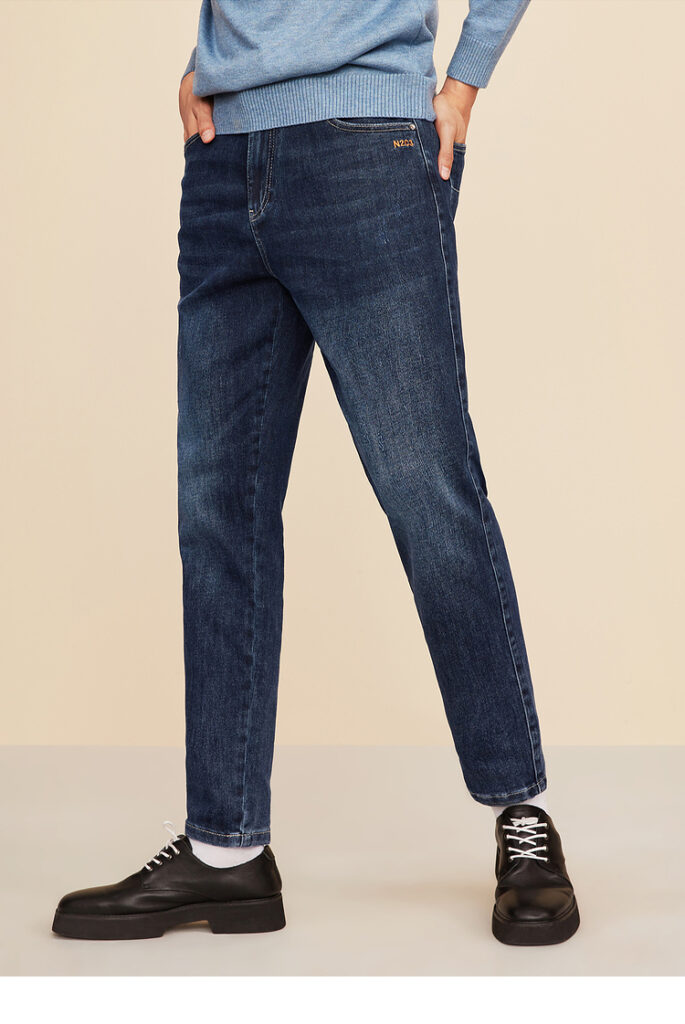
Brands can consider rigid cotton denim for a traditional structure, stretch denim for comfort, raw denim for an authentic unfinished appearance, or selvedge denim for premium collections.
Fabric weight is another important factor.
Heavy denim can create a substantial and durable feel, while lighter denim may be more comfortable in warmer environments.
The composition also affects performance.
A small amount of stretch fiber can provide greater flexibility, while a rigid construction may be preferred for traditional denim products.
Monsoon Apparel offers different denim material options, including stretch denim, raw denim, selvedge denim, and recycled blends, giving brands greater flexibility when developing custom products.
Create a Detailed Product Specification
Once the concept and fabric have been selected, the product should be translated into a clear specification.
A detailed specification can include measurements, construction details, fabric requirements, color references, wash instructions, stitching information, hardware specifications, labels, and packaging requirements.
The more clearly the product is defined, the easier it becomes for the manufacturer to reproduce the design consistently.
For custom men’s jeans, the specification should also identify details such as:
- Pocket dimensions
- Pocket placement
- Belt loop width
- Waistband construction
- Button and rivet type
- Zipper specifications
- Thread details
- Hem construction
- Branding placement
- Washing references
These details help create a common reference for both the brand and manufacturing team.
Sampling Turns the Concept into a Real Product
A sample is an essential part of the development process.
It allows the brand to see how the design works in an actual garment.
During sample review, the brand should check whether the jeans match the intended design and whether the fit feels comfortable.
The sample can also reveal issues that may not be obvious in a technical drawing.
For example, the rise may feel too short, the thigh may be too narrow, or the leg opening may not create the expected silhouette.
The brand can request adjustments and review another sample if necessary.
Monsoon Apparel’s manufacturing process includes design development, prototyping, and sample approval before mass production, allowing brands to review their garments before larger quantities are manufactured.
This development stage can help reduce production risks and improve the consistency of the final collection.
Denim Washing Requires Careful Control
Washing is one of the most recognizable features of denim.
The same jeans pattern can create very different products depending on the washing and finishing process.
A dark rinse creates a clean and sophisticated appearance, while a light wash can create a casual vintage look.
Distressing and abrasion can create a more worn-in appearance, while controlled fading can highlight specific areas of the garment.
Brands should provide clear visual references when requesting a specific wash.
The manufacturer then needs to develop the appropriate process and confirm the result through samples.
Washing can also influence garment measurements and fabric characteristics, so the final measurements should always be checked after finishing.
Custom Details Build Brand Identity
A pair of jeans does not need to be completely unconventional to feel distinctive.
Sometimes small design details can create strong brand recognition.
A custom back-pocket stitch, branded leather patch, unique button, special rivet, custom label, or distinctive wash can become part of a brand’s visual identity.
For private label men’s jeans, these details are especially important.
A logo alone may not be enough to differentiate a product in a crowded market. Combining branding with distinctive construction and finishing can create a more recognizable collection.
Monsoon Apparel supports various customization options, including labels, logos, hardware, embroidery, screen printing, patchwork, and other branding elements.
Private Label Manufacturing for Growing Businesses
Private label manufacturing provides a practical solution for companies that want to build their own denim brand without operating their own factory.
The brand can control the design and branding while the manufacturer manages production.
This model can be useful for:
- Fashion startups
- Ecommerce brands
- Retailers
- Boutique clothing companies
- Established apparel brands
- New men’s fashion labels
A private label collection can include custom labels, hang tags, packaging, branded hardware, patches, embroidery, and other details.
This gives businesses greater control over the customer-facing product while using an experienced manufacturing partner for production.
Why MOQ Matters
Production quantity can have a significant impact on a clothing brand’s finances.
Large orders can reduce the unit cost in some cases, but they also require greater upfront investment and create additional inventory risk.
For new brands, flexible minimum order quantities can make it easier to test a collection.
A business could begin with several core styles, evaluate sales performance, and then reorder the strongest products.
This approach can help reduce unnecessary inventory while giving the brand useful information about customer preferences.
Monsoon Apparel offers low MOQ options and works with startups and growing brands that may require smaller initial production quantities.
Quality Control During Bulk Production
After a sample has been approved, the manufacturer needs to reproduce it consistently during bulk production.
This is where quality control becomes particularly important.
The approved sample should serve as a reference for the production team.
Quality inspections can cover fabric, measurements, stitching, seams, hardware, pockets, labels, washing, and finishing.
For example, if the approved jeans have a specific dark blue wash, bulk production should remain consistent with that standard.
If the approved size measurements fall within specific tolerances, production garments should be checked against those requirements.
Strong quality control can help reduce defective products, customer complaints, and unnecessary returns.
Production Capacity and Scalability
A manufacturer should be able to support the brand beyond its first order.
A startup may begin with a relatively small production run, but successful styles can generate much larger demand.
If the manufacturing partner has sufficient production capacity and scalable processes, the brand can increase order quantities without completely changing its supply chain.
This can help maintain consistency in fabric, fit, construction, and branding.
Monsoon Apparel offers several cooperation models, including OEM, ODM, CMT, FOB, and private label production, providing different options for brands at different stages of development.
Packaging and Final Product Preparation
The manufacturing process continues beyond sewing and washing.
Before products are shipped, they need to be inspected, folded or prepared according to the brand’s requirements, labeled, packaged, and prepared for transportation.
Custom packaging can be especially useful for ecommerce brands because customers experience the packaging directly.
Branded hang tags, labels, bags, stickers, and other elements can create a more complete presentation.
When garment manufacturing and packaging are coordinated through the same production partner, brands can simplify their supply chain and reduce the need to manage multiple suppliers.
International Delivery and Production Management
For brands working with overseas manufacturers, shipping and production coordination are also important considerations.
A reliable manufacturer should provide clear information about production schedules, packaging, shipment preparation, and delivery arrangements.
International customers may have different requirements depending on their location and sales model.
A manufacturer with experience serving international clients can help make the process more straightforward.
Monsoon Apparel provides international apparel manufacturing services and states that it serves customers in more than 60 countries, supporting businesses through production and delivery.
How to Choose the Right Manufacturing Partner
Before selecting a men’s jeans manufacturer, brands should evaluate the complete production process rather than focusing only on the quoted unit price.
Important questions include:
- Does the manufacturer have experience producing men’s denim?
- What fabric options are available?
- Can custom fits and patterns be developed?
- Can the manufacturer create specific washes?
- Are private label services available?
- What branding options can be customized?
- Can samples be developed before bulk production?
- What are the minimum order quantities?
- How is quality controlled?
- Can production increase as the business grows?
- Does the manufacturer support packaging?
- Can it manage international orders and delivery?
A manufacturer that can provide clear answers to these questions is more likely to be a suitable long-term production partner.
Why a Full-Service Manufacturer Can Be Valuable
Managing multiple suppliers can make apparel production complicated.
A brand may otherwise need to coordinate fabric suppliers, pattern makers, sewing factories, washing facilities, label manufacturers, packaging suppliers, and logistics companies separately.
A full-service men’s jeans manufacturer can simplify this process by managing multiple production stages through one relationship.
This can save time and make communication easier.
It also allows the manufacturer to coordinate different components more effectively.
For example, the fabric, washing process, labels, hardware, and final packaging can all be managed according to the same product specifications.
Final Thoughts
Developing high-quality men’s jeans requires a combination of creative design and technical manufacturing expertise.
From choosing the right denim fabric and developing the fit to creating samples, controlling washes, adding branding, managing bulk production, inspecting finished garments, and preparing international shipments, every stage contributes to the final result.
For fashion startups, private label companies, retailers, and established brands, an experienced men’s jeans manufacturer can provide the production knowledge and flexibility needed to build a reliable denim collection.
Monsoon Apparel offers custom apparel manufacturing, OEM and private label production, product development, sampling, low MOQ solutions, branding, packaging, quality control, and international delivery support.
Whether your goal is to launch a small private label collection or develop a larger men’s denim range, choosing the right manufacturing partner can help you create jeans with consistent fit, dependable quality, distinctive details, and a strong brand identity.