The women’s T-shirt market is highly competitive. Customers can choose from thousands of basic tees, graphic shirts, oversized styles, fitted silhouettes, and premium cotton garments from brands around the world. For a fashion business, simply selling another standard T-shirt may not be enough to build a recognizable brand.
This is where working with an experienced women’s t-shirt manufacturer can make a significant difference.
Instead of relying entirely on ready-made wholesale products, brands can develop custom T-shirts based on their own designs, target customers, price points, and brand identity. The result can be a collection that looks and feels different from generic products available on large marketplaces.
From fabric and fit to printing, labels, colors, and packaging, customization gives fashion businesses greater control over the finished product.
Why Product Differentiation Matters
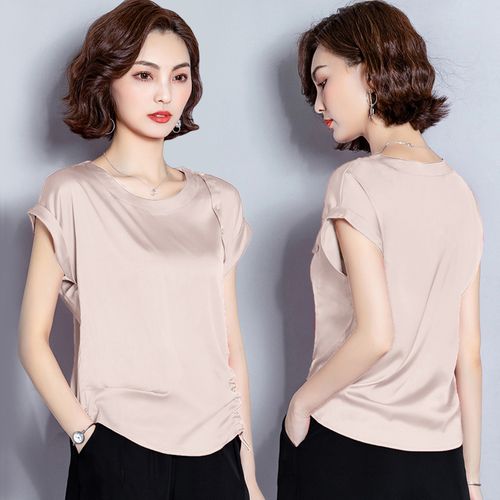
When customers have hundreds of similar products to choose from, a distinctive product can make a stronger impression.
A basic T-shirt can be transformed through relatively small design decisions. A heavier fabric can create a premium streetwear appearance. An oversized silhouette can appeal to customers who prefer relaxed fashion. A cropped shape can target a younger audience. A custom wash can give a garment a vintage appearance.
These details can become part of a brand’s identity.
A professional custom women’s t-shirt manufacturer can help turn these ideas into actual garments while considering practical manufacturing requirements.
For example, a brand may want to create a collection around three different T-shirt silhouettes:
- A relaxed everyday T-shirt
- A heavyweight oversized streetwear T-shirt
- A fitted premium basic T-shirt
Although all three products are technically T-shirts, their fabrics, patterns, construction, and finishing can be completely different.
This flexibility gives brands more opportunities to create a product range instead of simply purchasing generic blanks.
Start With Your Target Customer
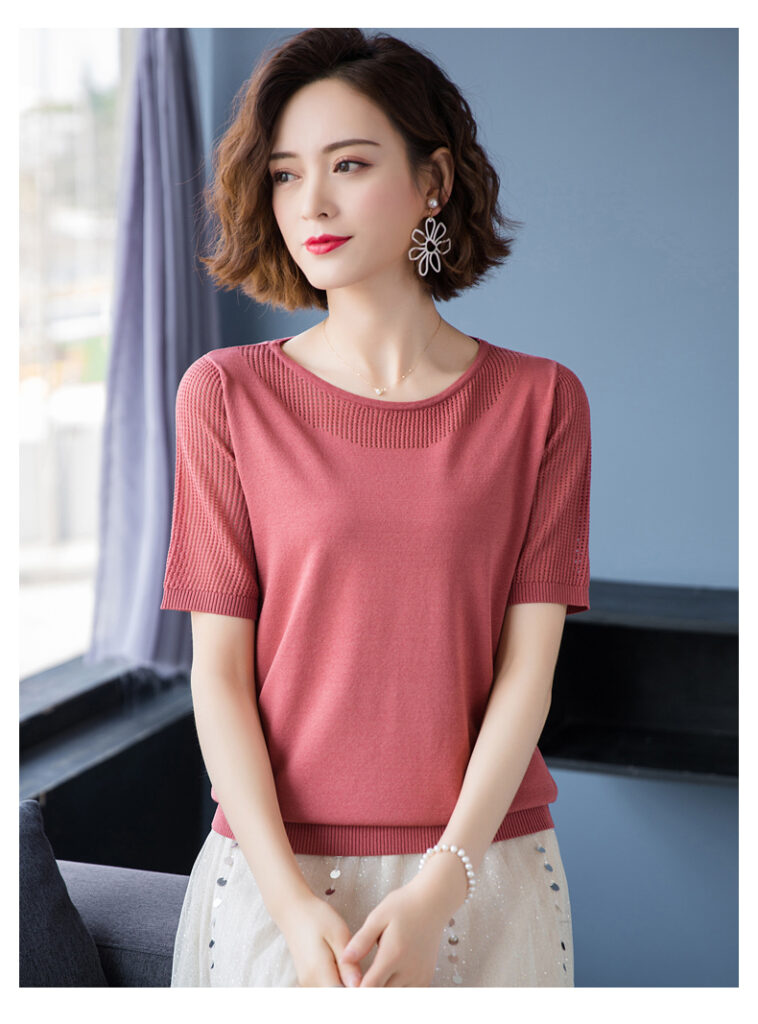
Before choosing fabrics or discussing production quantities, brands should understand who will wear the product.
A T-shirt designed for a luxury fashion customer may require a different fabric and finishing approach from one designed for an affordable casualwear brand.
Consider questions such as:
- Who is your ideal customer?
- What age group are you targeting?
- What price range do they prefer?
- Do they prefer fitted or relaxed clothing?
- What colors are popular with your audience?
- Is your brand focused on everyday basics or statement pieces?
- Is sustainability important to your customers?
- Will the T-shirt be worn alone or layered with other garments?
The answers can guide decisions throughout the manufacturing process.
A reliable women’s t-shirt supplier should be willing to understand these requirements instead of treating every order as a standard product.
Choosing the Right T-Shirt Fabric
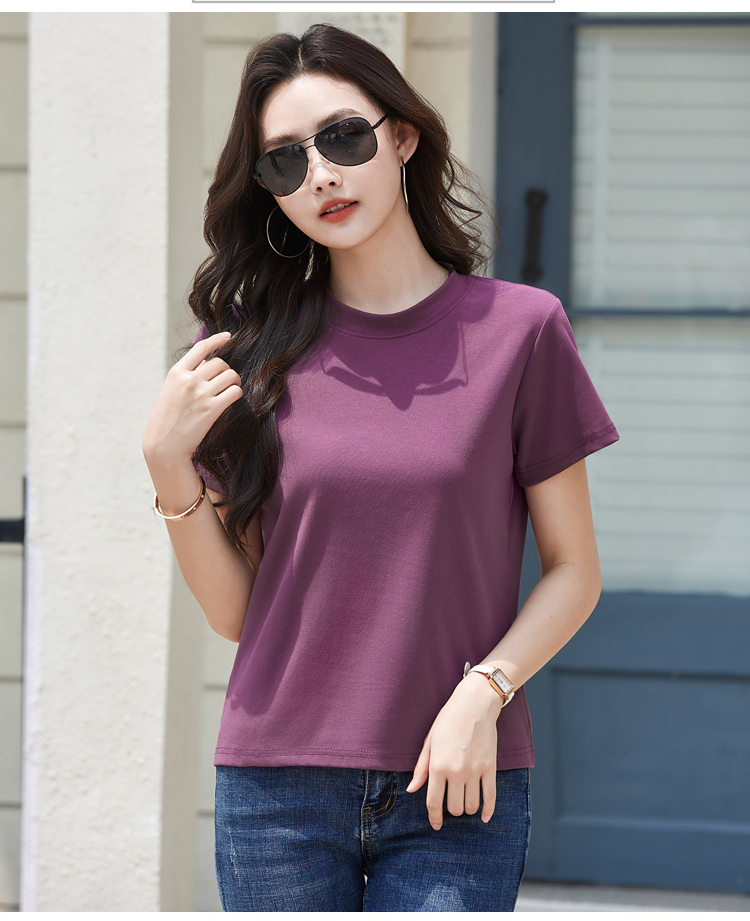
Fabric is one of the easiest ways to create a different product experience.
Two T-shirts can have identical designs but feel completely different because of their fabric.
Cotton jersey is widely used for women’s T-shirts because it is comfortable, versatile, and suitable for everyday wear. However, brands can explore different weights, constructions, and fiber combinations depending on the desired result.
A lightweight T-shirt may work well for summer collections. A heavier fabric can create a more structured silhouette and may be suitable for premium or streetwear products.
Brands interested in environmentally conscious collections may also consider materials such as organic cotton, hemp, or linen.
Monsoon Apparel states that it works with eco-friendly materials including organic cotton, hemp, and linen, while also focusing on recyclable packaging and more sustainable manufacturing practices.
When discussing fabric with your manufacturer, consider:
Fabric Weight
The weight affects the garment’s structure, drape, and overall feel.
Fiber Composition
Different fibers can influence softness, breathability, stretch, durability, and care requirements.
Surface Appearance
A smooth fabric may create a clean premium look, while a textured or washed fabric can create a more casual aesthetic.
Shrinkage
The manufacturer should account for potential shrinkage when developing garment measurements.
Color Performance
Color consistency and colorfastness are important, particularly when producing multiple batches.
The goal is not simply to choose the most expensive fabric. The goal is to select a material that fits your brand positioning and customer expectations.
Develop a Signature Fit
Fit can become one of the strongest characteristics of a women’s T-shirt collection.
Some brands are known for oversized garments, while others focus on fitted basics. A consistent silhouette can make products recognizable even before a customer sees the logo.
Common women’s T-shirt styles include:
- Regular fit
- Relaxed fit
- Oversized fit
- Boxy fit
- Slim fit
- Cropped fit
- Longline fit
- Drop-shoulder fit
A brand can also develop its own signature proportions.
For example, an oversized T-shirt might feature a wider body, dropped shoulders, longer sleeves, and a slightly shorter body length. These measurements can be adjusted until the brand achieves the desired silhouette.
This is one reason working directly with a custom clothing manufacturer can be valuable. Rather than selecting a predetermined blank garment, the brand has more control over the actual pattern.
Use Printing and Embroidery Strategically
Graphics are another effective way to differentiate women’s T-shirts.
A simple logo can create a minimalist product, while a large graphic can turn a basic tee into a statement piece.
Depending on the artwork and desired appearance, brands may consider screen printing, embroidery, or other decoration techniques.
Screen printing can work well for:
- Large front graphics
- Back prints
- Typography
- Illustrations
- Brand logos
- Multi-color artwork
Embroidery can provide a more dimensional appearance and is often suitable for smaller logos or premium branding.
Monsoon Apparel states that it supports screen printing and embroidery services and can produce both detailed printed designs and embroidered logos or artwork.
The decoration method should be selected based on the artwork, fabric, quantity, and desired product appearance rather than simply choosing the cheapest option.
Create Strong Private Label Branding
A T-shirt becomes a branded product when the entire customer experience reflects the brand.
For private label businesses, this can include:
- Custom neck labels
- Woven labels
- Printed care labels
- Hang tags
- Branded packaging
- Custom logo placement
- Personalized product details
A private label women’s t-shirt manufacturer can integrate these elements into the production process.
Monsoon Apparel offers private labeling, allowing brands to add their own name and logo to custom garments.
This can be particularly useful for online fashion businesses because customers often judge a product based on many details beyond the garment itself.
Professional labeling and packaging can make a product feel more established and consistent with the brand’s online presentation.
Take Advantage of Flexible MOQ
For a new fashion brand, inventory management can be challenging.
Ordering too much inventory can tie up capital and increase the risk of unsold products. Ordering too little can make it difficult to meet customer demand.
A manufacturer with flexible minimum order quantities can give emerging brands more room to test products.
Monsoon Apparel states that it maintains a low MOQ to support both small and large businesses and help reduce inventory costs and overstocking risk.
This can allow brands to introduce new designs gradually.
For example, a business could launch several T-shirt designs in limited quantities, track customer response, and then increase production of the strongest-performing products.
This approach can be especially useful for new brands that are still learning which colors, fits, and graphics appeal most to their customers.
Sampling Helps Protect Your Investment
Before ordering a large quantity, brands should review a physical sample.
A sample gives you the opportunity to inspect:
- Fabric quality
- Fit
- Measurements
- Stitching
- Neckline construction
- Sleeve proportions
- Print placement
- Embroidery
- Labels
- Overall appearance
Monsoon Apparel describes a manufacturing process that includes prototyping and sample approval before mass production. The sample is reviewed for fit, feel, craftsmanship, and alignment with the brand before production proceeds.
This stage is important because changes are generally easier to make before bulk manufacturing than after thousands of garments have already been produced.
Build a Consistent Product Collection
A strong T-shirt collection does not necessarily need dozens of designs.
Instead, brands can create several complementary products that share a recognizable identity.
For example:
Core Basic Tee: A clean everyday T-shirt in neutral colors.
Premium Heavyweight Tee: A structured product with a heavier fabric and oversized silhouette.
Graphic Tee: A statement product featuring the brand’s artwork.
Seasonal Tee: A limited-edition design connected to a particular collection.
Using consistent branding, color palettes, labels, and packaging can make these products feel like part of the same collection.
A capable women’s t-shirt manufacturer can help produce different styles while maintaining consistent quality across the range.
Consider Production Capability Beyond T-Shirts
A long-term apparel brand may eventually want to expand beyond T-shirts.
Once a brand establishes a successful women’s T-shirt collection, it may introduce hoodies, sweatshirts, sweatpants, activewear, loungewear, swimwear, jeans, or other categories.
Working with a manufacturer that offers multiple apparel categories can simplify this expansion.
Monsoon Apparel describes itself as a clothing manufacturer with an extensive selection of apparel categories and supports cooperation models including CMT, FOB, and ODM.
This broader production capability can be useful for brands that want to develop complete collections rather than individual products.
Why Choose Monsoon Apparel?
For brands looking for a women’s t-shirt manufacturer, Monsoon Apparel provides custom manufacturing services designed around individual product requirements.
The company’s stated process covers design and concept development, technical specifications, prototyping, sample approval, mass production, packaging, and worldwide shipping. It also provides private label and OEM services for brands that need customized products.
Monsoon Apparel also states that it serves customers in more than 60 countries across North America, Europe, Australia, and other markets. Its production capabilities are supported by professional apparel development teams and modern manufacturing equipment.
For a growing fashion business, this type of end-to-end support can make it easier to move from an initial product concept to a finished collection.
Final Thoughts
A successful women’s T-shirt brand is rarely built around one simple product.
The strongest collections usually combine thoughtful design, suitable fabrics, distinctive fits, quality construction, consistent branding, and a clear understanding of the target customer.
Working with an experienced women’s t-shirt manufacturer gives brands greater control over these details. Instead of competing solely on price, businesses can create products with their own identity and build a collection that customers recognize.
If you are developing a new women’s T-shirt line, start by defining your customer and product concept. Then consider fabric, fit, decoration, private labeling, packaging, MOQ, sampling, and production requirements.
With the right manufacturing partner, a basic T-shirt can become much more than a wardrobe essential. It can become a recognizable product that represents your brand and provides a foundation for future apparel collections.