
For fashion brands and online clothing businesses, controlling production costs is essential for maintaining healthy profit margins. However, reducing the cost of a women’s T-shirt does not simply mean choosing the manufacturer with the lowest quoted price.
The actual cost of developing and producing apparel depends on many factors, including fabric, garment construction, order quantity, customization, printing, packaging, shipping, and quality control. A low initial quotation can sometimes lead to higher expenses later if products require rework, arrive late, or fail to meet the approved specifications.
Working with the right women’s t-shirt manufacturer can help brands balance product quality, production efficiency, and overall costs.
Whether you are a startup launching your first collection or an established fashion company increasing production volume, understanding the major cost factors can help you make better manufacturing decisions.
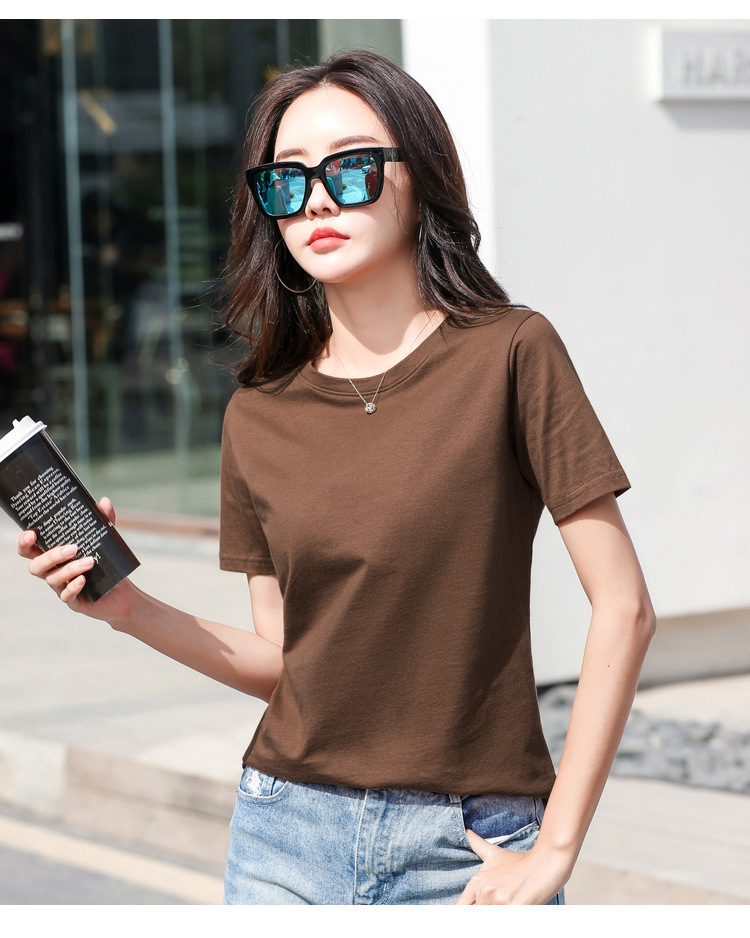
Why the Lowest Unit Price Is Not Always the Best Deal
When comparing manufacturers, it is tempting to focus on the price per T-shirt.
For example, one supplier may offer a lower unit price than another. At first glance, that may appear to be the better option.
However, the final cost of a product can include much more than the manufacturing price.
Additional expenses may include:
- Sample development
- Pattern adjustments
- Custom labels
- Printing
- Embroidery
- Special packaging
- Fabric sourcing
- Shipping
- Quality inspection
- Rework
- Rush production
- Import-related expenses
A manufacturer offering a slightly higher unit price may ultimately provide better value if the product quality is more consistent, communication is more efficient, and production problems are minimized.
The goal should be to achieve the best overall manufacturing value rather than simply finding the lowest number on a quotation.
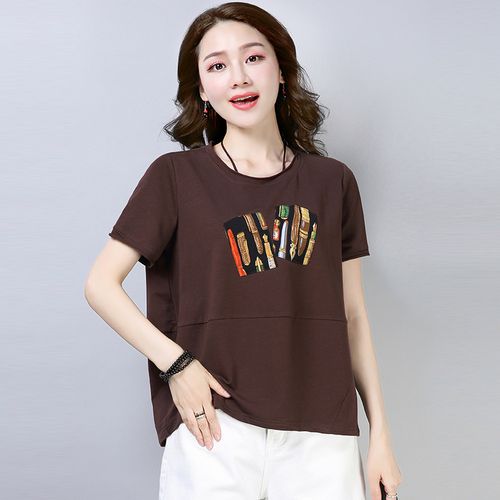
Choose the Right Fabric for Your Price Point
Fabric is one of the largest contributors to the cost of a T-shirt.
A premium heavyweight cotton fabric will generally have a different cost structure from a lightweight basic jersey. Organic materials and specialized fabrics can also affect the overall price.
However, more expensive does not automatically mean better for every brand.
A fashion label positioned in the premium market may benefit from investing in higher-quality materials. A brand focused on affordable everyday basics may need to prioritize comfort and durability while keeping fabric costs under control.
When discussing materials with a women’s t-shirt manufacturer, consider the relationship between fabric quality and your retail price.
Ask yourself:
- What price will the customer pay?
- What fabric quality does the target market expect?
- Does the garment need to be lightweight or heavyweight?
- Is stretch required?
- Does the product need special performance characteristics?
- Is sustainability part of the brand positioning?
The right material should support the product’s intended market rather than simply increasing the manufacturing cost.
Monsoon Apparel states that it works with materials including organic cotton, hemp, and linen, giving brands different options when developing custom apparel.
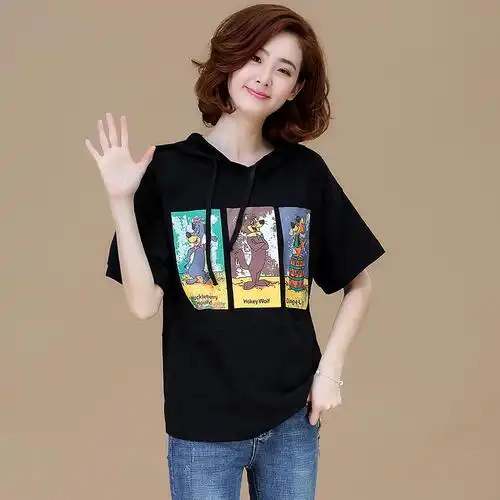
Understand How MOQ Affects Pricing
Minimum order quantity, commonly called MOQ, is one of the most important considerations in apparel manufacturing.
Manufacturers can often achieve better production efficiency when producing larger quantities. The cost of setting up cutting, sewing, printing, embroidery, and other processes can be distributed across more garments.
This means that larger orders may provide better unit economics.
However, ordering too much inventory can create another problem.
If a brand produces thousands of T-shirts that do not sell, the apparent savings on the unit price may become irrelevant.
For new businesses, finding a women’s t-shirt supplier with a reasonable MOQ can make it easier to test products before committing to large production quantities.
Monsoon Apparel states that it maintains a low MOQ to support businesses of different sizes and reduce inventory and overstocking risks.
The best order quantity depends on your sales forecast, available budget, storage capacity, and customer demand.
Start With a Small Product Range
One common mistake among new clothing brands is trying to launch too many products at once.
A new collection might include ten T-shirt designs, five colors per design, and a large number of sizes. Although this may look impressive, it can create significant inventory requirements.
A more controlled approach is to start with a smaller collection.
For example, a brand could launch three strong T-shirt designs:
- A basic everyday T-shirt
- An oversized graphic T-shirt
- A premium fitted T-shirt
Each product could be available in several carefully selected colors.
This allows the brand to test the market without committing excessive capital to inventory.
Once sales data becomes available, the company can increase production of successful products and reduce or discontinue weaker designs.
This approach can make working with a custom women’s t-shirt manufacturer more efficient because production decisions can be based on actual customer demand.
Standardize Where It Makes Sense
Customization is valuable, but not every element needs to be completely different.
Brands can reduce manufacturing complexity by standardizing certain components across a collection.
For example, several T-shirt styles could use the same:
- Neck label
- Care label
- Packaging
- Hang tag
- Brand colors
- Basic fabric
- Print technique
At the same time, the garments can have different silhouettes or graphics.
Standardization can simplify purchasing and production while maintaining a distinctive brand identity.
It can also make future reorders easier because the manufacturer is already familiar with the materials and production requirements.
Choose Decoration Methods Carefully
Printing and embroidery can add significant value to a T-shirt, but the wrong decoration method can unnecessarily increase costs.
Screen printing is commonly used for graphic designs and can be efficient for larger production quantities. Embroidery can create a premium appearance but may be less suitable for very large artwork.
When discussing decoration with your manufacturer, consider:
- Artwork size
- Number of colors
- Print location
- Fabric type
- Order quantity
- Desired appearance
- Durability requirements
A small embroidered chest logo may be perfect for one collection, while a large back graphic may be better suited to screen printing.
The objective is to choose a production method that delivers the desired appearance without adding unnecessary complexity.
Monsoon Apparel states that it provides both screen printing and embroidery services for custom apparel.
Avoid Expensive Mistakes With Sampling
Sampling may appear to be an additional expense, but it can actually help protect a brand’s investment.
Imagine ordering 2,000 women’s T-shirts and discovering after delivery that the neckline is too wide, the body length is incorrect, or the print is positioned incorrectly.
Fixing such a problem after mass production can be extremely expensive.
A sample allows you to identify issues before bulk manufacturing.
During the sample review, check:
- Garment measurements
- Fabric weight
- Fabric feel
- Fit
- Color
- Stitching
- Print quality
- Embroidery
- Labels
- Packaging
Monsoon Apparel describes a production process that includes prototyping and sample approval before mass production.
Investing in careful sample approval can therefore reduce the risk of costly production errors.
Prepare Clear Specifications
Clear communication can also reduce costs.
Manufacturers need accurate information to produce the correct garment. If specifications are incomplete or constantly changing, production can take longer and additional sampling may be required.
A well-prepared product specification should ideally include:
- Technical drawings
- Measurements
- Fabric requirements
- Color references
- Artwork
- Print placement
- Label specifications
- Packaging requirements
- Size range
- Quantity breakdown
If you have a tech pack, provide it to the manufacturer.
If you do not have a complete tech pack, discuss your requirements with the manufacturer before production begins.
A professional custom apparel manufacturer may be able to assist with product development and technical specifications.
Think About Quality From the Beginning
Poor quality can become one of the most expensive problems in apparel manufacturing.
If customers receive garments with loose stitching, inconsistent measurements, poor printing, or damaged fabric, they may request returns or refunds.
The brand may also need to replace products and pay additional shipping costs.
Quality control is therefore directly connected to cost management.
A reliable manufacturing partner should pay attention to quality throughout the production process rather than waiting until the very end.
Important checks include fabric inspection, garment measurements, sewing quality, print placement, color consistency, labels, and final packaging.
Consistent production helps reduce the number of defective garments and protects the brand’s reputation.
Plan Production Lead Times
Rushing an apparel order can increase costs.
A brand that waits until the last minute may need expedited production or shipping. It may also have fewer options for correcting problems before the product launch.
Good production planning can help avoid unnecessary rush charges.
Monsoon Apparel states that its standard production turnaround is generally around 7–20 working days, with expedited options available for urgent projects. Actual timing depends on the specific order, materials, quantity, customization, and other production requirements.
Brands should therefore build enough time into their launch schedule for sampling, revisions, production, inspection, packaging, and delivery.
Compare Manufacturers Based on Total Value
When evaluating several manufacturers, create a complete comparison rather than looking only at unit prices.
Consider:
| Factor | Why It Matters |
|---|---|
| Unit Price | Affects gross margin |
| MOQ | Determines inventory commitment |
| Fabric Options | Influences quality and product positioning |
| Sampling | Helps prevent production mistakes |
| Production Time | Affects launch schedules |
| Quality Control | Reduces defects and returns |
| Customization | Helps build a unique product |
| Private Label | Supports brand identity |
| Packaging | Influences customer experience |
| Shipping | Affects landed cost |
This approach can reveal why a slightly more expensive supplier may actually provide better overall value.
Consider Private Label Manufacturing
For fashion brands, private labeling can provide additional control over the customer experience.
A private label women’s t-shirt manufacturer can produce garments with the brand’s own labels, hang tags, packaging, and other customized elements.
Monsoon Apparel provides private label and OEM manufacturing services for businesses that want customized apparel under their own brand identity.
Instead of buying generic T-shirts and trying to modify them later, brands can plan branding elements during the manufacturing process.
This can create a more consistent and professional product.
Build a Long-Term Manufacturing Relationship
The first order is only one part of a fashion brand’s development.
As sales grow, manufacturers become familiar with the brand’s preferred fabrics, measurements, colors, construction methods, labels, and quality standards.
A strong long-term relationship can make future orders more efficient.
You may also be able to introduce new products more easily.
For example, a brand that starts with women’s T-shirts may later expand into hoodies, sweatshirts, sweatpants, activewear, swimwear, jeans, or loungewear.
Monsoon Apparel offers manufacturing across a broad range of clothing categories and states that it serves customers in more than 60 countries.
Having one manufacturing partner capable of supporting multiple product categories can simplify supplier management as the business expands.
Why Monsoon Apparel for Women’s T-Shirt Manufacturing?
Monsoon Apparel provides custom clothing manufacturing services for brands that need more than standard wholesale garments.
Its stated production process covers design and concept development, technical specifications, prototyping, sample approval, mass production, packaging, and shipping. The company also provides private label, OEM, CMT, FOB, and ODM cooperation options.
For brands searching for a reliable women’s t-shirt manufacturer, this end-to-end approach can help simplify product development and production management.
The company also states that it supports low MOQ orders and serves customers across North America, Europe, Australia, and other international markets.
Final Thoughts
Reducing the cost of women’s T-shirt manufacturing is not about cutting corners.
The most effective approach is to control unnecessary expenses while protecting the qualities that matter to your customers.
Choose appropriate fabrics, plan your order quantities carefully, standardize components where possible, select suitable decoration methods, approve samples before bulk production, communicate specifications clearly, and work with a manufacturer that can provide consistent quality.
A reliable women’s t-shirt manufacturer can help your business find the right balance between product quality, customization, production efficiency, and cost.
For startups, private label businesses, online retailers, and established fashion brands, the right manufacturing strategy can improve margins while creating products that customers want to buy again.
If you are planning your next women’s T-shirt collection, start by defining your target price, expected order quantity, fabric preferences, customization requirements, and delivery schedule. With clear planning and the right manufacturing partner, you can build a more efficient production process and create high-quality T-shirts that support long-term brand growth.