Choosing a reliable flannel shirt manufacturer is one of the most important decisions a clothing brand can make when developing a new product line. A manufacturer does much more than sew fabric together. The right production partner can influence product quality, development speed, order costs, inventory levels, delivery schedules, and ultimately the reputation of your brand.
Flannel shirts are popular across many clothing categories, including casualwear, streetwear, workwear, outdoor apparel, and seasonal fashion. Their relatively simple appearance can sometimes make them seem easy to manufacture, but producing a consistent, well-finished shirt at commercial scale requires experience and careful production management.
For brands planning to purchase flannel shirts in bulk, finding the right supplier requires more than comparing prices. You need to evaluate manufacturing capabilities, customization options, communication, sample quality, minimum order quantities, production capacity, quality control, and logistics.
This guide explains the most important factors to consider when selecting a manufacturing partner for your flannel shirt collection.
Define Your Requirements Before Contacting Manufacturers
One of the best ways to find the right manufacturer is to understand your own requirements first.
A supplier cannot provide an accurate quotation or production recommendation if the product specifications are unclear.
Before contacting manufacturers, prepare as much information as possible about your project.
Your product brief may include:
- Product type
- Target customer
- Garment fit
- Fabric composition
- Fabric weight
- Color requirements
- Plaid or solid design
- Size range
- Quantity
- Branding requirements
- Labels
- Buttons
- Pockets
- Printing
- Embroidery
- Packaging
- Target delivery date
You do not need to have every technical detail finalized before contacting a manufacturer. However, providing a clear overview will make communication much more efficient.
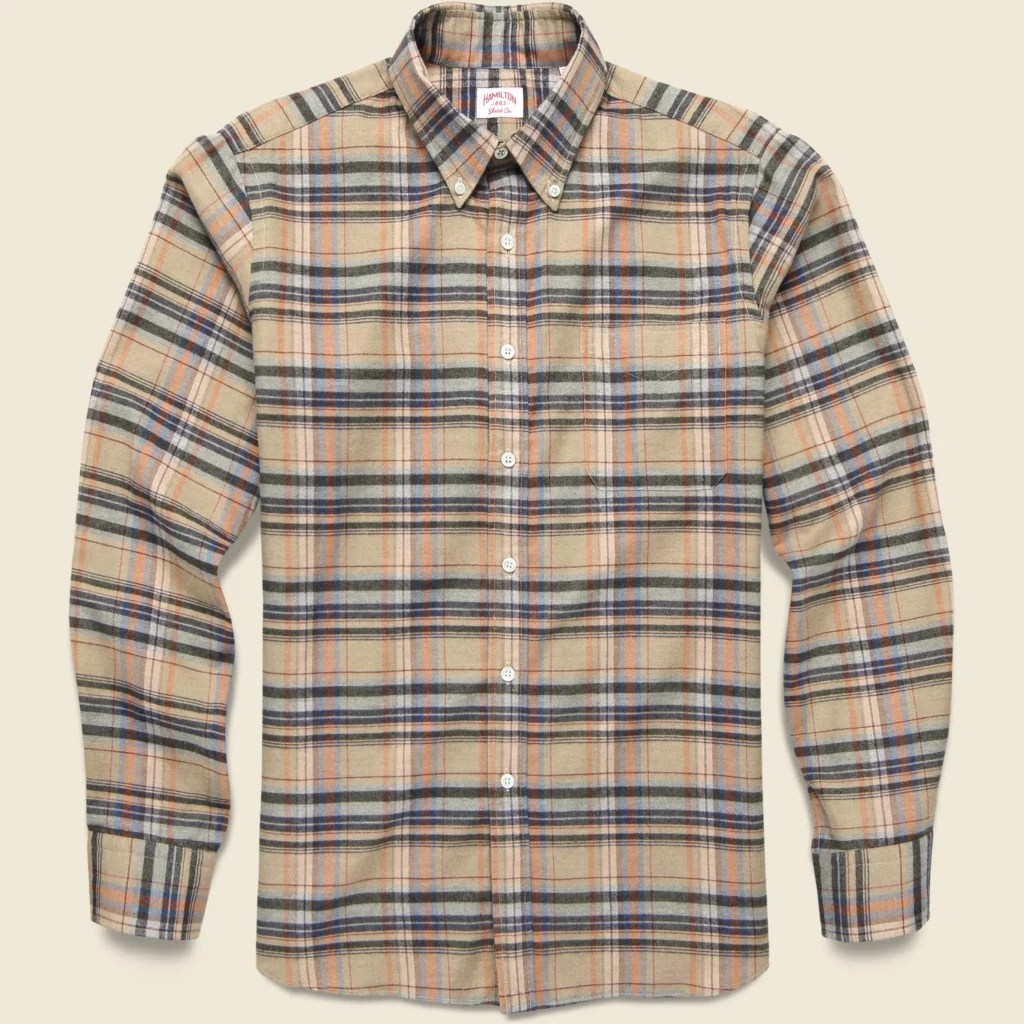
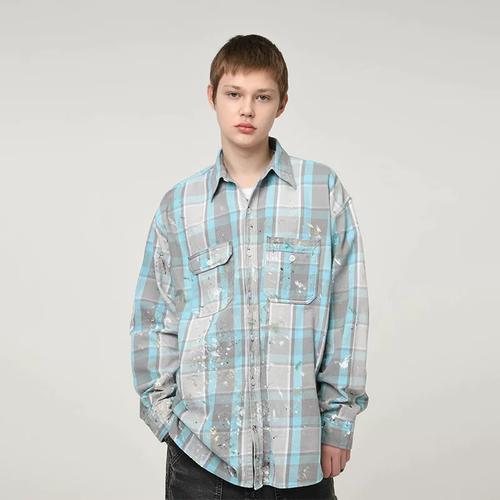
For example, telling a manufacturer that you need “a flannel shirt” is not enough to determine production requirements. A heavyweight oversized cotton flannel for streetwear is a completely different product from a lightweight regular-fit shirt for a traditional menswear collection.
The more clearly you define your product concept, the easier it becomes to find a manufacturer that is actually suitable for your project.
Look for Experience With Similar Products
Not every clothing manufacturer specializes in every type of garment.
Some factories may focus primarily on T-shirts and sweatshirts, while others have stronger experience with shirts, jackets, uniforms, or woven garments.
When evaluating a flannel shirt manufacturer, ask whether the company has experience producing similar products.
A manufacturer with relevant experience is more likely to understand issues such as:
- Shirt pattern construction
- Collar production
- Cuff construction
- Button placement
- Pocket attachment
- Plaid matching
- Woven fabric handling
- Garment finishing
- Shrinkage control
This experience can make the development process smoother.
It can also help reduce the number of revisions required during sampling because the production team is familiar with common challenges associated with woven shirts and flannel fabrics.
Compare Manufacturers Beyond Unit Price
Price is naturally an important consideration when purchasing clothing in bulk, but it should not be the only factor.
A low unit price can become expensive if the manufacturer produces inconsistent quality, misses deadlines, or requires extensive revisions.
When comparing suppliers, consider the total value of the manufacturing service.
Important factors include:
Product quality: Does the sample meet your expectations?
Customization: Can the manufacturer produce your required design?
MOQ: Is the minimum quantity suitable for your business?
Lead time: Can production fit your launch schedule?
Communication: Does the supplier respond clearly and efficiently?
Quality control: Does the company have a structured inspection process?
Branding: Can it provide labels, hangtags, printing, embroidery, and packaging?
Logistics: Can it support international shipping if required?
The best manufacturing partner is often the one that provides a balance between quality, flexibility, service, and cost.
Request a Product Sample
Never make a major bulk purchase based only on photographs or a product description.
A physical sample is one of the most useful tools for evaluating a manufacturer.
When you receive a sample flannel shirt, inspect the product carefully.
Check the fabric first. Does it feel as expected? Is the weight appropriate? Does the surface have the right softness?
Then examine the construction.
Look at the stitching, collar, cuffs, buttons, pockets, seams, and hem. Check whether the garment measurements match the specifications.
If the shirt has a plaid pattern, examine whether the pattern is positioned consistently across the garment.
You should also check the branding.
Are the labels correctly positioned? Is the embroidery clean? Does the printed artwork match the approved design?
The sample stage is an opportunity to identify issues before you commit to bulk production.
Understand the OEM Manufacturing Process
OEM production is commonly used by clothing brands that have their own product designs or detailed specifications.
The brand provides the product requirements, while the manufacturer manages the technical and production process.
A typical OEM flannel shirt project may follow this sequence:
Design Brief → Technical Specifications → Fabric Selection → Pattern Development → Sample → Revision → Approval → Bulk Production → Inspection → Packaging → Shipping
The exact process can vary depending on the manufacturer and product complexity.
For a brand with an established design team, OEM production can provide considerable control over the final garment.
For a newer company, the manufacturer may also help identify practical production solutions when certain design ideas need adjustment before manufacturing.
Monsoon Apparel offers OEM clothing manufacturing services and supports customized product development, allowing brands to provide their own requirements for garments, colors, logos, and other details.
Consider Private Label Services
If you are building your own clothing brand, private labeling should be part of your manufacturing requirements from the beginning.
A flannel shirt can include several branded components:
- Main woven label
- Size label
- Care label
- Hangtag
- Logo embroidery
- Printed artwork
- Custom buttons
- Branded packaging
These elements help create a consistent brand identity.
Instead of purchasing generic shirts and adding labels separately, working with a manufacturer that provides private label services can simplify the production process.
Monsoon Apparel provides private labeling services and allows brands to customize garments with their own branding and logos.
When discussing private label production, make sure to provide high-quality artwork and confirm the exact placement and dimensions of every branding element before production.
Evaluate Minimum Order Quantities
MOQ can have a major impact on your purchasing strategy.
For established retailers with predictable sales, high-volume production may be appropriate. For startups or new clothing collections, however, ordering too much inventory can create unnecessary financial pressure.
A flexible flannel shirt manufacturer can make it easier for smaller businesses to test products.
Suppose your brand wants to launch four flannel shirt colors. Ordering a very large quantity of every color could create significant inventory risk.
A lower production quantity can allow you to test customer response before increasing the order.
Monsoon Apparel states that it offers low minimum order quantities to support businesses of different sizes and help reduce inventory and overstocking risks.
When comparing suppliers, ask whether the MOQ applies per design, per color, or per total order. These details can make a significant difference to your purchasing plan.
Calculate the Real Cost of Your Flannel Shirt
The manufacturer’s quoted unit price is only one part of your total product cost.
A clothing brand should consider the complete landed cost.
This may include:
- Fabric
- Garment manufacturing
- Labels
- Buttons
- Printing
- Embroidery
- Packaging
- Quality inspection
- Shipping
- Customs and duties
- Warehousing
- Other logistics expenses
A supplier with a slightly higher factory price may still be more cost-effective if it provides better quality, lower defect rates, reliable lead times, and efficient logistics.
When requesting quotations, provide the same specifications to each manufacturer. This makes comparisons much more meaningful.
Comparing a basic flannel shirt quotation with a quotation for a fully customized private label garment will not provide an accurate picture of the actual difference in cost.
Communication Is a Major Part of Manufacturing
Good communication can prevent many production problems.
A manufacturer should be able to clearly discuss:
- Fabric availability
- Sample changes
- Production requirements
- Pricing
- Quantity
- Lead times
- Packaging
- Quality expectations
- Shipping arrangements
The manufacturer should also be willing to ask questions when your specifications are unclear.
For international clothing brands, communication is especially important because product development may involve multiple rounds of revisions.
A supplier that responds quickly but does not understand the details is not necessarily better than one that takes a little longer but provides accurate and useful answers.
The goal should be clear, documented communication throughout the project.
Check Production Capacity
Before placing a large order, make sure the manufacturer can handle your expected volume.
Production capacity becomes particularly important when a product becomes successful.
A brand may begin with a relatively small order and later need significantly larger quantities.
If your manufacturer cannot scale production, you may eventually need to find another supplier. This can create additional sampling, quality control, and supply chain challenges.
Ask potential manufacturers about their typical order volumes and whether they can support increasing quantities over time.
For a growing apparel brand, the ability to build a long-term manufacturing relationship can be more valuable than finding the cheapest supplier for a single order.
Pay Attention to Quality Control
Quality control should be discussed before production starts.
For flannel shirts, important quality checks may include fabric defects, color consistency, measurements, stitching, buttons, labels, pocket placement, plaid matching, printing, embroidery, and final garment appearance.
The approved sample should serve as a reference for bulk production.
If your brand requires specific measurements or tolerances, these should be documented clearly.
Quality expectations should also be communicated before production rather than after the garments have already been manufactured.
This helps both the brand and manufacturer understand what constitutes an acceptable finished product.
Production Lead Times Matter
A reliable supplier should provide realistic production timelines.
Monsoon Apparel states that its standard order turnaround is approximately 7–20 working days, with expedited options available for urgent requirements. Actual lead time depends on product complexity, order quantity, materials, and other project specifications.
Brands should remember that manufacturing time is only part of the total schedule.
A realistic launch plan may need to include:
Design Development
Sample Production
Sample Revision
Final Approval
Bulk Manufacturing
Quality Inspection
Packaging
International Shipping
Customs Clearance
Warehouse Delivery
Planning every stage in advance can help prevent inventory arriving after the intended selling season.
Think About Your Long-Term Product Strategy
The best manufacturing relationship is not necessarily based on a single product.
If your brand plans to expand its clothing collection, consider whether the manufacturer can support additional categories.
A successful flannel shirt collection may eventually be expanded with:
- Overshirts
- Casual shirts
- Work jackets
- Hoodies
- Sweatshirts
- T-shirts
- Outerwear
- Casual trousers
- Accessories
A manufacturing partner that can support multiple apparel categories may make future expansion easier.
Monsoon Apparel offers custom apparel manufacturing across different product categories, along with services such as OEM, ODM, private labeling, printing, embroidery, packaging, and international shipping.
This type of broader manufacturing capability can be useful for brands that want to build a complete collection rather than rely on a single product.
Why Brands Work With Monsoon Apparel
For businesses searching for a flannel shirt manufacturer, Monsoon Apparel provides an integrated approach to product development and garment manufacturing.
The company supports brands with custom clothing development, sampling, private labeling, OEM production, printing, embroidery, packaging, and mass production. It also works with international customers and offers global shipping support.
Its manufacturing process includes concept development, prototyping, sample approval, production, quality control, packaging, and shipping. This allows brands to coordinate multiple stages of the product development process through one manufacturing partner.
For businesses that want to create customized flannel shirts under their own brand name, having these services available through one supplier can simplify communication and production management.
Questions to Ask Before Placing Your First Order
Before selecting a manufacturer, create a checklist of questions.
Ask about:
- Available flannel fabrics
- Fabric sourcing
- Custom colors and patterns
- Sample costs
- Sample lead times
- MOQ
- Bulk production lead times
- Private labels
- Custom packaging
- Printing
- Embroidery
- Quality control
- Production capacity
- Shipping options
- Payment terms
You should also ask how the manufacturer handles revisions if the first sample does not meet your requirements.
A professional production partner should have a clear process for reviewing samples and making adjustments before bulk manufacturing.
Final Thoughts
Finding a reliable flannel shirt manufacturer requires more research than simply searching for the lowest factory price.
A good supplier should be able to meet your product specifications, provide high-quality samples, support custom branding, maintain consistent quality, offer practical MOQs, communicate effectively, and deliver products according to an agreed production schedule.
For new brands, the ideal manufacturing partner can also provide guidance during product development and help reduce unnecessary production risks.
For established companies, a reliable manufacturer can become an important part of a long-term supply chain and support future product expansion.
Whether you are developing a classic plaid flannel, a heavyweight streetwear overshirt, a workwear-inspired shirt, or a completely custom design, the manufacturing process should begin with a clear product concept and a carefully selected production partner.
By evaluating fabric capabilities, customization options, sample quality, MOQ, production capacity, quality control, lead time, and overall service, your brand can make a more informed decision and build a flannel shirt collection that combines product quality with a strong brand identity.