Building a successful fashion label or uniform line requires anchor products that consumers buy repeatedly and recommend to others. In both modern menswear and executive womenswear, dress pants serve as that essential anchor. However, trousers are notoriously complex to manufacture compared to simple cut-and-sew garments like t-shirts or hoodies. A single millimeter off in pattern grading or a poorly fused waistband can result in unflattering fits, high return rates, and damaged brand reputation.
Partnering with an experienced dress pants manufacturer who understands the intricate physics of tailored garments is critical to turning high manufacturing standards into higher retail margins. Here is an in-depth breakdown of how precision construction, advanced material sourcing, and efficient manufacturing workflows drive product excellence and profitability.
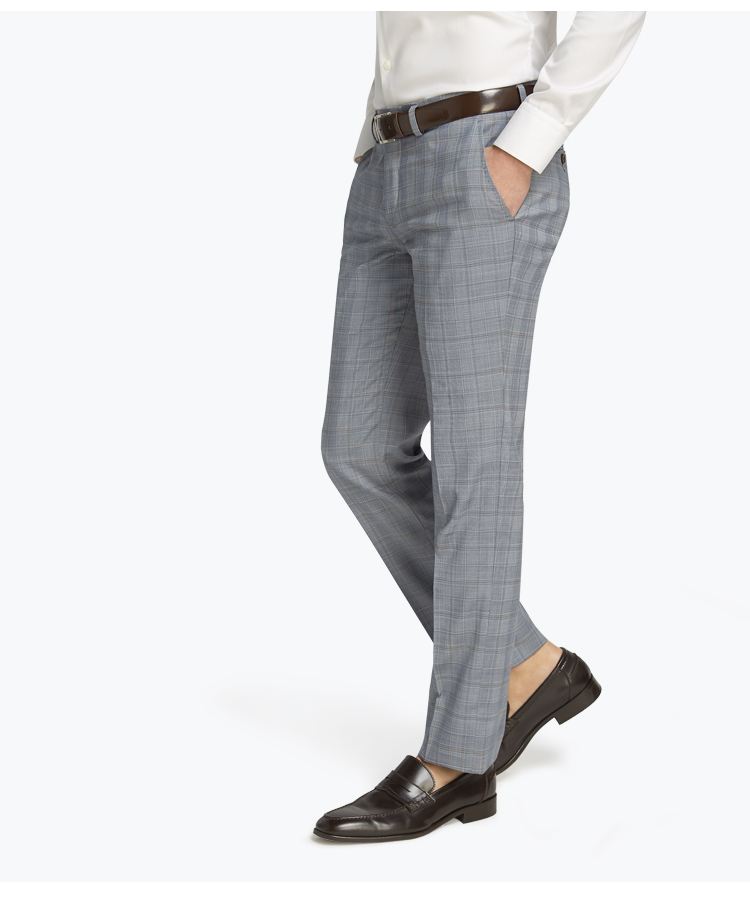
The Hidden Architecture: Internal Components of Premium Trousers
What makes a dress pant look refined and feel comfortable after a twelve-hour workday often lies hidden inside the garment. While consumers notice the exterior fabric and color first, long-term satisfaction depends on internal engineering.
1. The Curtain Waistband (Ban-Rol / Waistband Canvas)
Cheap trousers use a simple folded strip of fabric with a single elastic or fused strip. In contrast, luxury tailored pants utilize a multi-piece curtain waistband. This inner construction includes a stiffened canvas layer (frequently woven from horsehair, cotton, or synthetic canvas) wrapped in lining fabric. It provides rigid structure to prevent the waistband from rolling over the belt, while allowing soft contact against the skin.
2. The French Fly and Secure Closure Systems
High-quality trousers feature an inner extension tab with an extra button known as a French fly. This interior closure distributes tension evenly across the front waist, preventing unsightly pulling across the zipper and maintaining a smooth, flat front silhouette.
3. Reinforced Pocket Bags and Crotch Linings
Stress-point blowouts are a major source of customer complaints. Quality-focused manufacturers reinforce stress points with dense bar-tack stitching and use high-density pocket fabric (such as 100% combed cotton or durable poly-cotton twill). Furthermore, adding a lightweight breathable lining in the crotch shield area reduces friction, protects against sweat, and drastically extends garment lifespan.
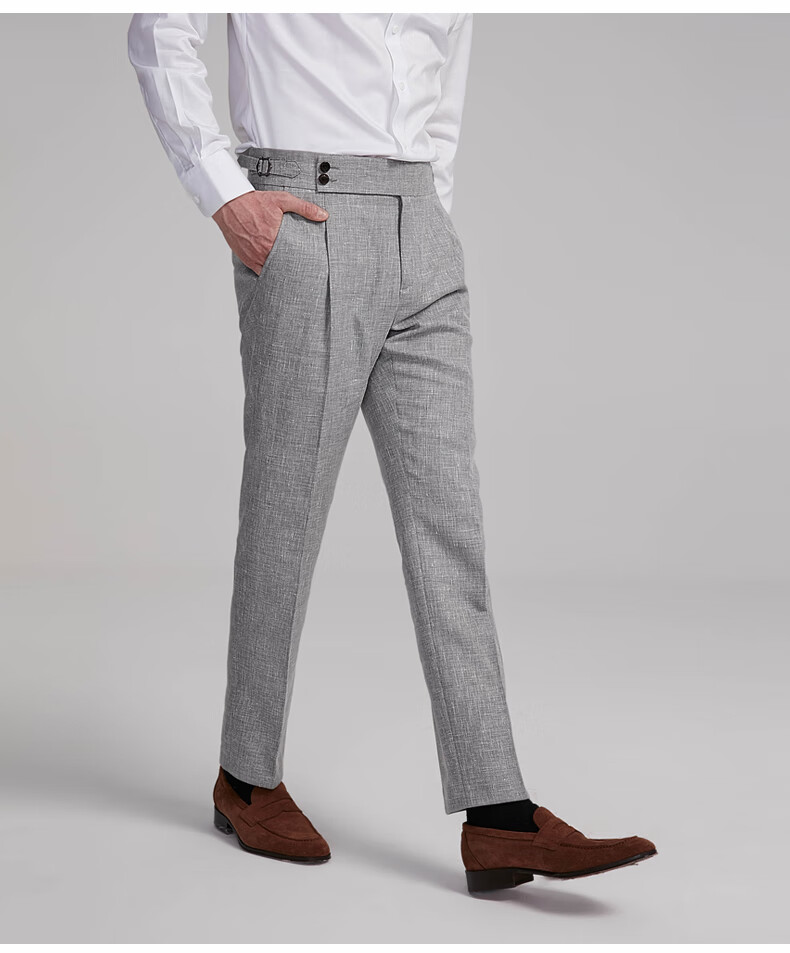
Technical Benchmarks: Stitching and Finishing Standards
When reviewing factory production or tech packs, establishing clear technical standards ensures consistent execution across bulk orders.
| Manufacturing Component | Standard Quality Benchmark | Premium Tailored Benchmark |
| Stitch Count (SPI) | 8 – 10 stitches per inch | 12 – 14 stitches per inch |
| Pocket Finishing | Standard single-stitch seams | Double-welted with inner bar-tacks |
| Fly Zipper | Standard metal or nylon coil zipper | Self-locking YKK brass or semi-auto slider zipper |
| Hem Line | Machine top-stitched or basic blind stitch | Invisible blind hem with bias binding tape |
| Seam Finishing | Standard 3-thread overlock | 5-thread safety stitch or fully bound clean edges |
| Waistband Interior | Direct fusible interlining | Multi-layer curtain waistband with friction grip strip |
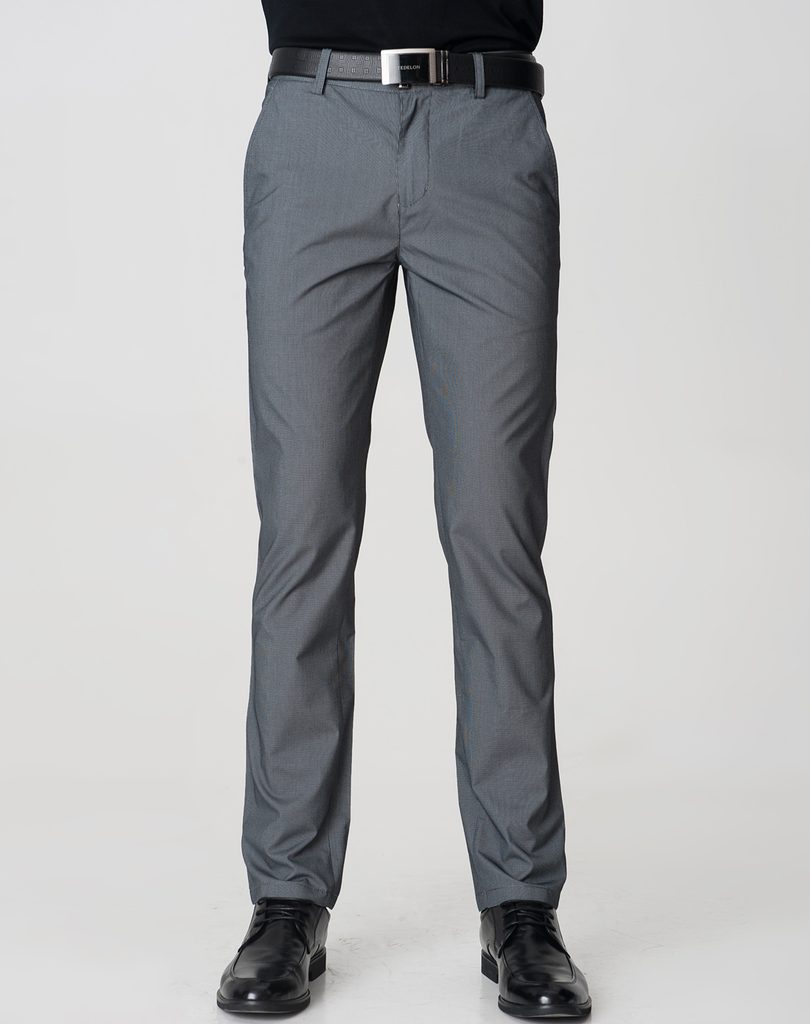
Overcoming Sizing Challenges: Precision CAD Pattern Grading
High return rates erode retail profit margins faster than almost any other operational cost. In online retail, ill-fitting trousers account for over 40% of all apparel returns. The primary culprit is often poor pattern grading—the mathematical scaling of base sizing into larger and smaller dimensions.
An expert dress pants manufacturer solves this through specialized CAD (Computer-Aided Design) pattern engineering:
- Proportional Rise Scaling: As waist sizes increase, the front and back crotch rise must scale proportionally rather than linearly. Linear scaling creates sagging seats in larger sizes or binding, uncomfortable fits in smaller sizes.
- Thigh and Knee Taper Balance: Maintaining a sleek aesthetic while accommodating real-world thigh measurements requires nuanced curved pattern lines rather than straight-line grading.
- Pre-Shrinkage Fabric Testing: Before digital markers are cut, fabric rolls undergo heat and steam shrinkage testing. Pattern pieces are then scaled digitally to account for post-assembly ironing and laundering shrinkage, ensuring garments match the spec sheet straight out of the box.
Innovating with Smart Fabrics and Sustainable Materials
Today’s professionals demand dress pants that offer traditional structure combined with modern, activewear-inspired comfort. Forward-thinking brands leverage their manufacturer’s fabric mill network to introduce innovative textiles that capture consumer attention.
- Performance Wool Blends: Combining fine Merino wool with small percentages of elastane (2%–4%) and technical polyester creates trousers that are naturally temperature-regulating, stain-resistant, and possess 4-way stretch.
- Wrinkle-Free Viscose Blends: Rayon/Viscose blended with synthetic fibers provides a fluid, luxurious drape similar to silk, while maintaining heavy-duty wrinkle recovery—ideal for frequent business travelers.
- Eco-Conscious Recycled Polyester: Sourcing Global Recycled Standard (GRS) certified recycled polyester made from post-consumer PET bottles allows brands to offer eco-friendly dress pants without sacrificing durability or crisp crease retention.
Streamlining Production Workflows for Better Margins
Profitable manufacturing is a balance between craftsmanship and efficiency. Working with an experienced custom trousers factory allows brands to optimize costs without compromising quality:
- Marker Yield Optimization: Computerized marker placement maximizes fabric usage, aiming for over 85% layout efficiency. Since fabric represents 50% to 70% of total garment cost, reducing waste directly lowers per-unit cost.
- Integrated Assembly Lines: Dedicated trousers production lines group operators by specialized tasks—such as automated pocket welting or computerized waistband attaching—ensuring speed, consistency, and lower labor cost per piece.
- AQL 2.5 Quality Assurance: Implementing strict mid-line and final AQL (Acceptable Quality Limit) inspections guarantees that defects are identified and rectified before shipment, protecting your brand from costly customer chargebacks.
Building a Lasting Manufacturing Partnership
Sourcing custom trousers is an investment in your brand’s core reputation. By choosing a dress pants manufacturer equipped with advanced machinery, technical pattern capabilities, and robust fabric supply chains, you create products that stand out in a crowded market. Superior fit, durable construction, and modern functional fabrics are the ultimate drivers of repeat purchases and scalable brand growth.