For fashion brands, creating a successful denim shirt starts with an idea but does not end with a sketch. Between the first design concept and the finished garments delivered to a warehouse, there are many important steps that require technical knowledge, careful planning, and reliable production management.
Working with an experienced denim shirt manufacturer can make this process significantly more efficient. A professional manufacturing partner can help transform design drawings, reference images, fabric ideas, and brand requirements into a finished product that is suitable for commercial production.
For startups, private label brands, fashion retailers, and established apparel companies, understanding how denim shirt production works can make communication with a manufacturing partner easier and help avoid costly mistakes.

The Journey Starts with a Product Concept
Every denim shirt collection begins with a concept.
The concept may come from a designer’s sketch, a mood board, an existing garment, a seasonal trend, or a specific customer requirement.
At this stage, the brand should define the basic characteristics of the product.
Important questions include:
- What type of customer will wear the shirt?
- Is the product casual, premium, workwear, or fashion-oriented?
- What fit should it have?
- Which denim weight is appropriate?
- What color should the garment be?
- Should the shirt have a washed or vintage appearance?
- Which branding details are required?
Clear information at the beginning gives the manufacturer a better understanding of the product’s objectives.
Technical Development Comes Before Production
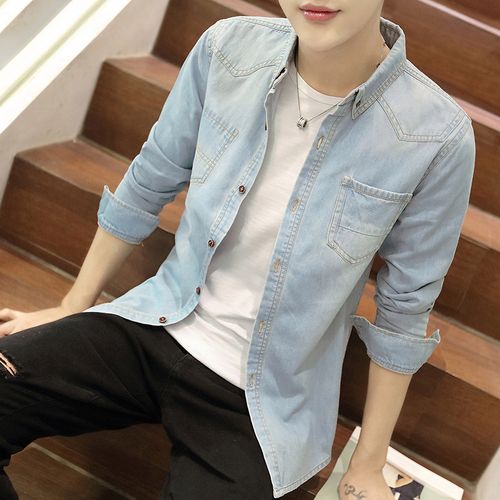
A design image may show what a denim shirt should look like, but it does not contain all the information required to manufacture it.
The manufacturer needs technical specifications that describe how the garment should be constructed.
These may include:
- Garment measurements
- Seam construction
- Stitching requirements
- Collar dimensions
- Pocket dimensions
- Sleeve measurements
- Button specifications
- Label placement
- Fabric composition
- Washing requirements
A technical team can review the information and identify potential production issues before creating the first sample.
This stage is particularly valuable when developing complicated designs or garments with multiple construction details.
Pattern Making and Grading
The pattern is one of the most important components of garment development.
It determines how individual fabric pieces will be cut and assembled into the finished shirt.
A professional manufacturer develops patterns based on the approved measurements and desired fit.
The pattern may then be graded into multiple sizes.
For example, a brand may require a denim shirt in:
- XS
- S
- M
- L
- XL
- XXL
Proper grading ensures that the proportions remain consistent across different sizes.
Poor pattern development can result in uncomfortable garments, inconsistent sizing, or an appearance that differs from the original design.
Selecting the Fabric
After the product specifications have been established, the appropriate denim fabric can be selected.
The manufacturer may recommend different materials based on the product concept.
Options can include:
- Lightweight cotton denim
- Midweight denim
- Heavyweight denim
- Stretch denim
- Organic cotton denim
- Recycled denim
- Slub denim
- Colored denim
Fabric selection affects the final garment’s weight, drape, softness, durability, and appearance.
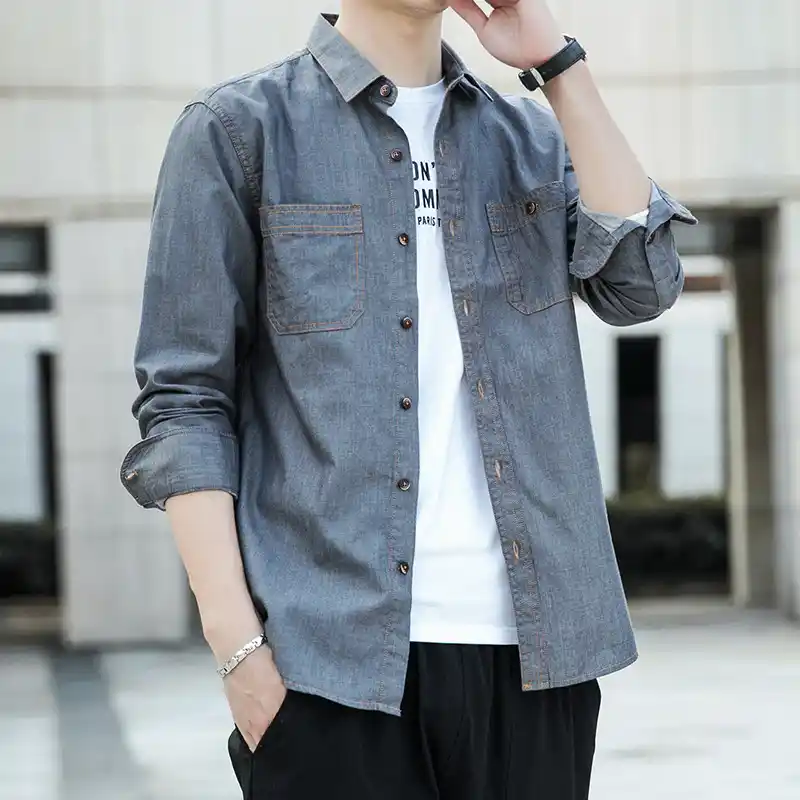
For example, a lightweight denim shirt intended for summer layering requires a very different fabric from a heavyweight workwear overshirt.
An experienced denim shirt manufacturer can help brands evaluate these differences before making a final decision.
Creating the First Sample
Once the pattern and materials have been confirmed, the first prototype can be produced.
The initial sample allows the brand to see how the design works in physical form.
The sample should be evaluated carefully rather than simply approved based on appearance.
Important areas to check include:
Fit
Does the shirt sit correctly on the shoulders?
Is there enough room around the chest and body?
Are the sleeves the correct length?
Construction
Are the seams clean and strong?
Are the pockets positioned correctly?
Are the buttons secure?
Appearance
Does the denim color match expectations?
Does the washing effect look correct?
Are the proportions consistent with the design?
Comfort
Does the fabric feel appropriate?
Is the shirt comfortable during movement?
The sample review provides an opportunity to identify problems before production quantities increase.
Making Sample Revisions
It is normal for a first sample to require adjustments.
A brand may decide that the sleeves should be longer, the body should be wider, or the collar should be smaller.
Other changes may involve:
- Pocket shape
- Button placement
- Stitching
- Fabric weight
- Washing effect
- Garment length
- Branding position
The manufacturer then modifies the pattern or construction based on the feedback.
Depending on the complexity of the design, several sample rounds may be necessary before the final version is approved.
Denim Washing Development
Washing is particularly important in denim manufacturing because it can change both the appearance and physical dimensions of the garment.
Common treatments include:
- Stone wash
- Enzyme wash
- Vintage wash
- Acid wash
- Soft wash
- Garment wash
- Distressed finishing
The washing process can influence shrinkage, color, softness, and overall fit.
For this reason, washing should be considered during product development rather than treated as an afterthought.
A manufacturer with denim experience can help establish a washing process that produces the desired appearance while maintaining consistency.
Approving the Final Sample
Once all changes have been completed, the brand approves a final production sample.
This sample becomes an important reference for bulk manufacturing.
The approved version should clearly define:
- Fabric
- Color
- Measurements
- Fit
- Construction
- Washing
- Hardware
- Labels
- Packaging
The clearer the approved specifications are, the easier it is for the production team to maintain consistency.
Preparing for Bulk Production
After sample approval, the manufacturer prepares the production plan.
This can include ordering fabrics, confirming accessories, arranging production schedules, and preparing cutting patterns.
Materials should be checked before entering production.
Fabric inspection may identify issues such as:
- Color variation
- Weaving defects
- Uneven texture
- Stains
- Holes
- Incorrect fabric weight
Identifying these problems early reduces the risk of defects during mass production.
Cutting and Sewing
Once materials have passed inspection, production begins.
Fabric is cut according to the approved patterns.
The individual components are then assembled through a series of sewing operations.
For denim shirts, these may include:
- Front panel construction
- Back panel assembly
- Sleeve attachment
- Collar construction
- Pocket attachment
- Cuff construction
- Button or snap installation
- Hem finishing
Experienced sewing operators and proper production management are essential for maintaining consistent results.
Washing and Finishing
After sewing, denim garments may be sent through the selected washing and finishing process.
This stage creates the final color, softness, and worn appearance specified during product development.
After washing, garments may undergo additional finishing processes such as:
- Thread trimming
- Pressing
- Final shaping
- Label checking
- Hardware inspection
The goal is to ensure the finished shirt matches the approved sample.
Quality Control Before Shipment
Quality inspection is one of the final and most important stages.
A professional manufacturer checks finished garments for problems such as:
- Incorrect measurements
- Sewing defects
- Loose threads
- Damaged fabric
- Uneven washing
- Missing buttons
- Incorrect labels
- Stains
- Packaging problems
Quality control helps prevent defective products from reaching customers.
For brands selling internationally, this step is particularly important because returning or replacing large quantities of garments can be expensive and time-consuming.
Packaging and Delivery
After final inspection, the denim shirts are folded, labeled, packed, and prepared for shipment.
Packaging can also be customized according to the brand’s requirements.
Options may include:
- Custom poly bags
- Branded cartons
- Hang tags
- Individual garment packaging
- Retail-ready packaging
The manufacturer can then coordinate shipment according to the agreed delivery plan.
Why Choose Monsoon Apparel for Denim Shirt Production?
Monsoon Apparel supports brands throughout the apparel manufacturing process, from product development and fabric sourcing to sampling, bulk production, quality control, private labeling, packaging, and shipping.
Its manufacturing approach is designed to give brands greater control over their products while providing flexible solutions for different business sizes.
For companies developing custom denim shirts, this integrated approach can reduce the need to coordinate with multiple suppliers for different production stages.
By working with one experienced manufacturing partner, brands can simplify communication, maintain consistent specifications, and manage the transition from prototype to finished inventory more efficiently.
Building a Long-Term Manufacturing Partnership
A successful denim shirt project should not be viewed as a single transaction.
When a manufacturer understands a brand’s product standards, preferred fabrics, sizing system, branding requirements, and quality expectations, future collections can often be developed more efficiently.
A long-term partnership can provide benefits such as:
- Faster sample development
- Better product consistency
- Easier communication
- More efficient production planning
- Improved material sourcing
- Greater flexibility for new collections
As the brand grows, the manufacturing relationship can evolve from producing individual products to supporting an entire apparel collection.
Final Thoughts
Turning a denim shirt design into a finished commercial product requires careful coordination at every stage.
From the first product concept and technical specifications to pattern development, fabric selection, sampling, washing, bulk production, quality inspection, and shipping, every step contributes to the final result.
An experienced denim shirt manufacturer can provide the technical expertise and production resources needed to manage this process efficiently.
For fashion startups, private label companies, retailers, and established brands, the right manufacturing partner can make it easier to transform creative ideas into reliable products that customers want to wear.
With comprehensive manufacturing support from development through delivery, Monsoon Apparel helps brands move from an initial denim shirt concept to finished garments while maintaining attention to quality, customization, and production consistency.
Get a Quote Now