Taking a fashion concept from a preliminary sketch to a beautifully finished garment ready for the retail floor is a highly intricate journey. For independent fashion labels, having a clear understanding of this journey is vital to managing timelines, budgets, and expectations. When you collaborate with a dedicated A-line skirt manufacturer, you are not merely handing off a design and waiting for boxes to arrive; you are entering into a highly structured, collaborative workflow.
Demystifying the apparel production process can empower you as a brand owner. Here is a step-by-step look at what happens behind the scenes when you partner with an expert clothing manufacturer to bring your skirt collections to life.
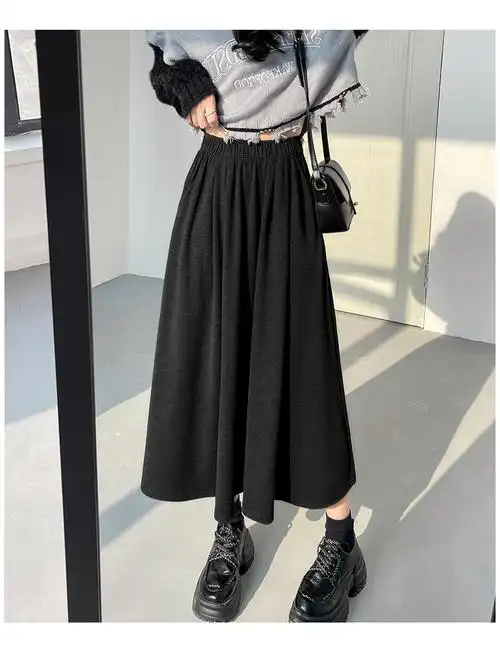
Phase 1: The Tech Pack and Initial Consultation
The foundation of any successful garment production run is a comprehensive technical package, commonly known as a tech pack. Think of this as the architectural blueprint for your garment. Your A-line skirt manufacturer will rely on this document to understand every detail of your vision.
A thorough tech pack should include flat sketches (front, back, and side views), exact measurements, grading rules for different sizes, fabric specifications, color codes, and details on all trims (such as zippers, buttons, or hook-and-eye closures). During the initial consultation, a top-tier manufacturing partner will review your tech pack meticulously. They will ask clarifying questions and might even suggest minor adjustments to improve the garment’s construction or reduce production costs without compromising the overall aesthetic.
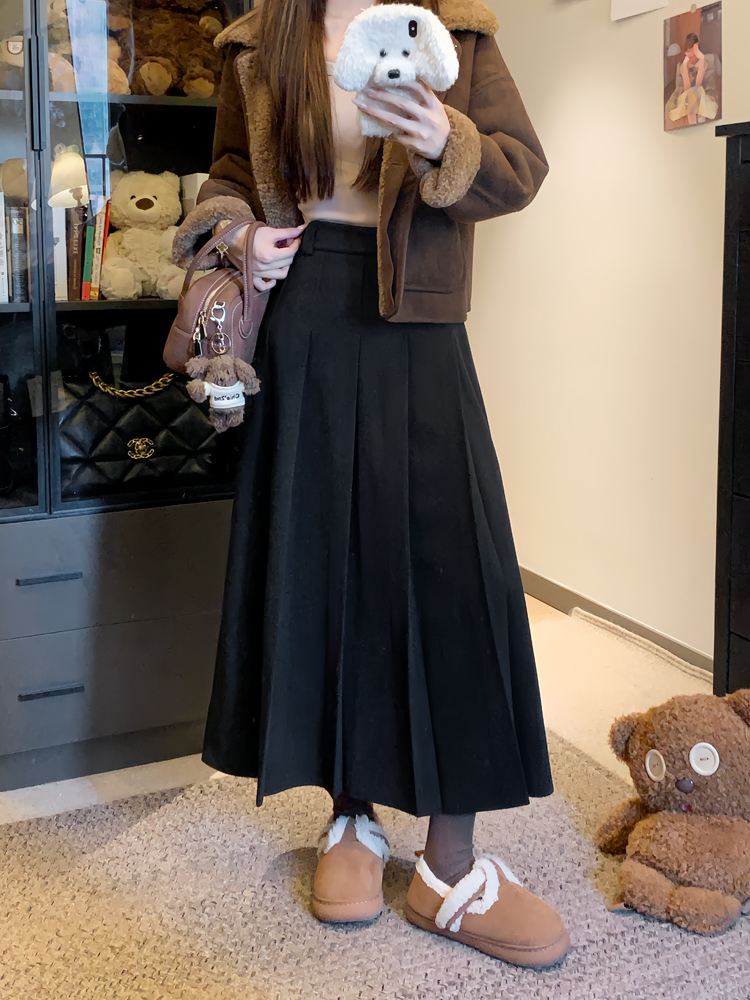
Phase 2: Material Sourcing and Development
Once the technical details are finalized, the focus shifts to sourcing materials. Because the A-line silhouette relies heavily on how the fabric falls over the hips and flares at the hem, material selection is paramount.
Your A-line skirt manufacturer will tap into their network of textile suppliers to source the main body fabric, as well as necessary linings and interfacings. If you require custom-dyed fabrics to match your brand’s specific seasonal color palette, lab dips (small swatches of dyed fabric) will be created for your approval. Simultaneously, the manufacturer will source the appropriate hardware. Whether you need heavy-duty exposed zippers for an edgy denim skirt or delicate invisible zippers for an elegant silk piece, all components are gathered before physical production begins.
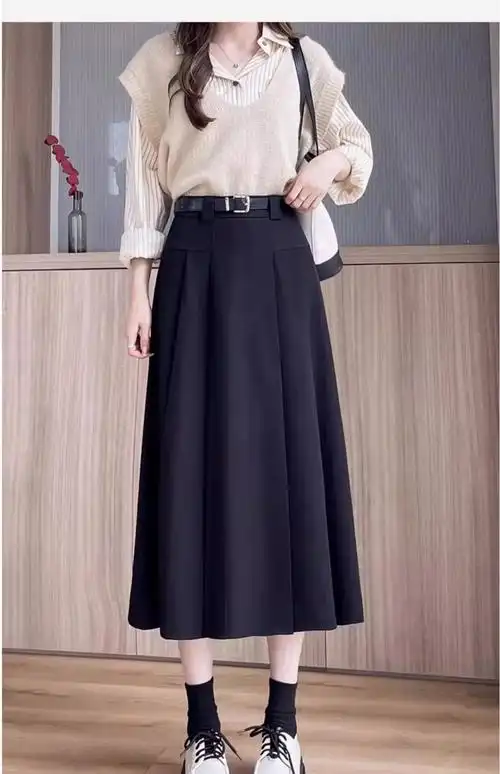
Phase 3: Pattern Making and the First Prototype
With materials secured, the factory’s master pattern makers step in. They translate your two-dimensional tech pack into a three-dimensional paper or digital pattern. Creating a pattern for an A-line skirt requires precision, especially if the design involves bias cuts, pleats, or paneled construction, to ensure the garment flares evenly.
After the pattern is drafted, the manufacturer will produce a prototype, often referred to as a “first sample” or “fit sample.” This is usually cut from available muslin or a fabric similar in weight to your final choice. This sample is crucial; it allows you to see the proportions and test the fit on a live model or a dress form.
Phase 4: Fitting, Revisions, and the Pre-Production Sample
It is highly unusual for a first sample to be perfect. You will likely request revisions—perhaps the hem needs to be an inch longer, or the waistband needs to be taken in slightly. A reliable A-line skirt manufacturer expects this and will revise the pattern accordingly.
Once the fit is perfected, the factory will create a Pre-Production (PP) sample. This is crafted using the exact final fabrics, trims, and colors. The PP sample is the ultimate benchmark. Once you approve this sample, it becomes the golden standard against which every single skirt in the bulk production run will be measured.
Phase 5: Grading, Cutting, and Mass Production
Following your approval, the pattern is “graded,” meaning it is mathematically scaled up and down to create the full size run (e.g., Extra Small through Extra Large).
Next comes the cutting phase. For A-line skirts, cutting is a critical step that requires immense skill, as the fabric must be laid out and cut precisely to maintain the correct grainline, preventing the skirt from twisting when worn. Advanced factories often use computerized cutting machines for maximum precision and minimal fabric waste.
Finally, the cut pieces move to the sewing floor. A specialized A-line skirt manufacturer will organize the sewing process into an efficient assembly line. Different operators handle different tasks—one might attach the waistbands, another installs the zippers, and another focuses entirely on ensuring the hems are perfectly leveled and stitched.
Phase 6: Quality Control and Final Packaging
As the skirts come off the sewing line, they enter the final, critical phase: Quality Control (QC). Inspectors examine the garments inside and out. They trim loose threads, test the zippers, check for skipped stitches, and measure the final garments to ensure they match the approved spec sheet.
Once the skirts pass the QC inspection, they are pressed, steamed, and folded. They are then packaged according to your brand’s specifications—whether that means being placed in protective polybags, wrapped in custom tissue paper, or hung on branded hangers. Finally, the boxes are packed, weighed, and shipped out, ready to be unboxed by your eager customers.
Understanding this intricate process highlights exactly why choosing an experienced, communicative manufacturing partner is the most important investment you can make for your brand’s future.