Ribbed fabric is widely used in modern apparel because of its flexibility, textured appearance, and ability to create a comfortable, body-hugging fit. From fitted T-shirts and tank tops to sweatshirt cuffs, waistbands, and casual dresses, rib knit fabric plays an important role in both garment design and functionality.
However, not all ribbed fabrics stretch or recover in the same way. Their performance depends on several factors, especially fiber composition. Cotton, polyester, modal, nylon, and elastane each contribute different characteristics that influence how a garment stretches, returns to its original shape, and performs after repeated wear and washing.
For clothing brands and apparel manufacturers, understanding these differences is essential when selecting ribbed fabric for a new collection.
What Makes Ribbed Fabric Stretchy?
Ribbed fabric is a knitted material created by alternating knit and purl columns. This construction forms distinctive vertical ridges and allows the fabric to expand, particularly across its width.
Unlike woven fabrics, which generally have limited natural stretch unless elastic fibers are added, knitted rib structures can provide considerable mechanical flexibility through their loop construction.
There are several common rib structures, including:
- 1×1 rib: Alternating one knit column and one purl column, creating a fine texture and flexible structure.
- 2×2 rib: Alternating two knit columns and two purl columns, producing wider ridges and a different balance of flexibility and structure.
- Fine rib: A smaller, more delicate rib pattern often used for fitted tops and lightweight garments.
Although rib construction provides natural stretch, fiber composition has a major influence on how the material behaves under tension and how well it returns to its original dimensions.
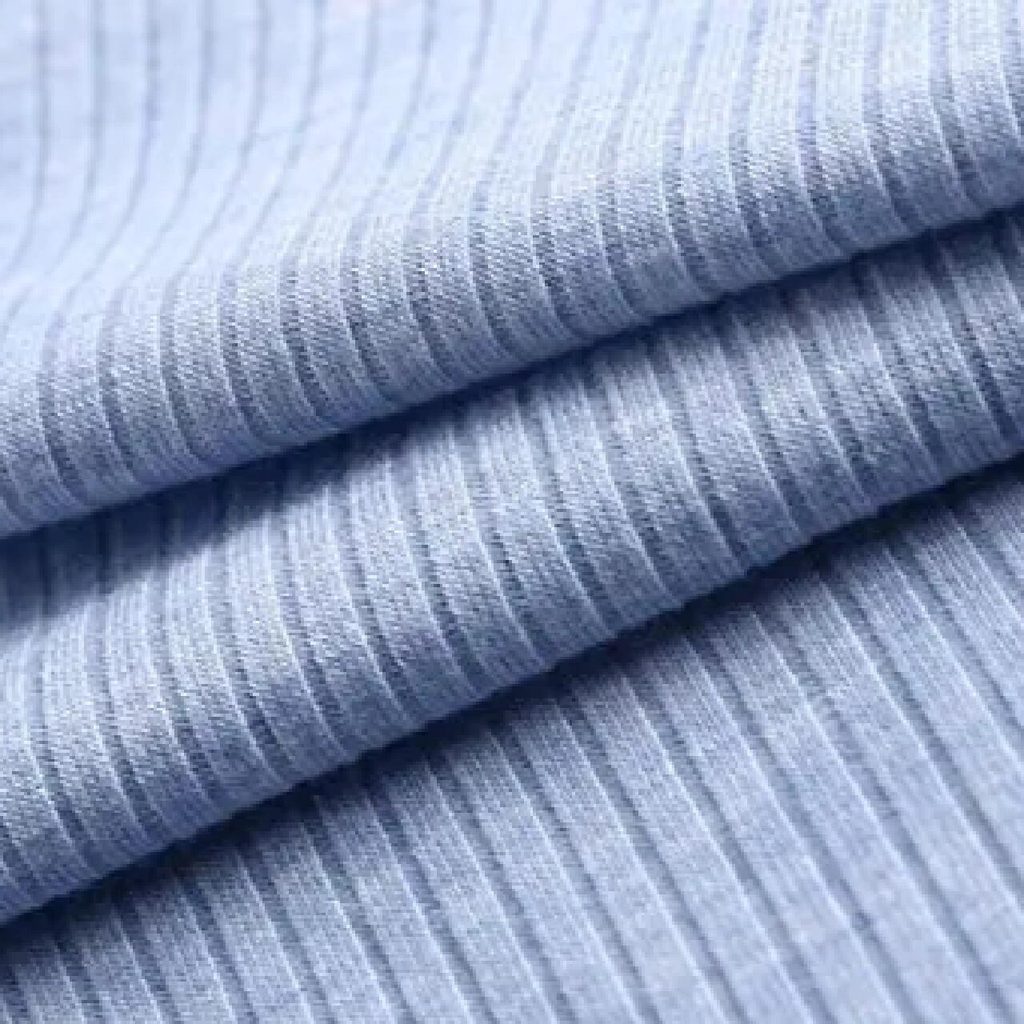
1. Cotton Rib: Natural Comfort with Moderate Recovery
Cotton is one of the most common fibers used in ribbed fabric. It is valued for its softness, breathability, and comfortable feel against the skin.
Cotton rib fabric can stretch because of its knitted structure, even without added elastic fibers. However, cotton itself does not provide the same elastic recovery as elastane. After repeated stretching, a 100% cotton rib garment may gradually become loose or lose some of its original shape, depending on the construction and finishing.
This makes cotton rib suitable for products where natural comfort and a relaxed fit are priorities.
Common applications include:
- Casual T-shirts
- Lightweight tops
- Lounge clothing
- Children’s garments
- Relaxed-fit dresses
For neckbands, cuffs, and fitted garments that need to maintain a close fit, manufacturers may consider adding elastane to improve recovery.
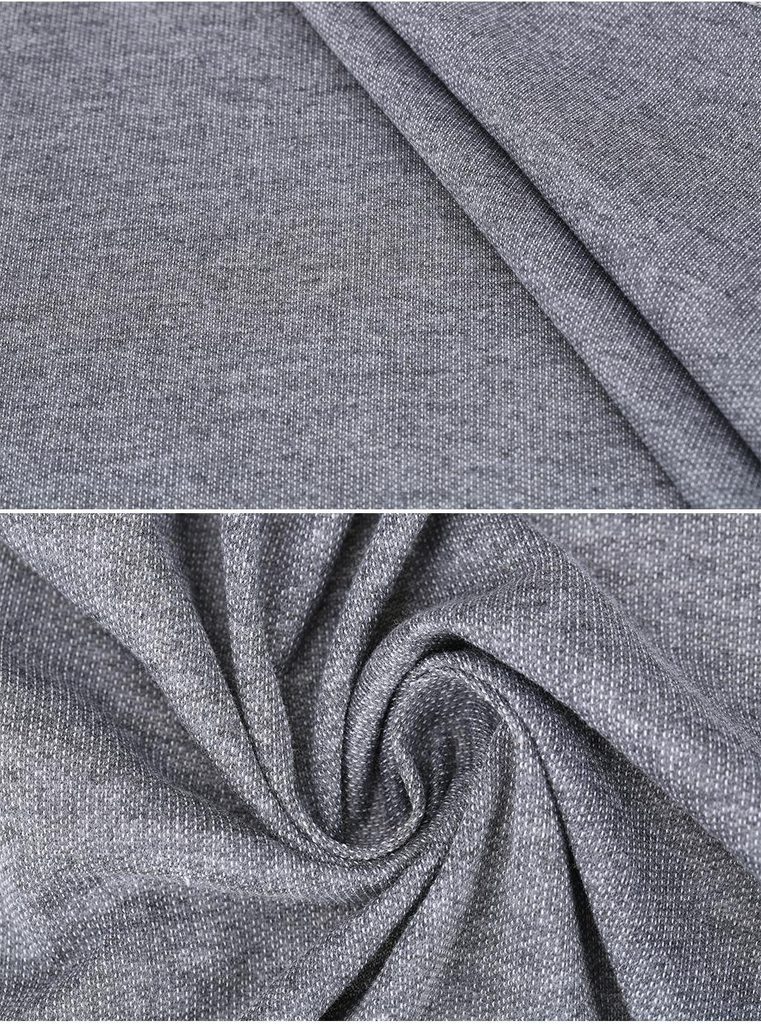
2. Polyester Rib: Durability and Dimensional Stability
Polyester is often blended with other fibers to improve the durability and dimensional stability of knitted fabrics.
In ribbed fabric, polyester can help garments maintain a more consistent shape during regular use and care. It also offers good resistance to many forms of everyday wear.
Polyester does not automatically provide the same stretch recovery as elastane. Its contribution depends on yarn properties, fabric construction, and whether elastic fibers are included in the blend.
Polyester rib blends can be useful for:
- Sports-inspired casualwear
- Uniform components
- Sweatshirt cuffs
- Everyday tops
- Garments requiring easy-care properties
When developing polyester rib fabric, brands should also consider the desired hand feel, moisture management, and breathability. These characteristics vary with yarn type and fabric structure.
3. Modal and Viscose Rib: Softness and Flexible Drape
Modal and viscose are regenerated cellulose fibers commonly used in soft, comfortable apparel.
When knitted into rib fabric, these fibers can create a smooth hand feel and fluid drape. This makes them attractive for fitted tops, camisoles, dresses, and lightweight lounge sets.
However, softness and drape should not be confused with elastic recovery. Modal and viscose rib fabrics can stretch through their knitted construction, but their ability to return to their original shape depends on the fiber blend and fabric engineering.
Adding elastane can help improve recovery while retaining much of the soft feel that makes these materials appealing.
For premium casualwear brands, modal-elastane and viscose-elastane rib blends can be worth evaluating when the design requires both a soft touch and a close-fitting silhouette.
4. Elastane: The Key to Improved Stretch Recovery
Elastane, also known as spandex, is widely used in stretch apparel because of its high elasticity and ability to recover after deformation.
When incorporated into ribbed fabric, elastane helps the material return toward its original dimensions after being stretched. This is particularly important for garments that repeatedly expand and contract during movement.
For example, a ribbed neckline needs to stretch when a wearer puts on a T-shirt and then return to a neat shape. Similarly, cuffs and waistbands must provide flexibility without becoming loose too quickly.
Elastane is commonly blended with cotton, polyester, modal, or other fibers to balance comfort and performance.
The appropriate percentage depends on the intended application. A small amount may be sufficient for certain trims, while fitted garments or performance-oriented products may require a different specification.
More elastane does not automatically mean better fabric. Excessive stretch can affect garment fit, hand feel, cutting, and sewing. The final composition should be selected according to the product’s actual performance requirements.
5. How Fiber Blends Influence Garment Performance
Blending different fibers allows manufacturers to combine desirable characteristics within one fabric.
The following table provides a general comparison:
| Fabric composition | Main characteristics | Common applications |
|---|---|---|
| 100% cotton rib | Natural feel, breathable, moderate recovery | Casual tops, relaxed garments |
| Cotton-elastane rib | Softness with improved recovery | Neckbands, fitted tops |
| Polyester rib | Durable, easy-care potential | Sports-inspired casualwear |
| Polyester-elastane rib | Flexible with improved shape retention | Active casualwear, fitted garments |
| Modal-elastane rib | Soft hand feel, fluid drape, improved recovery | Premium tops, dresses, lounge sets |
| Viscose-elastane rib | Smooth texture and flexible fit | Fashion tops and lightweight dresses |
These are general tendencies rather than guaranteed results. Yarn quality, knitting density, rib structure, fabric weight, and finishing treatments can significantly change the final performance.
6. Why Stretch and Recovery Testing Matters
Choosing a fabric based only on its fiber label can lead to unexpected results during bulk production.
Two rib fabrics with similar compositions may perform differently because of variations in knitting construction, yarn tension, elastane content, and finishing conditions.
Before approving a fabric, clothing brands should evaluate several properties:
Stretch percentage: Measure how far the fabric extends under a defined testing method.
Elastic recovery: Check how closely the fabric returns to its original dimensions after stretching.
Growth after wear: Evaluate whether the material remains stretched after repeated movement or tension.
Dimensional stability: Test shrinkage and shape changes after the intended washing and drying process.
Hand feel and fit: Assess whether the fabric provides the desired comfort and body-hugging effect in an actual garment.
Testing the fabric in a finished sample is particularly important for necklines, cuffs, waistbands, and fitted garment panels.
7. Selecting the Right Ribbed Fabric for Your Clothing Collection
The best ribbed fabric depends on the product category, target customer, and intended garment fit.
For a relaxed cotton T-shirt, a cotton-rich rib may provide the desired natural feel. For a fitted tank top, a cotton-elastane or modal-elastane blend may offer a better balance of softness and recovery. For sweatshirt cuffs and waistbands, the fabric should provide enough elasticity to maintain a secure fit without feeling restrictive.
Brands should also consider fabric weight, rib width, color matching, shrinkage, and compatibility with the main garment fabric.
Working with an experienced apparel manufacturer during fabric development can help identify potential issues before bulk production begins.
Conclusion
Ribbed fabric composition has a direct influence on garment stretch, recovery, comfort, and shape retention. Cotton provides natural softness, polyester can contribute to durability and dimensional stability, modal and viscose offer smoothness and drape, while elastane improves elastic recovery.
The right combination depends on the garment’s design and performance requirements. By evaluating fiber composition alongside knit structure, fabric weight, and finishing, clothing brands can make more informed material decisions and develop garments that maintain their fit through everyday wear.
At Monsoon Apparel, fabric selection is an important part of custom clothing development. By considering both material properties and garment construction, brands can create ribbed apparel that combines comfort, flexibility, and consistent production quality.