Finding the right apparel production partner is the cornerstone of building a profitable, high-reputation clothing brand. In the tailored menswear and modern professional womenswear spaces, dress pants present a unique set of technical manufacturing challenges. Unlike basic t-shirts or unstructured loungewear, trousers demand exact pattern cutting, structured waistband construction, high-tensile seam strength, and immaculate press finishing.
Whether expanding an established fashion label or launching a corporate uniform line, knowing how to select and collaborate with a specialized dress pants manufacturer directly impacts product quality, profit margins, and customer loyalty.
Key Capabilities of an Elite Dress Pants Factory
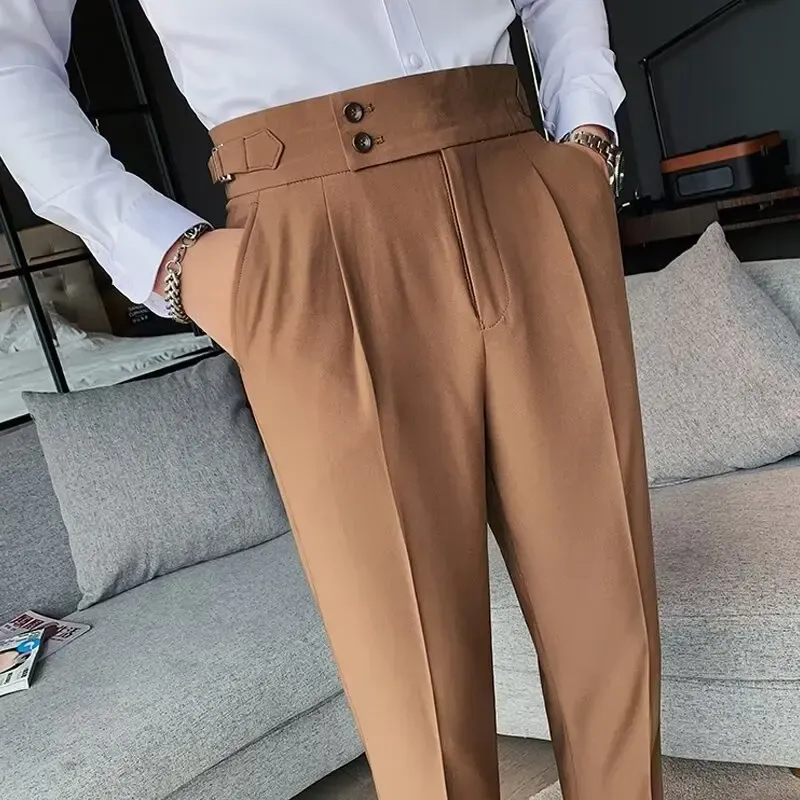
Not all garment factories possess the specialized machinery or skilled labor required for formal trousers. High-end trousers require precision engineering at every stage of production.
- Advanced Pattern Making and Grading: Precision fitting across a complete size run requires sophisticated Computer-Aided Design (CAD) systems. A capable factory ensures that proportions stay balanced whether producing a size 30 waist or a size 44.
- Automated Fabric Spreading and Cutting: Laser-guided or automated blade cutters maintain uniform panel sizes, reducing variances that lead to twisted pant legs or misaligned side seams.
- Specialized Sewing Equipment: Dedicated machinery—such as double-needle welt pocket machines, blind hem stitchers, and waistband setting units—is non-negotiable for clean, professional finishes.
- In-House Pressing and Molding: Modern trousers require three-dimensional pressing machines that shape the crotch curve, thigh crease, and waistband to match natural body contours.
Fabric Selection: Balancing Aesthetics, Performance, and Cost
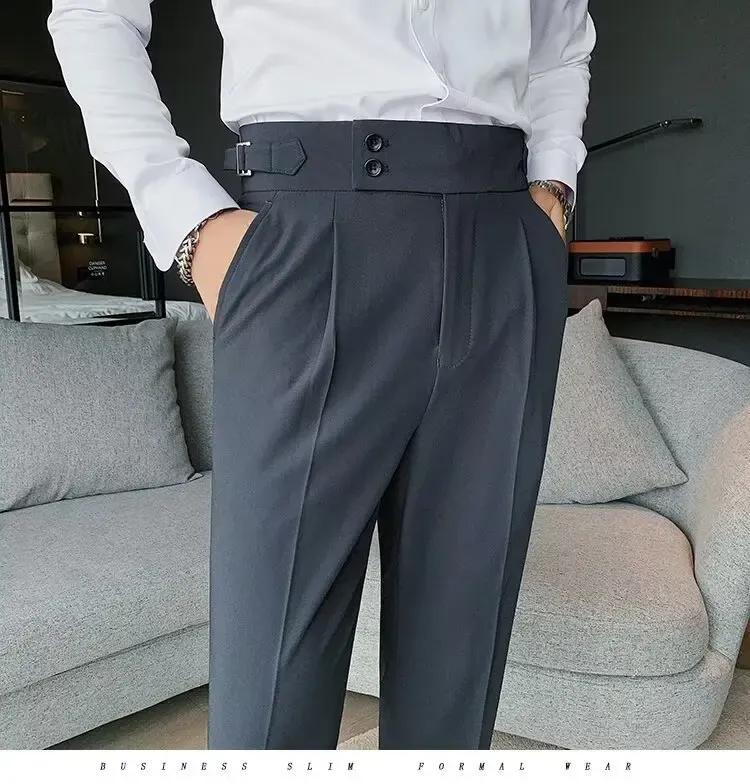
The choice of textile defines the drape, durability, and comfort of formal trousers. Partnering with a factory that maintains strong relationships with reputable fabric mills allows brands to access diverse material options at competitive prices.
| Fabric Type | Key Properties | Ideal Target Market | Care Requirements |
| 100% Superfine Wool | Premium drape, natural temperature regulation, luxurious feel | Luxury retail, executive formalwear | Dry clean only |
| Wool-Blend (Polyester/Viscose) | Wrinkle-resistant, cost-effective, durable shape retention | Corporate uniforms, daily office wear | Machine washable or dry clean |
| Cotton-Elastane Chino/Trouser | Breathable, flexible stretch, structured casual look | Smart-casual, modern office wear | Machine washable |
| Poly-Rayon Spandex | High elasticity, soft hand-feel, fluid drape | Contemporary womenswear, stretch suit pants | Machine washable |
| Recycled Polyester Blends | Sustainable, highly durable, moisture-wicking | Eco-conscious brands, travel trousers | Machine washable |
Critical Steps in the Dress Pants Manufacturing Process
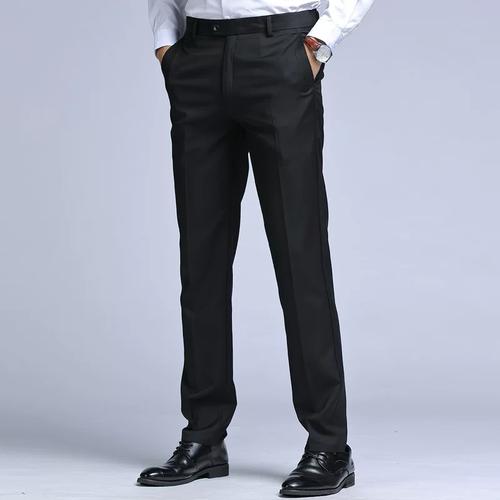
Understanding how a factory processes an order from tech pack to final shipment ensures smoother communication and fewer costly revisions.
Tech Pack Review and Sample Development
Production begins with the technical specification package (tech pack). A premier factory meticulously reviews flat sketches, measurement specs, bill of materials (BOM), and stitch callouts. A Proto Sample is generated first to check fit and drape, followed by a Fit Sample, and finally a Pre-Production (PP) Sample utilizing exact production fabrics and trims.
Internal Waistband Engineering
The waistband is the structural core of any pair of dress pants. Superior factories utilize multi-layered construction incorporating stiff curtain canvas, non-slip rubberized interior grip strips, and reinforced buttonhole backing. This prevents the waistband from rolling, sagging, or losing structure after repeated wear.
Pocketing and Fly Construction
Heavy-duty pocket bags prevent tearing from keys and phones. The zipper fly requires reinforced bar-tacking at stress points to withstand daily tension. Look for factories using self-locking YKK zippers and bias-taped inner seams for a polished interior aesthetic.
Quality Control Standards and Inspection Protocols
Defects in tailoring are immediately noticeable to consumers. A dependable factory implements strict quality assurance at multiple production checkpoints:
- Raw Material Inspection (4-Point System): Checking fabric rolls for shade shading, slubs, and dimensional stability before cutting.
- In-Line Quality Checks: Monitoring sewing operations during assembly to catch skip-stitches, tension puckering, or uneven pocket placements immediately.
- Final Quality Inspection (AQL 2.5 Standard): Utilizing Acceptable Quality Limit standards to audit finished garments for fit accuracy, thread trims, press quality, and stain-free presentation.
Optimizing Minimum Order Quantities (MOQs) and Lead Times
Navigating order volumes and production schedules requires open communication with your production partner. Traditional factories often demand high MOQs (1,000+ units per colorway), which can strain cash flow for growing brands. Flexible manufacturing partners offer tiered MOQs, allowing brands to test new fits or colors in smaller runs (200–500 units) before scaling up.
Standard lead times for custom dress pants manufacturing typically break down into:
- Sampling Phase: 2 to 3 weeks
- Fabric Sourcing & Dyeing: 3 to 5 weeks
- Bulk Cut & Sew Production: 4 to 6 weeks
- Logistics & Shipping: 1 to 4 weeks (depending on air or ocean freight)
Selecting a trusted dress pants manufacturer means choosing a partner committed to precision craftsmanship, transparent communication, and reliable delivery. By focusing on structural integrity, fabric sourcing capabilities, and rigid quality control, your brand can consistently deliver high-performance trousers that build lasting market authority.