Men’s jeans remain one of the most important products in the global fashion market. From classic straight-leg denim to modern relaxed fits, cargo jeans, distressed styles, and premium selvedge denim, there are countless opportunities for clothing brands to develop their own collections. However, creating successful jeans requires more than an attractive design. The quality of the finished product depends heavily on choosing the right men’s jeans manufacturer.
For fashion startups, private label brands, retailers, and established clothing companies, the manufacturing partner can influence everything from fabric quality and fit to production efficiency and delivery schedules. A reliable manufacturer can help turn a product concept into commercially successful jeans, while an unsuitable supplier can create inconsistent quality, unexpected costs, and production delays.
If you are planning to launch or expand a men’s denim collection, understanding what to look for in a manufacturing partner is essential.
Understanding the Role of a Men’s Jeans Manufacturer
A professional men’s jeans manufacturer does much more than sew pieces of denim together.
The manufacturing process can involve fabric selection, pattern development, sample making, cutting, sewing, washing, finishing, hardware installation, quality inspection, labeling, packaging, and shipping. Each stage affects the appearance and performance of the final product.
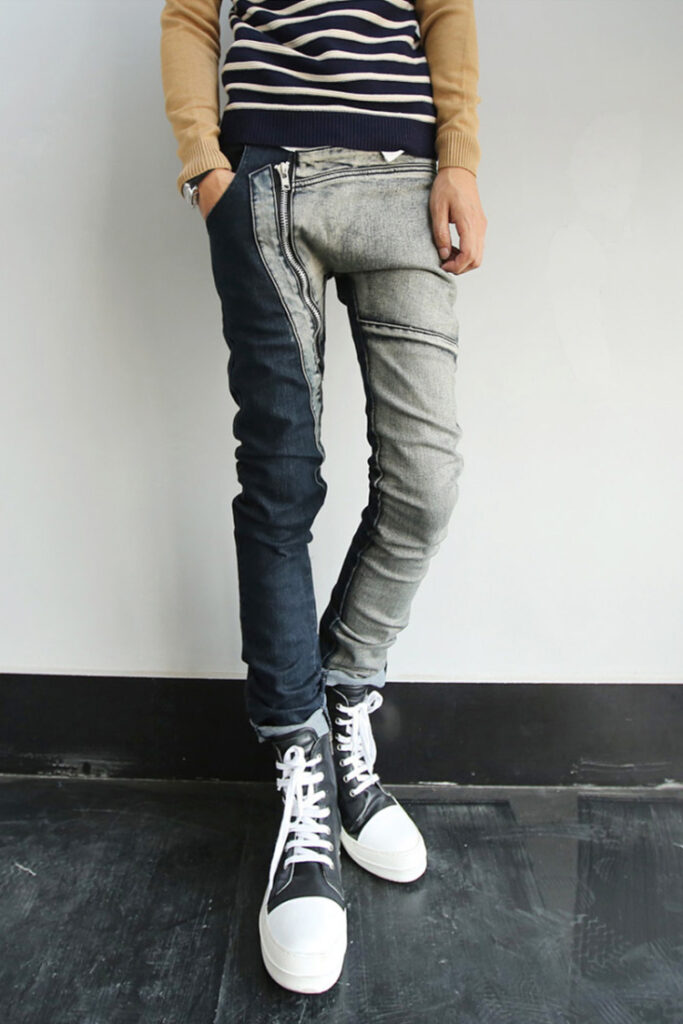
For example, the same jeans design can look completely different depending on the denim weight, fabric composition, wash, stitching details, and finishing process.
This is why experienced denim manufacturing knowledge matters.
A manufacturer familiar with men’s jeans can help brands identify practical production solutions while maintaining the original design concept. This is especially valuable when a brand is developing custom jeans for the first time.
Instead of simply following a basic specification, an experienced production team can help identify potential issues with construction, measurements, fabric behavior, or finishing before the product enters large-scale production.
Fabric Selection Is the Foundation of Quality Jeans
Denim fabric has a major influence on how men’s jeans feel, fit, and perform.
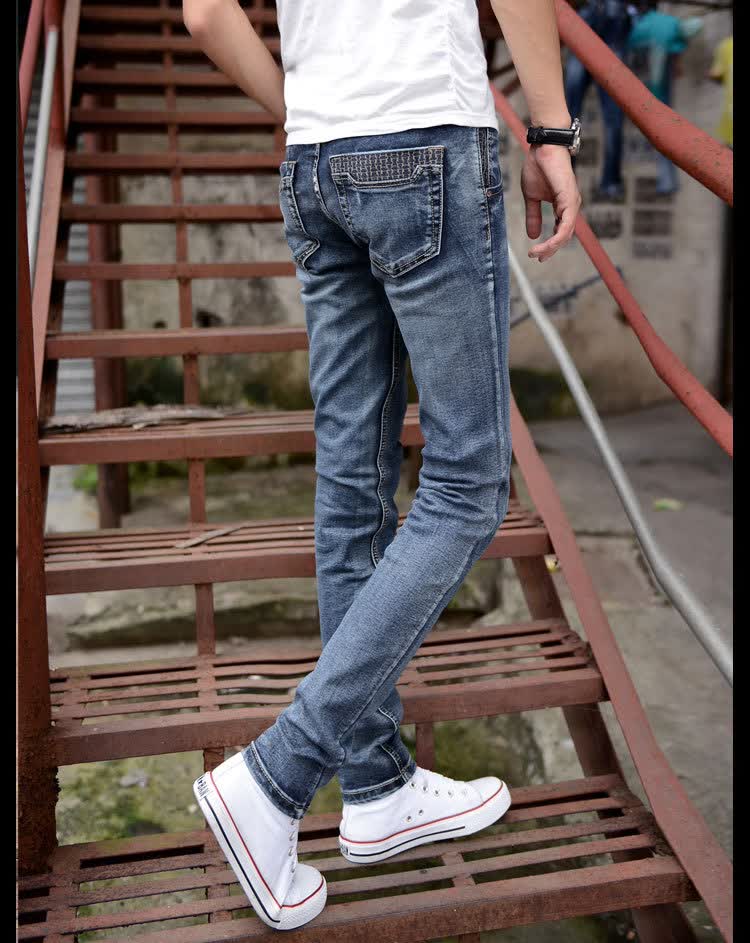
When developing a new collection, brands should consider factors such as fabric weight, fiber composition, stretch, texture, color, durability, and intended use.
For everyday casual jeans, a comfortable cotton blend with a small amount of stretch may provide the flexibility customers expect. A premium denim brand may prefer heavier rigid denim or selvedge fabric for a more structured appearance.
Different fits can also benefit from different materials.
Slim jeans may require a certain amount of flexibility, while relaxed and straight-leg styles can work well with more structured fabrics. The washing process can further change the texture, color, and overall appearance of the garment.
A capable men’s jeans manufacturer should therefore provide access to a range of denim materials and help brands select the most appropriate option for their collection.
Monsoon Apparel offers a variety of denim fabric choices, including stretch denim, raw denim, selvedge denim, and recycled blends, allowing brands to develop products based on their specific requirements.
Fit Development Can Make or Break a Denim Collection
Fit is one of the most important factors when customers purchase men’s jeans.
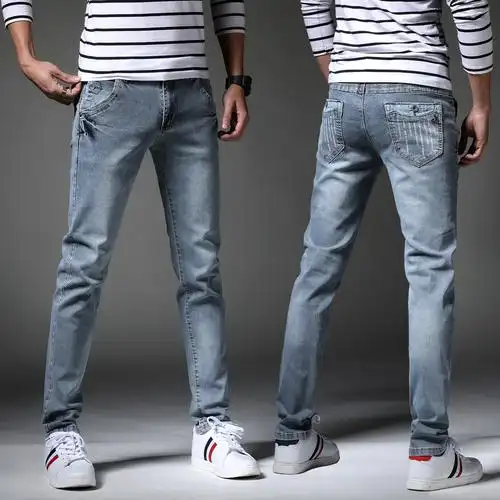
Customers may have different preferences, but they generally expect the product to match the advertised silhouette and size. A small difference in the rise, thigh width, knee position, or leg opening can significantly change how jeans look when worn.
Common men’s jeans fits include:
- Skinny fit
- Slim fit
- Straight fit
- Tapered fit
- Relaxed fit
- Loose fit
- Wide-leg fit
- Bootcut fit
Each silhouette requires careful pattern development.
For example, a relaxed fit is not simply a slim fit made larger. The proportions between the waist, hip, thigh, knee, and leg opening need to be developed specifically for the intended silhouette.
This is why sample development is such an important part of working with a professional manufacturer.
The brand can evaluate the first sample, identify adjustments, and establish an approved fit before bulk production begins.
Custom Men’s Jeans Give Brands More Creative Control
For many fashion businesses, the goal is not simply to purchase standard jeans. They want a product that represents their own brand.
Custom men’s jeans allow businesses to control important product details.
A brand can specify the denim fabric, fit, color, wash, pocket design, stitching, hardware, branding, and packaging. These details can help create a distinctive product that customers cannot easily find from competing brands.
For a streetwear label, customization could include oversized proportions, faded washes, embroidered graphics, branded rivets, and large back-pocket designs.
For a premium menswear brand, the approach might be very different. The collection could use high-quality rigid denim, clean stitching, minimal branding, custom buttons, and carefully developed dark washes.
The manufacturer should be capable of adapting production to these different design directions.
Private Label Jeans Can Strengthen Brand Identity
Private label manufacturing provides another practical route for fashion businesses.
Instead of selling generic denim products, a company can create men’s jeans under its own brand name. The manufacturer produces the garments while the brand controls the identity, positioning, marketing, and sales channels.
Branding opportunities can include woven labels, printed care labels, leather patches, hang tags, custom buttons, rivets, embroidery, screen printing, and packaging.
These elements may seem small individually, but together they create a complete branded product.
Monsoon Apparel offers private label and OEM manufacturing solutions, including customized labels, logos, hardware, embroidery, screen printing, patchwork, and packaging.
For an emerging fashion company, this can make it easier to establish a recognizable identity in a competitive denim market.
Why Sampling Is Important Before Mass Production
One of the most common mistakes new brands can make is moving into bulk production before properly approving a sample.
A technical specification can provide measurements and construction details, but a physical sample allows the brand to see how all of those elements work together.
During the sampling stage, brands can check:
- Overall fit
- Waist and hip measurements
- Rise length
- Thigh and knee proportions
- Leg opening
- Inseam
- Pocket size
- Pocket position
- Stitching quality
- Hardware
- Fabric hand feel
- Color
- Washing effect
- Branding placement
If something does not meet expectations, changes can be made before production begins.
A professional manufacturer should be comfortable with this development process because sample revisions are a normal part of custom apparel production.
Monsoon Apparel describes a production workflow that includes prototype development and sample approval before mass production.
This gives brands greater control over the finished product and can reduce the risk of costly production problems.
Low MOQ Can Benefit Growing Clothing Brands
Minimum order quantity is another important consideration when selecting a jeans supplier.
Large minimum orders can be difficult for startups because they require more upfront investment and create greater inventory risk.
A manufacturer that offers flexible MOQ options can provide brands with more freedom to test new designs.
For example, a startup could introduce a small collection with several core men’s jeans styles rather than immediately ordering a large number of products. Sales performance can then be evaluated before expanding the collection.
This approach can be useful for ecommerce brands, capsule collections, seasonal launches, and businesses entering the denim market for the first time.
Monsoon Apparel offers flexible MOQ solutions designed for startups, growing brands, and different production requirements.
Quality Control Should Be Consistent
A successful denim product requires consistent quality across every production batch.
Quality control should cover more than the appearance of the finished jeans. Measurements, stitching, seams, fabric, hardware, labels, washing, and finishing should all be checked against the approved specifications.
Measurement consistency is particularly important.
If one batch of size 32 jeans fits differently from another batch with the same size label, customers may become dissatisfied and returns can increase.
A professional manufacturing partner should have inspection procedures throughout production and before shipment.
Monsoon Apparel states that quality assurance and finished-product inspection are included in its denim manufacturing process.
For brands building a long-term reputation, consistent manufacturing quality is an important part of customer satisfaction.
Production Capacity Matters as Your Brand Grows
A manufacturer should not only meet your current needs but also have the ability to support future growth.
A startup may initially require a relatively small production run. If the brand becomes successful, however, production requirements may increase significantly.
Changing manufacturers every time order volume increases can create unnecessary complexity. Product consistency may also become more difficult to maintain.
For this reason, it is useful to evaluate a manufacturer’s production capabilities from the beginning.
Ask whether the manufacturer can handle both smaller orders and larger production runs, whether it supports multiple manufacturing models, and whether it can maintain quality as order quantities increase.
Monsoon Apparel provides CMT, FOB, and ODM cooperation models in addition to OEM and private label manufacturing services, providing brands with different production options as their requirements change.
Communication Is an Important Part of Manufacturing
Good communication can make the entire production process easier.
When developing custom men’s jeans, brands may need to discuss measurements, fabric specifications, artwork, labels, hardware, washing references, packaging, and shipping requirements.
Clear communication helps ensure that everyone is working from the same product specifications.
It is also important that manufacturers provide clear information about sampling, production timelines, minimum quantities, costs, and shipping.
A strong manufacturing relationship should feel like a collaboration rather than a simple transaction.
The manufacturer should understand what the brand is trying to achieve and help translate the concept into a production-ready garment.
Choosing a Manufacturer for Long-Term Growth
Selecting a men’s jeans manufacturer should be viewed as a long-term business decision.
The lowest quotation is not always the best option. A slightly higher production cost may be worthwhile if the manufacturer provides better fabric options, stronger quality control, better communication, reliable sampling, and more consistent production.
Before choosing a supplier, brands should consider several important factors:
- Denim manufacturing experience
- Fabric selection
- Customization capabilities
- Sample development
- Quality control
- MOQ flexibility
- Private label services
- Branding and packaging options
- Production capacity
- Communication and delivery reliability
Evaluating these factors can help brands avoid common production problems and establish a stronger foundation for future collections.
Final Thoughts
Men’s jeans are a competitive product category, but they also provide significant opportunities for brands that can develop distinctive products with reliable quality.
The right men’s jeans manufacturer can support your business from the initial design concept through fabric selection, sampling, production, branding, quality inspection, packaging, and delivery.
Whether you are launching your first private label denim collection or expanding an established fashion brand, choosing a manufacturer with experience in custom jeans can make the development process more efficient and predictable.
Monsoon Apparel provides custom denim manufacturing, private label production, OEM services, flexible MOQ solutions, and end-to-end apparel manufacturing support for brands around the world. (monsoonapparel.com)
With the right manufacturing partner, your brand can develop men’s jeans that combine fit, fabric, construction, branding, and quality into a product designed for today’s customers.