
In apparel manufacturing, fabric weight, softness, warmth, and durability are closely connected. For brands developing hoodies, sweatshirts, joggers, and winter apparel, brushed fabric and fleece are popular choices because they offer a comfortable hand feel and reliable thermal insulation. However, the brushing process also introduces an important challenge: balancing fabric weight loss, heat retention, and fiber shedding.
Brushing transforms a relatively flat knitted surface into a soft, raised texture by lifting fibers from the yarn structure. This process creates tiny air pockets that help retain body heat, but it can also release loose fibers and affect the finished fabric’s appearance and performance. When brushing is too aggressive or the yarn quality is inconsistent, manufacturers may experience excessive lint, pilling, and changes in fabric weight.
Understanding how GSM loss occurs during fabric finishing helps apparel brands make better material decisions, control production quality, and deliver garments that remain comfortable after repeated washing.
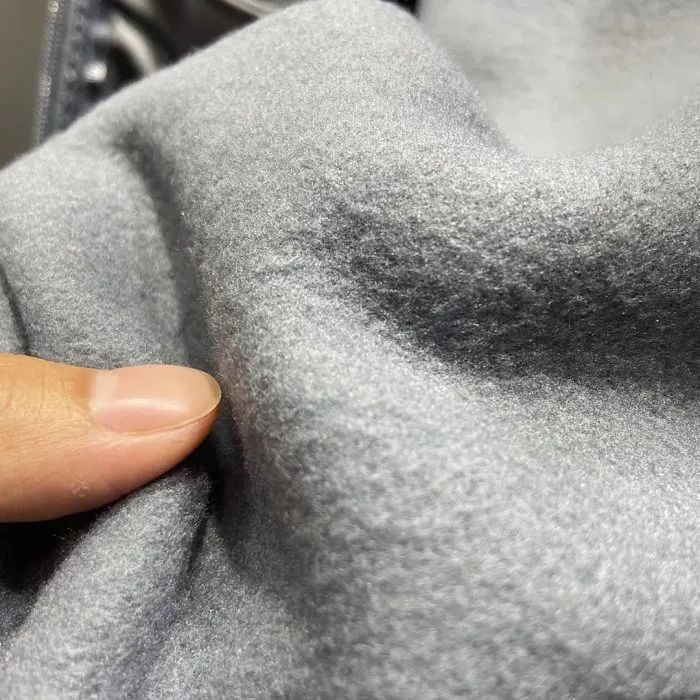
1. What Is GSM Loss in Brushed Fabric?
GSM stands for grams per square meter and is the standard measurement used to describe fabric weight. It helps manufacturers compare materials, establish product specifications, and evaluate consistency between production batches.
During the brushing process, specialized rollers lift surface fibers to create a soft, fuzzy nap. Some fibers may become detached during this mechanical treatment, particularly when the yarn contains short fibers or the brushing settings are too aggressive. These detached fibers can become lint, resulting in a reduction in fabric mass.
However, brushing does not always cause a simple or predictable decrease in GSM. The final weight depends on the original fabric construction, fiber composition, brushing intensity, finishing treatments, and subsequent washing or drying.
For example, two fabrics manufactured with the same initial GSM may have different finished weights after brushing. One may develop a soft, dense surface with relatively little fiber loss, while another may release more lint and show a less uniform texture.
This is why manufacturers should measure GSM after the relevant finishing processes rather than relying exclusively on the weight of unfinished fabric.
For apparel brands, the most important consideration is not simply how much weight the fabric loses. It is whether the finished material meets the required weight, insulation, appearance, and durability standards.
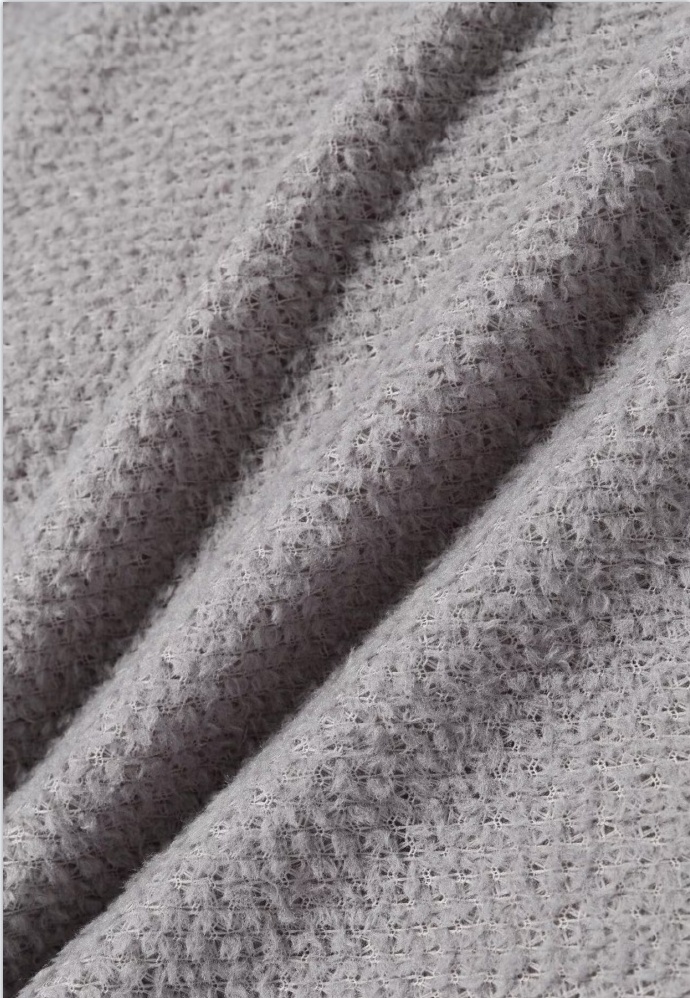
2. How Brushing Creates Warmth and Softness
The main purpose of brushing is to improve the fabric’s surface texture and thermal performance.
During mechanical brushing, fine wire-covered rollers raise fibers from the knitted structure. These fibers form a soft layer that traps small pockets of relatively still air. Because trapped air slows heat transfer, the raised surface can improve the fabric’s insulating performance.
This explains why brushed cotton fabric and brushed fleece often feel warmer than smoother fabrics with similar construction and weight.
The degree of warmth depends on several factors:
- Pile height: A suitable raised surface helps retain air close to the body.
- Pile density: A more uniform surface can improve the consistency of insulation.
- Fabric construction: Knit structure and yarn arrangement influence thickness, stretch, and air retention.
- Fiber composition: Cotton, polyester, and blended fibers behave differently in terms of moisture management, softness, and durability.
- Finishing quality: Controlled brushing helps create an even surface without unnecessarily weakening the fabric.
More brushing does not automatically produce better insulation. Excessive brushing can loosen too many fibers, reduce the integrity of the yarn structure, and increase the likelihood of shedding or pilling.
The objective is to develop enough surface loft for the desired warmth without compromising the fabric’s long-term performance.
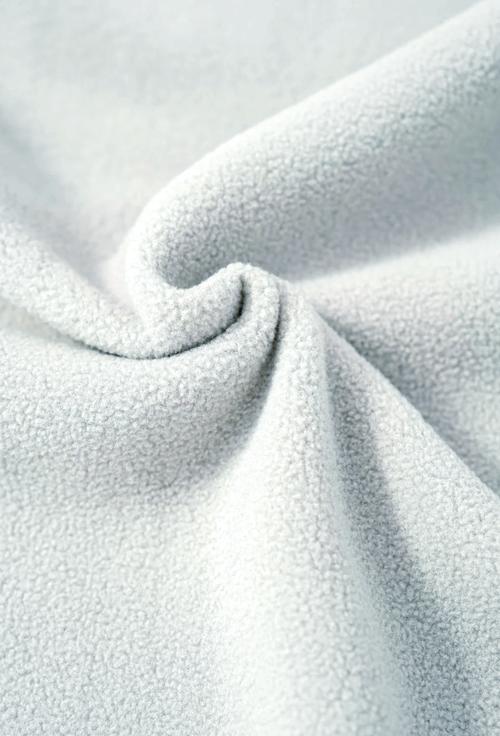
3. Fabric Weight Loss and Fiber Shedding: What Is the Difference?
GSM loss and fiber shedding are related, but they are not identical.
GSM loss refers to a measurable reduction in fabric mass. Fiber shedding describes the release of fibers from the fabric surface during manufacturing, handling, wearing, or laundering.
A brushed fabric may lose some loose fibers during finishing and still maintain acceptable performance. Conversely, a fabric with a satisfactory initial GSM may continue shedding fibers after several washes.
Excessive shedding can affect both product quality and the customer experience. Loose lint may accumulate on dark clothing, transfer to other garments, or remain visible inside a hoodie after washing.
Several factors contribute to fiber shedding.
Yarn quality
Yarns made from short or poorly controlled fibers may release more loose fibers during brushing. Fiber length, yarn spinning quality, and yarn strength influence how securely fibers remain anchored within the yarn.
Brushing intensity
The number of brushing passes, machine settings, and mechanical pressure affect how much fiber is raised from the surface. Aggressive treatment can produce an initially fluffy texture but may also increase loose fiber release.
Fiber composition
Cotton-rich fabrics and polyester fleece can exhibit different shedding and pilling behaviors. The outcome depends on fiber characteristics, yarn construction, and finishing rather than fiber composition alone.
Fabric structure
A stable knitted structure helps retain yarn integrity during mechanical finishing and everyday wear. Poor construction may increase the likelihood of surface damage.
Washing conditions
Repeated washing introduces friction and mechanical movement. Loose fibers may be released during early wash cycles, while continued abrasion can contribute to pilling over time.
Manufacturers should therefore evaluate fiber shedding across the entire production process instead of judging fabric quality solely by its appearance immediately after brushing.
4. Brushed Cotton vs. Fleece: Which Offers Better Warmth?
Brushed cotton and fleece are both widely used for comfortable cold-weather clothing, but they serve somewhat different needs.
Brushed cotton generally offers a soft, familiar hand feel and can provide good breathability. Depending on its construction, it is suitable for sweatshirts, casual tops, lightweight thermal layers, and comfortable everyday apparel.
Fleece is a broader category that includes different knitted and pile constructions. Cotton-rich sweatshirt fleece often has a smooth outer face and a brushed inner surface, while polyester polar fleece typically features a raised pile on one or both sides.
The right choice depends on the intended garment, climate, and performance requirements.
| Feature | Brushed cotton | Brushed fleece |
|---|---|---|
| Hand feel | Soft and natural | Plush and insulating |
| Warmth | Depends on weight and pile | Often offers strong insulation for its weight |
| Breathability | Often good, depending on construction | Varies by fiber and structure |
| Moisture behavior | Cotton absorbs moisture | Polyester fleece generally dries faster |
| Shedding risk | Depends on yarn and brushing | Depends on pile stability and finishing |
| Common applications | Sweatshirts, casualwear, thermal tops | Hoodies, winter sweatshirts, outer layers |
Neither material is automatically superior in every category. A well-engineered brushed cotton fabric may outperform a poorly finished fleece in durability, while a suitable polyester fleece may provide excellent warmth without excessive garment weight.
For brands selecting materials, comparing finished samples is more useful than relying on fabric names alone.
5. How GSM Affects Warmth, Comfort, and Garment Performance
Fabric weight is an important purchasing specification, but GSM should not be treated as a direct measurement of warmth.
A heavier fabric often provides more material and may create a thicker, more substantial garment. Nevertheless, insulation also depends on how effectively the fabric traps air, how its surface is constructed, and how much air can circulate through the material.
For many casualwear applications, the following ranges provide a useful starting point. Actual specifications vary by construction, fiber composition, and supplier.
- 200–260 GSM: Suitable for lighter sweatshirts, transitional-season garments, and layering pieces.
- 260–320 GSM: A versatile range for everyday hoodies, crewneck sweatshirts, and casual fleece garments.
- 320–400 GSM: Often selected for heavyweight hoodies, premium streetwear, and colder-weather apparel.
- Above 400 GSM: Used for selected heavyweight or specialized products where substantial fabric body is desirable.
These ranges are guidelines rather than universal standards. A brushed fabric may feel considerably thicker than a smooth fabric of comparable weight because its raised fibers increase surface loft.
There is also a practical trade-off. Higher GSM can increase garment weight, material consumption, drying time, and shipping volume. Lower GSM may improve layering and reduce bulk but may not provide the desired insulation for certain winter products.
The best fabric weight is therefore the one that meets the intended thermal performance and comfort requirements without introducing unnecessary material costs.
6. How to Reduce Fiber Shedding Without Sacrificing Warmth
Reducing fiber shedding requires a combination of material selection, process control, and performance testing. Simply reducing brushing intensity may lower lint release, but it can also create a flatter surface with less of the softness customers expect.
A more effective approach addresses the underlying causes.
Select suitable yarns
Choose yarns with appropriate fiber length, strength, and consistency for the intended fabric. Better yarn construction can help fibers remain anchored while still allowing the surface to develop a soft nap.
Optimize brushing parameters
Brushing intensity should match the yarn, knit structure, and desired pile height. Controlled machine settings help achieve a uniform surface while limiting unnecessary fiber damage.
Apply appropriate finishing
Depending on the fabric, processes such as shearing, compacting, or suitable anti-pilling treatments may help improve surface consistency and performance. These treatments should be selected according to fiber composition and end-use requirements.
An anti-pilling finish does not guarantee zero shedding, and excessive finishing can introduce other performance trade-offs. Testing is essential.
Evaluate the finished GSM
Measure fabric weight after brushing and other relevant finishing operations. Establish an acceptable finished-weight range and verify that production batches remain within the agreed specification.
Test before bulk production
Assess fabric samples for lint release, surface appearance, pilling resistance, shrinkage, and dimensional stability. Testing should reflect the expected use and care conditions of the finished garment.
For apparel brands, these checks can identify problems before they affect large production quantities.
7. How to Test Brushed Fabric for Shedding and Pilling
A reliable quality-control process should distinguish between loose fibers that detach from the surface and pills that form when fibers become entangled.
Fiber shedding tests evaluate how much lint or loose fiber is released under defined conditions. Depending on the product, manufacturers may use controlled rubbing, washing, or other suitable methods to assess fiber release.
Pilling tests evaluate the formation of small fiber balls caused by surface friction. Standardized laboratory methods can help compare samples and determine whether the fabric meets the buyer’s requirements.
GSM testing verifies the fabric’s mass per unit area. Measurements should be taken from representative samples under appropriate conditioning and testing procedures.
Wash testing helps identify changes in softness, surface appearance, shrinkage, and lint release after laundering.
When establishing acceptance criteria, brands should agree with their suppliers on the relevant test method, number of wash cycles, evaluation procedure, and acceptable performance level. Results from different methods should not be treated as directly interchangeable.
A fabric that looks exceptionally soft before washing may not retain the same texture after repeated laundering. Testing both the initial sample and the washed sample provides a more realistic assessment of product quality.
8. Finding the Right Balance for Apparel Development
For clothing manufacturers and fashion brands, the ideal brushed fabric is not necessarily the heaviest or the fluffiest option. It is the material that achieves the right combination of warmth, softness, structural stability, and low fiber shedding for its intended application.
A premium winter hoodie may benefit from a higher-GSM brushed fleece with a dense, comfortable interior. A lightweight sweatshirt intended for layering may perform better with a more moderate fabric weight and a controlled brushed finish.
In both cases, the development process should begin with the end-use requirements. Brands should define the target GSM, fiber composition, surface texture, thermal expectations, and acceptable shedding and pilling levels before confirming bulk production.
It is equally important to consider how the fabric performs after washing. Consistent finished weight, stable dimensions, and a surface that remains comfortable over time contribute to customer satisfaction and reduce the risk of product complaints.
By controlling brushing intensity, selecting appropriate yarns, and testing finished fabric thoroughly, manufacturers can minimize unnecessary GSM loss while preserving the warmth and softness that make brushed fabrics attractive.
Conclusion
GSM loss in brushed fabric and fleece is not simply a matter of reducing material weight. It reflects the interaction between fiber characteristics, yarn construction, mechanical brushing, and finishing quality.
Brushing creates the raised surface that helps trap insulating air, but excessive fiber release can undermine durability and appearance. The challenge is to achieve sufficient loft for warmth while maintaining a stable surface with acceptable shedding and pilling performance.
For brands developing hoodies, sweatshirts, and other cold-weather apparel, the most reliable strategy is to evaluate finished GSM alongside insulation, fiber shedding, pilling resistance, and wash durability.
When these factors are considered together, it becomes easier to select fabrics that balance warmth, comfort, appearance, and long-term quality.