
A garment can look perfect during sampling and still become a production disaster after its first wash. Sleeves become too short, waistbands feel tighter, body lengths change, and carefully approved silhouettes no longer fit as intended. For clothing brands, these problems can lead to customer complaints, product returns, expensive rework, and damaged brand reputation.
One of the most overlooked causes is fabric shrinkage.
Fabric shrinkage is the dimensional reduction that occurs when textile materials change during washing, drying, steaming, or other manufacturing processes. Although some shrinkage is normal, uncontrolled shrinkage can undermine garment fit and consistency across an entire production run.
For fashion designers, apparel buyers, and clothing manufacturers, understanding fabric shrinkage before bulk production is essential. Here is why it happens, how to measure it, and how to prevent it from becoming an expensive problem.
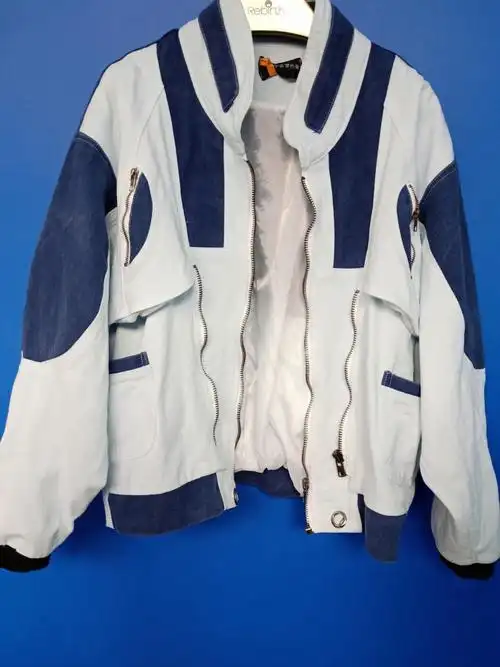
1. What Is Fabric Shrinkage, and Why Does It Happen?
Fabric shrinkage refers to a reduction in the length or width of a textile after it undergoes a particular treatment or process.
During knitting, weaving, dyeing, finishing, and fabric handling, textiles may experience mechanical tension, heat, moisture, and stretching. Some of these stresses can be released when the material is washed or dried, allowing the fabric to contract.
Different fibers and constructions respond differently.
Cotton fabric: Cotton fibers absorb moisture, while the yarn and fabric structure can relax during laundering. Cotton garments may therefore experience noticeable dimensional changes if the fabric has not been adequately stabilized.
Polyester fabric: Polyester generally offers good dimensional stability, but shrinkage can still occur depending on heat exposure, yarn construction, and finishing conditions.
Knitted fabrics: Jersey, rib, fleece, and other knitted materials may relax after production because of their loop structure and manufacturing tension. Width changes and garment twisting can also become concerns.
Woven fabrics: Woven cotton and blended fabrics may shrink in length or width depending on their construction, finishing, and care conditions.
The important point is that fiber content alone cannot predict the exact shrinkage performance of a finished garment. Fabric construction, finishing, and the washing and drying process all matter.
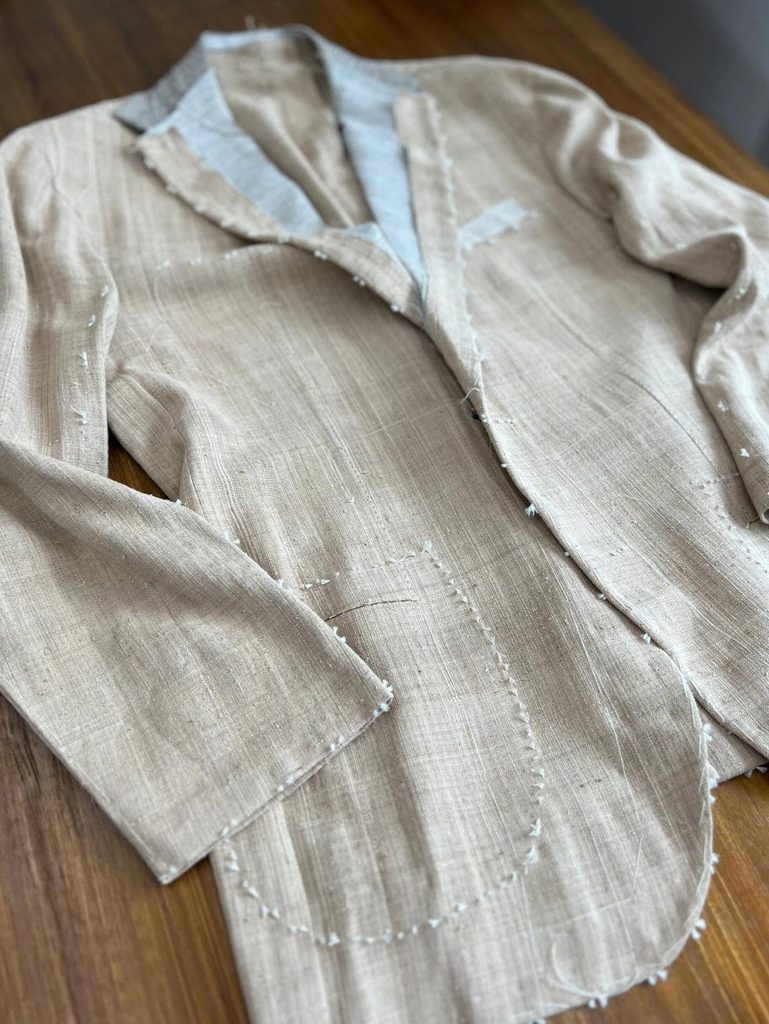
2. How Small Shrinkage Percentages Create Big Problems
A shrinkage result of just a few percentage points may appear insignificant on a laboratory report. In garment production, however, the dimensional change can be substantial.
Consider a T-shirt with an original body length of 72 cm. If the garment experiences 4% shrinkage in that direction, its finished length becomes approximately 69.12 cm—a reduction of 2.88 cm.
That difference can noticeably affect how the shirt fits and where its hem falls.
The same problem can affect chest width, sleeve length, trouser inseams, skirt lengths, and other critical measurements. If shrinkage occurs unevenly across the fabric, the garment may also become distorted.
For a clothing brand selling hundreds or thousands of units, inconsistent shrinkage can create a batch of garments that no longer matches the approved size chart.
This is why fabric shrinkage should be treated as a product development and quality control issue, not merely a technical detail handled by the fabric mill.
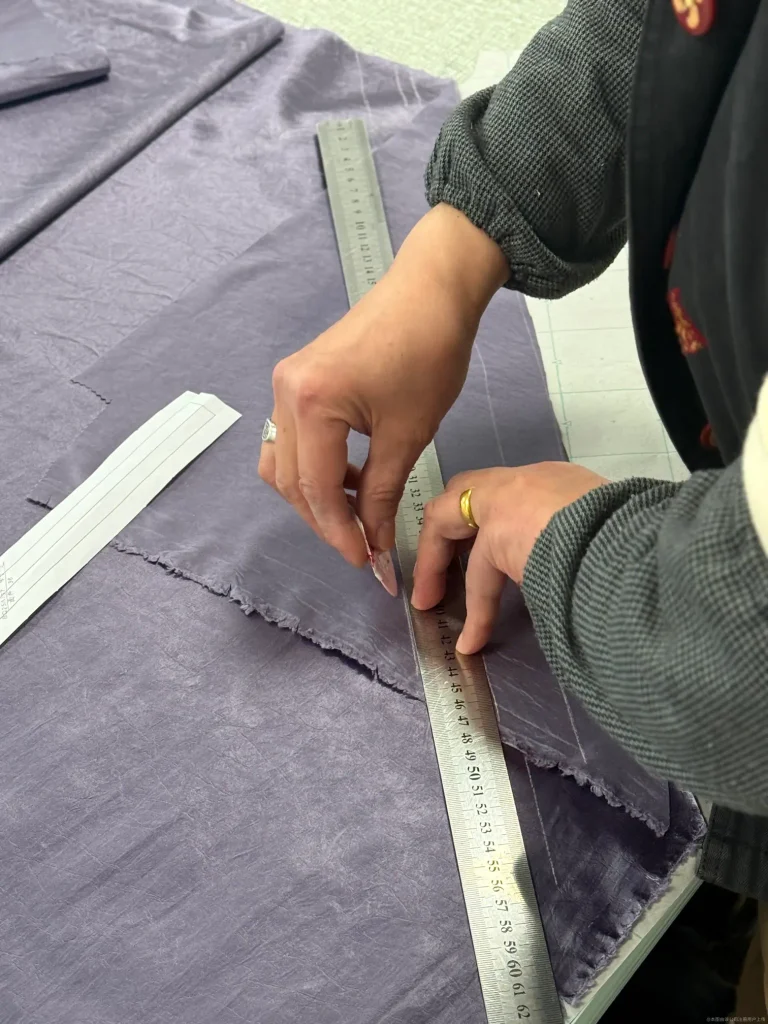
3. Fabric Shrinkage Testing: What Should You Check?
The most reliable way to understand shrinkage is to test the material before bulk cutting begins.
Two commonly referenced methods are AATCC TM135, which evaluates dimensional changes in fabrics after home laundering, and ISO 5077, which measures dimensional change following washing and drying procedures specified separately.
The appropriate method depends on your target market, customer requirements, and testing specification. Results should always be interpreted alongside the actual washing and drying conditions used.
A proper shrinkage test typically involves the following steps:
- Prepare the fabric specimen. Identify and condition the sample according to the selected test method.
- Mark reference measurements. Record defined distances in the lengthwise and widthwise directions.
- Apply the specified washing and drying procedure. Follow the agreed temperature, machine settings, detergent, and drying method.
- Measure the specimen again. Compare the final dimensions with the original measurements.
- Calculate dimensional change. Report shrinkage or growth separately for each direction.
For example, if a marked length decreases from 50 cm to 48.5 cm, the shrinkage is 3%.
A useful report should identify the fabric, test method, wash and drying conditions, number of cycles, and measured changes in both directions. Without this information, a shrinkage percentage can be difficult to interpret or compare.
4. What Is an Acceptable Fabric Shrinkage Rate?
There is no single shrinkage limit that works for every garment, fabric, or customer.
The acceptable rate depends on the product category, material construction, target fit, care instructions, and buyer’s quality requirements. A fitted garment may require tighter dimensional control than a loose-fitting style.
Some buyers specify a maximum dimensional change of around 3% in each direction for certain products, while other categories or specifications permit different limits. These figures should be treated as contract-specific requirements, not universal industry rules.
Before approving fabric for bulk production, agree on:
- Maximum acceptable lengthwise shrinkage.
- Maximum acceptable widthwise shrinkage.
- The test method and washing conditions.
- Whether the requirement applies to fabric, finished garments, or both.
- The action required if results exceed the agreed limits.
Do not rely on a supplier’s statement that a fabric is “pre-shrunk” or “shrink-resistant” without supporting test results. Such treatments can reduce shrinkage, but their effectiveness depends on the material and process.